Natural vs. Lab-Grown Gemstones: Identification Tests, Key Differences and Disclosure Rules
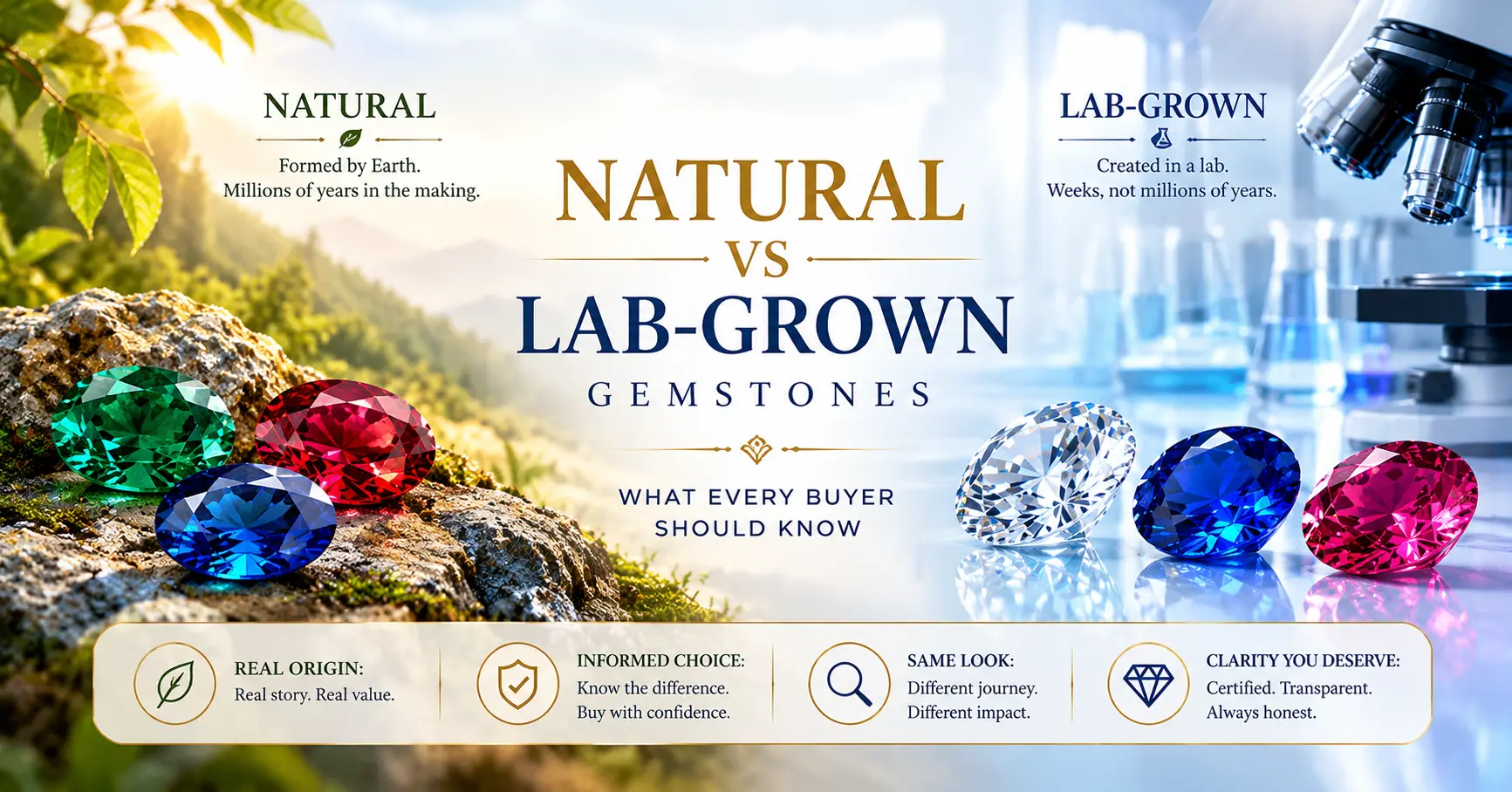
A gemstone can look beautiful, sparkle under the light, and appear almost flawless, but its origin may be very different from what a buyer expects. Some gemstones form naturally within the Earth over millions of years, while others are created in laboratories using specialised techniques that reproduce many of the conditions responsible for natural crystal growth.
This difference matters when buying gemstones for jewellery, collecting, gifting, or traditional astrological purposes. Natural and laboratory-grown gemstones can share the same chemical composition and crystal structure, but they may differ in origin, inclusions, rarity, market price, and how they should be described when sold.
Understanding natural vs. lab-grown gemstones is not simply about deciding which one looks better. It is about knowing what you are purchasing, how its identity can be verified, and whether the seller has provided clear information about its origin and any relevant treatments.
In this guide, we explore the key differences between natural and lab-grown gemstones, the tests gemologists use to distinguish them, and the disclosure practices buyers should understand before making a purchase.
1. What Are Natural and Lab-Grown Gemstones?
Natural Gemstones: Formed by Nature
Natural gemstones develop through geological processes inside the Earth. Heat, pressure, mineral-rich fluids, and suitable chemical conditions can gradually produce crystals such as ruby, emerald, sapphire, and many other gem varieties.
Their formation often leaves distinctive internal features called inclusions. These may include tiny mineral crystals, fluid-filled cavities, growth patterns, or healed fractures. However, not every natural gemstone contains visible inclusions, and some are exceptionally clean.
Explore the GemRishi gemstone collection to discover different gemstone varieties and learn more about their characteristics.
Lab-Grown Gemstones: Created in Controlled Environments
Lab-grown gemstones are produced by people using specialised equipment and controlled growth conditions. Methods vary by gemstone and can include flame fusion, flux growth, hydrothermal growth, and high-pressure, high-temperature or other crystal-growth techniques.
A laboratory-grown ruby, for example, can have essentially the same chemical composition and crystal structure as a natural ruby. It is not automatically an imitation simply because it was created in a laboratory.
This is an important distinction: lab-grown and natural describe origin, while imitation describes a material intended to resemble another gemstone.
Glass, cubic zirconia, and other materials may imitate the appearance of gemstones without having the same composition or crystal structure as the stones they resemble.
2. Natural vs. Lab-Grown Gemstones: Key Differences
The main differences between natural and lab-grown gemstones relate to their origin, growth characteristics, availability, market price, and disclosure requirements.
- Origin: Natural gemstones form through geological processes, while lab-grown gemstones are produced under controlled laboratory conditions.
- Composition: Lab-grown gemstones can share essentially the same chemical composition and crystal structure as their natural counterparts.
- Inclusions: Natural and laboratory-grown gemstones may contain different internal features that help gemologists determine their origin.
- Availability: Natural gemstone availability depends on geological supply, while laboratory production can increase the availability of certain varieties.

- Market price: Lab-grown gemstones often cost less than comparable natural stones, although actual prices depend on quality, variety, and market conditions.
- Identification: Both may require professional gemological testing because appearance alone cannot reliably establish origin.
- Disclosure: Sellers should accurately communicate whether a gemstone is natural or laboratory-grown and disclose relevant treatments as required by applicable rules.
Neither category is automatically superior in every respect. The right choice depends on your budget, preferred appearance, intended use, and the importance you place on natural origin.
If you are exploring natural gemstones, you can browse the GemRishi gemstone collection to compare available varieties.
3. How to Identify Natural vs. Lab-Grown Gemstones
The most reliable way to distinguish a natural gemstone from a laboratory-grown one is to examine several characteristics together. No single visual clue works for every gemstone, and the correct testing method depends on the material being examined.
Visual Inspection and Magnification
A jeweller's loupe or gemological microscope can reveal inclusions, growth patterns, colour zoning, fractures, and other internal features. Some characteristics may suggest natural or laboratory growth, but they must be interpreted by someone trained in gem identification.
For example, natural emeralds may contain mineral crystals and fluid inclusions, while laboratory-grown emeralds can display features associated with their particular growth process.
A flawless appearance does not prove that a gemstone is lab-grown, and visible inclusions do not guarantee natural origin.
For a gemstone-specific example, read GemRishi's guide on how to identify an original Panna (Emerald).
Refractive Index and Other Physical Properties
Gemologists may measure refractive index, specific gravity, optical behaviour, and other physical properties to help identify a gemstone species. These tests can distinguish some imitations from genuine gemstone materials.
However, natural and laboratory-grown versions of the same gemstone can have very similar properties. Such measurements alone may not establish the stone's origin.
Advanced Laboratory Testing
For valuable gemstones, laboratories may use specialised techniques such as spectroscopy, chemical analysis, and detailed microscopic examination. These methods help identify characteristic growth features, trace elements, and treatment indicators.
A suitable independent report is particularly helpful when purchasing an expensive ruby, emerald, sapphire, or another gemstone whose value depends significantly on its origin and treatment.
You can explore GemRishi's Natural Ruby Gemstone collection, Blue Sapphire Gemstone collection, and Yellow Sapphire Gemstone collection to learn more about these popular varieties.
For further identification guidance, read Yellow Sapphire (Pukhraj): Original vs. Fake Identification Guide.
Can Home Tests Confirm Authenticity?
Not reliably. Scratching a gemstone, testing it with household chemicals, or judging it by its appearance in sunlight can damage the stone or produce misleading conclusions.
If you are unsure about a gemstone, seek an assessment from a qualified gemologist or reputable gemological laboratory instead of relying on informal home tests.
4. Gemstone Certification: What Should Buyers Check?
A gemstone certificate or identification report can provide useful evidence about what you are buying. However, not every certificate provides the same level of examination or detail.
Before purchasing, check whether the report identifies:
- Gemstone identity: The species and variety, such as corundum and ruby.
- Origin: Whether the stone is identified as natural or laboratory-grown.
- Treatments: Any detectable enhancements, such as heating or clarity enhancement.
- Measurements and weight: Details that help match the report to the actual gemstone.
- Laboratory details: The issuing laboratory, report number, and available verification facility.
Some reports may also provide an opinion on geographic origin when the laboratory offers that service and the evidence supports a conclusion. Geographic origin is not the same as natural or laboratory-grown origin.
Before choosing a gemstone, you can explore GemRishi's Natural Ruby collection, Blue Sapphire collection, and Yellow Sapphire collection for further product information.
5. Disclosure Rules: What Should Sellers Tell Buyers?
Disclosure is central to a fair gemstone transaction. Buyers should not have to guess whether a stone was mined or grown in a laboratory.
A product listing, invoice, or accompanying documentation should accurately describe the gemstone's identity and origin. Relevant treatments should also be communicated in accordance with applicable laws and trade standards.
The distinction matters because terms such as natural, laboratory-grown, synthetic, imitation, heated, and untreated do not mean the same thing.
For example, a natural ruby may be heat-treated and remain a natural ruby. A laboratory-grown ruby has a different origin, even if its composition and crystal structure match those of natural ruby. Glass that resembles ruby is an imitation.
For sellers, clear descriptions help prevent misunderstandings and support customer confidence. For buyers, written disclosure provides a reference if the delivered gemstone does not match the product description.
Disclosure requirements vary by jurisdiction and product category, so businesses should check the rules that apply to their market rather than assume one universal regulation covers every gemstone.
Treatments are another important consideration. Learn more in GemRishi's guide to Untreated vs. Heated Gemstones.
6. Which Should You Buy: Natural or Lab-Grown?
The better choice depends on what matters most to you.
Natural gemstones may appeal to buyers who value geological history, natural rarity, collecting, or traditional gemstone selection. Lab-grown gemstones may suit those who prefer a particular appearance at a potentially lower price.
Neither choice should be made on appearance alone. Consider your budget, intended use, quality requirements, documentation, and the importance of natural origin to you.
If you are exploring natural gemstones for traditional purposes, browse the GemRishi Gemstone Collection to compare different varieties.
You can also learn about the characteristics and traditional appeal of ruby in Ruby: Why This Red Gemstone Is Known as the King of Gemstones.
For anyone interested in coloured gemstones, the Morganite Gemstone Guide offers additional information about another popular gemstone variety.
The most important principle is simple: buy the gemstone that suits your needs, and make sure it is described honestly.
Conclusion
Natural and lab-grown gemstones can look remarkably similar, which is why identification, certification, and disclosure matter. Their shared beauty does not erase the difference in how they are formed, and neither appearance nor price alone can establish authenticity.
A little research before purchasing can help you ask better questions, understand a laboratory report, and avoid confusing natural gemstones with laboratory-grown stones or imitations.
At GemRishi, exploring gemstone education alongside product information can help you make a more informed choice. Whether you value natural origin, visual appeal, or affordability, confidence begins with knowing exactly what you are buying.
Frequently Asked Questions
1. What Is the Main Difference Between Natural and Lab-Grown Gemstones?
Natural gemstones form through geological processes, while lab-grown gemstones are produced under controlled laboratory conditions. Both can share the same essential composition and crystal structure.
2. Are Lab-Grown Gemstones Real Gemstones?
Yes. A properly identified lab-grown ruby or emerald is genuine gemstone material, but it is not natural-origin material.
3. Can You Identify Lab-Grown Gemstones with the Naked Eye?
Not reliably in every case. Some features offer clues, but specialised gemological testing may be needed.
4. Are Natural Gemstones More Expensive Than Lab-Grown Gemstones?
Often, comparable natural gemstones cost more because of natural rarity and market demand. Actual prices depend on quality, size, treatments, and other factors.
5. Do Lab-Grown Gemstones Have Inclusions?
Yes. They can contain inclusions and growth features associated with their manufacturing process.
6. Does a Gemstone Certificate Guarantee That a Stone Is Natural?
No. Check whether the report explicitly identifies natural or laboratory-grown origin, and verify the report with the issuing laboratory.
7. Can a Treated Gemstone Still Be Natural?
Yes. A natural gemstone can undergo treatments such as heating or clarity enhancement. Its origin and treatment status are separate characteristics.
8. What Is the Difference Between a Synthetic Gemstone and an Imitation?
A synthetic gemstone has essentially the same principal chemical composition and crystal structure as its natural counterpart. An imitation merely resembles another gemstone.
9. Are Lab-Grown Gemstones Suitable for Jewellery?
Yes. They can be used in rings, pendants, earrings, and other jewellery. Durability depends on the gemstone material and how the jewellery is made and worn.
10. What Should Sellers Disclose When Selling Gemstones?
They should accurately describe the gemstone's identity and origin and disclose relevant treatments as required by applicable rules and trade standards.
11. Can a Home Test Prove That a Gemstone Is Natural?
No. Household tests and visual checks cannot reliably establish natural origin. Professional examination is the safer option for valuable purchases.
12. Where Can I Learn More About Identifying Specific Gemstones?
You can explore GemRishi's guide to Natural vs. Lab-Grown Emeralds and the Morganite Gemstone Guide to understand individual gemstone properties and buying considerations.
Have Questions Regarding This Gemstone?
Connect 1-on-1 with GemRishi’s certified Vedic gemologists on WhatsApp for personalized birth chart recommendations, lab certificate verification, or custom jewelry quotes.
Gemrishi
Gemrishi is a certified gemologist and Vedic astrology scholar at GemRishi with over 15 years experience in natural gemstone origin authentication.