Govardhan Puja 2026: Date, Significance, Rituals & Gemstones for Prosperity
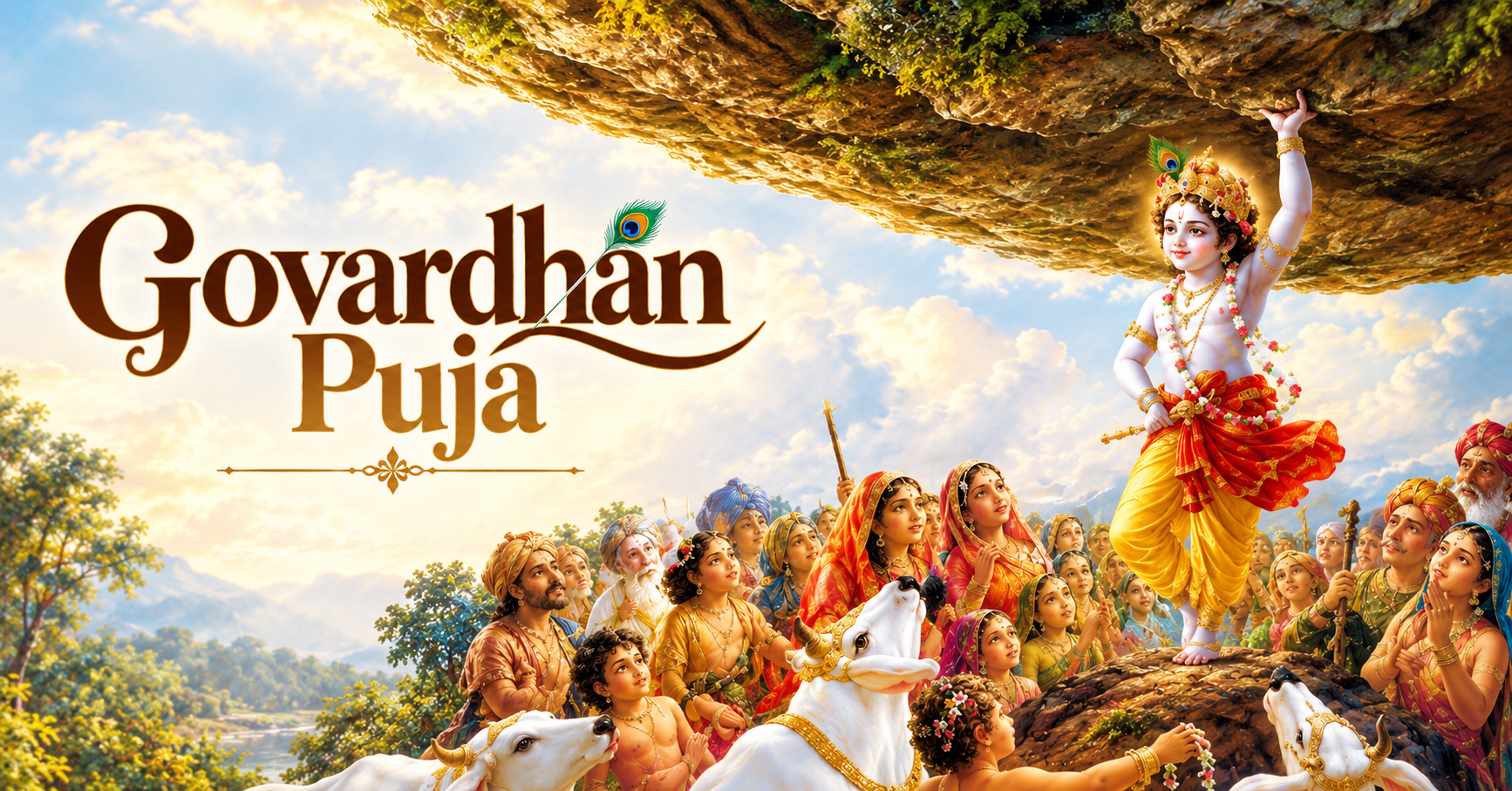
Govardhan Puja is one of the festivals of five festive season celebrated during the Diwali season. It reminds devotees of Lord Krishna's protection of the people of Braj and teaches an important lesson about gratitude towards nature, food, animals and the resources that support everyday life.
It is known as Annakut Puja, the festival is celebrated with prayers, traditional food offerings, worship of Govardhan Hill and devotion to Lord Krishna. Homes and temples prepare a variety of dishes as an expression of gratitude and abundance. In many parts of India, cows and other cattle are also honoured on this occasion.
Govardhan Puja also offers an opportunity to reflect on the traditional Indian understanding of prosperity. Wealth is not limited to money or material possessions. Good health, wisdom, family well-being, contentment and respect for nature are equally important.
In Vedic astrology, certain gemstones are traditionally associated with prosperity, wisdom and positive planetary influences. Although these associations are part of astrological beliefs rather than scientifically established effects, they remain an important part of India's gemstone heritage.
Let's understand when Govardhan Puja falls in 2026, why it is celebrated, which rituals are followed and how gemstones are traditionally connected with prosperity and good fortune.
When Is Govardhan Puja in 2026?
Govardhan Puja is observed on Kartik Shukla Pratipada, the first day of the bright fortnight of the Hindu lunar month of Kartik.
For 2026, there is a calendar difference worth noting. Drik Panchang lists Govardhan Puja on Tuesday, 10 November 2026, while the IMD Rashtriya Panchanga festival calendar lists it on Monday, 9 November 2026. The difference relates to regional calendar conventions and the observance of the Pratipada tithi.
According to Drik Panchang, the following are the New Delhi timings:
- Festival date: Tuesday, 10 November 2026
- Tithi: Kartik Shukla Pratipada
- Pratipada begins: 9 November, 12:31 PM
- Pratipada ends: 10 November, 2:00 PM
- Morning puja muhurat: 6:40 AM to 8:50 AM
These timings are specific to New Delhi. Devotees should check their local Panchang or consult their family priest before deciding the exact puja time.
What Is the Significance of Govardhan Puja?
This festival is all devoted to Lord Krishna.The belief that he save people of Braj from Govardhan Hill heavy RainFall. It had created a greate belief and trust on him . On this day People pay their devotion towards him.
This festival is also represents faith, humility, gratitude and the importance of respecting nature.
Govardhan Hill holds a special place in the religious traditions of Braj. It is associated with Lord Krishna's childhood and his relationship with the people, animals and natural surroundings of the region.
The festival carries several important messages:
1. Gratitude Towards Nature
Nature provides food, water, shelter and resources that support life. Govardhan Puja reminds people not to take these gifts for granted.
The worship of Govardhan Hill represents respect for the natural environment and the resources that sustain communities.
2. Faith and Protection
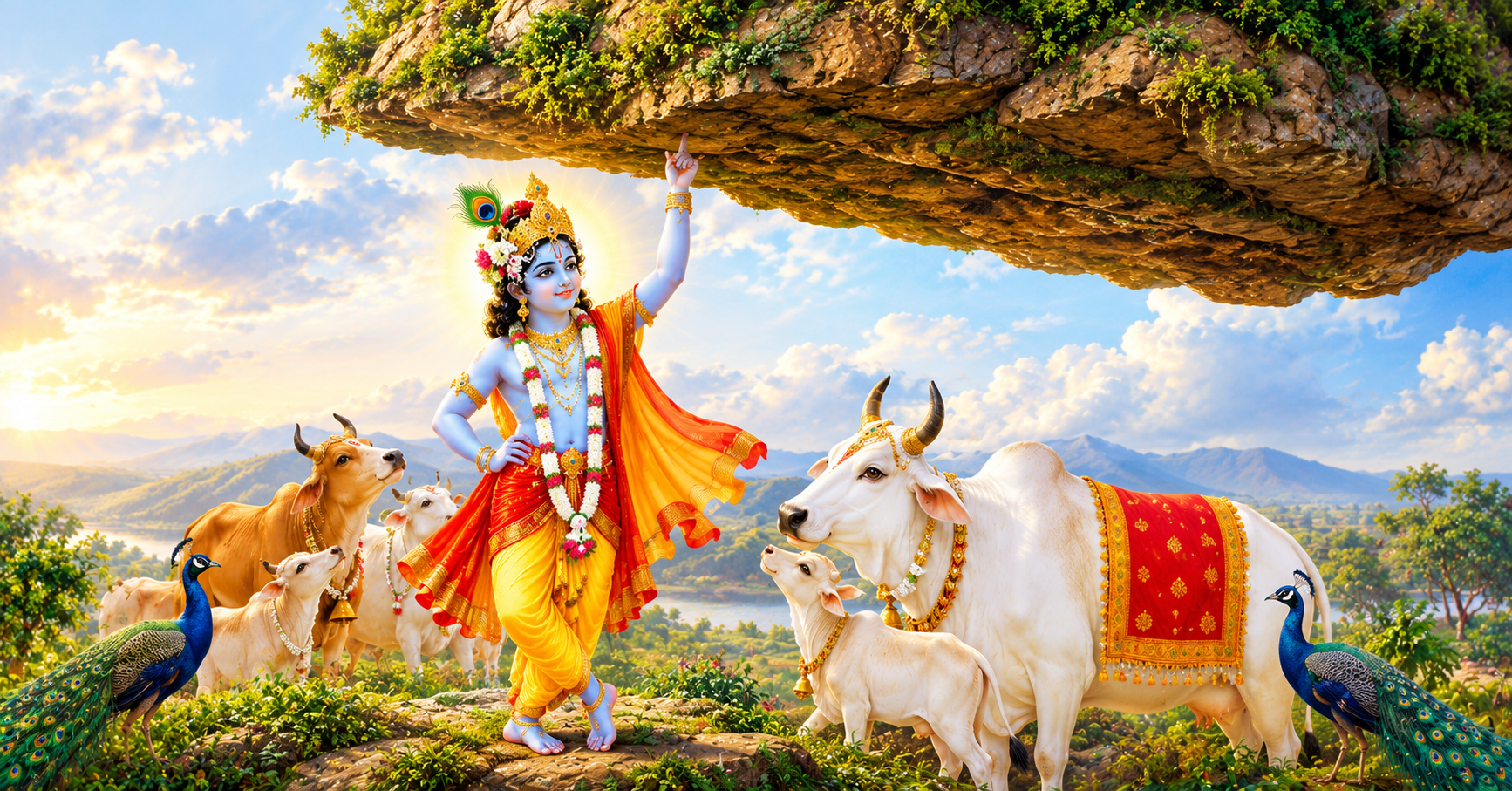
The story of Lord Krishna lifting the hill represents divine protection and the importance of faith during difficult circumstances.
It teaches devotees to remain hopeful and trust in their values when facing challenges.
3. Respect for Cattle and Agriculture
Cows, calves and bulls have traditionally played an important role in Indian agricultural and rural life.
They have provided milk, supported farming and contributed to the livelihoods of many families. Their worship during Govardhan Puja reflects gratitude towards animals and their contribution to everyday life.
4. The Importance of Food and Sharing
The Annakut tradition highlights the value of food. Preparing a large offering and distributing it as Prasad encourages sharing, generosity and community participation.
It also reminds people to respect food and avoid unnecessary wastage.
The Story of Lord Krishna and Govardhan Hill
In Hindu community , the people of Braj used to worship Lord Indra, the deity associated with rain and storms. They believed that his blessings were important for rainfall and agricultural prosperity.
One day, young Lord Krishna questioned this practice. He explained to the villagers that Govardhan Hill, the surrounding forests, the land and the cattle were directly connected to their everyday lives.
He encouraged them to express gratitude towards Govardhan Hill and the natural resources that supported their community.After tht the villagers prepared offerings and worshipped Govardhan Hill instead of performing their usual ritual for Indra.
This angered Indra, who sent heavy rainfall and powerful storms over Braj. The villagers became frightened as the rain continued and threatened their homes, cattle and livelihoods.
Seeing their suffering, Lord Krishna lifted Govardhan Hill on his little finger. He asked the people and their cattle to take shelter beneath it.Afterthat for seven days, Lord Krishna held the hill while the people remained protected from the storm.
Eventually, Indra understood his mistake and realised the divine nature of Krishna. He withdrew the storm and accepted his error.
The story is remembered during Govardhan Puja as a reminder that pride should never become greater than wisdom, humility and devotion.
It also explains why Govardhan Hill is worshipped with such devotion, particularly in the Braj region.
Important Govardhan Puja Rituals and Traditions
Govardhan Puja is celebrated differently across regions and families. However, the central idea remains the same: worshipping Lord Krishna, expressing gratitude and celebrating the abundance of nature.
People generally follow the following steps on Goverdhan Puja:
1. Morning Bath and Preparation
Devotees usually begin the day with a morning bath and clean their homes and puja areas.
They arrange flowers, incense, lamps, sweets and other offerings for the puja. Some families also prepare special traditional dishes for the occasion.
2. Making a Symbolic Govardhan Hill
One of the most recognisable traditions is creating a small representation of Govardhan Hill.
In many households, it is made using cow dung and decorated with flowers, leaves and other natural materials.
Some families prepare the symbolic hill using cooked grains and food items instead.
The arrangement represents Govardhan Hill and is worshipped with devotion.
3. Worshipping Lord Krishna
Devotees offer flowers, sweets, fruits, incense and lamps to Lord Krishna.
Some people recite Krishna mantras, read religious stories or sing devotional songs.
The puja is performed to express gratitude and seek blessings for peace, happiness and well-being.
4. Gau Puja: Worship of Cows
Cows and calves are honoured in many communities during Govardhan Puja.
They may be decorated with flowers, colourful cloth or traditional ornaments. Devotees offer fodder and other suitable food while expressing gratitude for their contribution to agricultural and rural life.
The exact customs differ between regions and households.
5. Govardhan Parikrama
Govardhan Parikrama is an important pilgrimage tradition associated with the sacred Govardhan Hill in Uttar Pradesh.
Devotees walk around the hill as an expression of devotion to Lord Krishna. The complete traditional parikrama route is approximately 21 kilometres.
Pilgrims visit important religious places along the route, including temples and sacred kunds.
People who cannot travel to Govardhan may worship a symbolic Govardhan Hill at home.
6. Lighting Diyas and Performing Aarti
Lighting diyas and performing aarti are common parts of the celebration.
Families gather for prayers and sing devotional songs dedicated to Lord Krishna.
The light of the diya symbolises devotion, hope and the removal of darkness.
What Is Annakut and Why Is Chhappan Bhog Offered?
Annakut is one of the most important traditions associated with Govardhan Puja.
The word Annakut means a mountain of food. It represents abundance and gratitude towards the food that sustains life.
On this occasion, devotees prepare a variety of vegetarian dishes and arrange them as an offering to Lord Krishna.
In many temples and households, the Annakut offering includes Chhappan Bhog, traditionally understood as 56 different food preparations.
The tradition is commonly connected with the belief that Krishna was offered 56 dishes after he protected the people of Braj for seven days.
After the offering, the food is distributed among devotees as Prasad.
Beyond the religious tradition, Annakut carries a simple message: food should be respected, shared and never wasted.
Gemstones Traditionally Associated with Prosperity and Good Fortune
In Indian culture, gemstones have long held a connection with jewellery, royal heritage, religious symbolism and Vedic astrology.
The Navaratna tradition, which brings together nine important gemstones, reflects the relationship between gemstones and the nine planetary influences described in Indian astrology.
Some gemstones are traditionally associated with wisdom, financial stability, confidence and personal growth. Their meanings depend on the astrological tradition and the individual's birth chart.
During festivals such as Govardhan Puja, people may also explore gemstones as meaningful jewellery choices or gifts.
1. Yellow Sapphire (Pukhraj): Traditionally Associated with Jupiter
Yellow Sapphire, commonly known as Pukhraj, is traditionally associated with Jupiter or Brihaspati in Vedic astrology.
Jupiter is symbolically connected with wisdom, knowledge, guidance, learning and prosperity.
For this reason, Yellow Sapphire is often discussed in traditional astrology in connection with financial stability, personal growth and good judgement.
Its attractive yellow colour also makes it a popular choice for fine gemstone jewellery.
Explore the Yellow Sapphire gemstone collection at GemRishi.
2. Emerald (Panna): Traditionally Associated with Mercury
Emerald, also known as Panna, is associated with Mercury or Budh.
In Vedic astrology, Mercury represents communication, intelligence, reasoning and business-related skills.
Emerald is traditionally connected with clear thinking, learning and effective communication.
Its rich green colour has also made it a popular gemstone in Indian jewellery traditions.
Explore the GemRishi gemstone collection to learn more about Emerald and other natural gemstones.
3. Ruby (Manik): Traditionally Associated with the Sun
Ruby, known as Manik, represents the Sun or Surya in traditional Vedic astrology.
The Sun is associated with leadership, confidence, authority and vitality.
Ruby has historically been valued by royal families and jewellery collectors because of its rich red colour and distinctive appearance.
In traditional astrological interpretations, it is connected with confidence and leadership qualities.
4. Pearl (Moti): Traditionally Associated with the Moon
Pearl, commonly known as Moti, is associated with the Moon or Chandra.
The Moon is traditionally connected with emotions, calmness, sensitivity and the mind.
Pearls are admired for their soft lustre and elegant appearance. They have also held an important place in traditional Indian ornaments and royal jewellery.
These four gemstones represent only a small part of India's rich gemstone heritage. Other traditional planetary gemstones include Blue Sapphire, Red Coral, Hessonite and Cat's Eye.
How to Choose a Gemstone for Yourself
Choosing a gemstone should involve more than selecting a colour or following a popular recommendation.
If you are interested in wearing a gemstone for astrological reasons, traditional Vedic practices consider several factors before recommending a particular stone.
Some important considerations include:
Birth chart: The individual's Kundli, planetary positions and relevant astrological factors are considered in traditional gemstone selection.
Natural quality: Buyers should understand whether a gemstone is natural, synthetic or treated.
Certification: A reliable laboratory report can provide useful information about gemstone identity and treatment.
Personal preference: Colour, design, comfort and budget are important when selecting gemstone jewellery.
Expert guidance: If the purpose is astrological, consult a knowledgeable practitioner instead of following a general recommendation based only on your zodiac sign.
You can also read the GemRishi gemstone buying guide before selecting a stone.
The Spiritual Connection Between Prosperity and Gratitude
One of the most meaningful lessons of Govardhan Puja is that prosperity should not be understood only in financial terms.
The festival highlights the importance of food, nature, family, animals and community.
A family that shares its food, respects natural resources and supports others reflects the deeper message of Annakut.
Similarly, traditional gemstone symbolism often connects prosperity with qualities such as wisdom, patience, confidence and responsible decision-making.
This is where the festival's message and India's gemstone heritage meet.
Whether someone chooses to wear Yellow Sapphire, Emerald, Ruby or Pearl, the gemstone can serve as a personal reminder of the qualities they wish to cultivate.
For many people, jewellery also carries emotional and cultural value. A gemstone gifted during a festival can become a meaningful keepsake connected with family traditions and special memories.
Final Thoughts
Govardhan Puja is a festival that brings together devotion, gratitude and respect for nature. Every year it reminds the story of Lord Krishna lifting Govardhan Hill to save people.The humility, faith and care for others are more meaningful than pride or material possessions.
The Annakut tradition adds another important message to the celebration. Food is valuable, abundance should be shared and nature deserves respect.
Gemstones also have a special place in India's cultural and astrological heritage. Yellow Sapphire, Emerald, Ruby and Pearl carry traditional planetary associations and continue to be valued for their beauty and symbolic meanings.
As Govardhan Puja 2026 approaches, the most meaningful way to celebrate is to remember its central message: appreciate what sustains life, share what you have and approach prosperity with gratitude.
May this Govardhan Puja bring peace, happiness, wisdom and abundance to every home.
Have Questions Regarding This Gemstone?
Connect 1-on-1 with GemRishi’s certified Vedic gemologists on WhatsApp for personalized birth chart recommendations, lab certificate verification, or custom jewelry quotes.
Gemrishi
Gemrishi is a certified gemologist and Vedic astrology scholar at GemRishi with over 15 years experience in natural gemstone origin authentication.