Strong vs Weak Planets in Astrology: Planetary Effects, Gemstone Remedies & Kundli Analysis
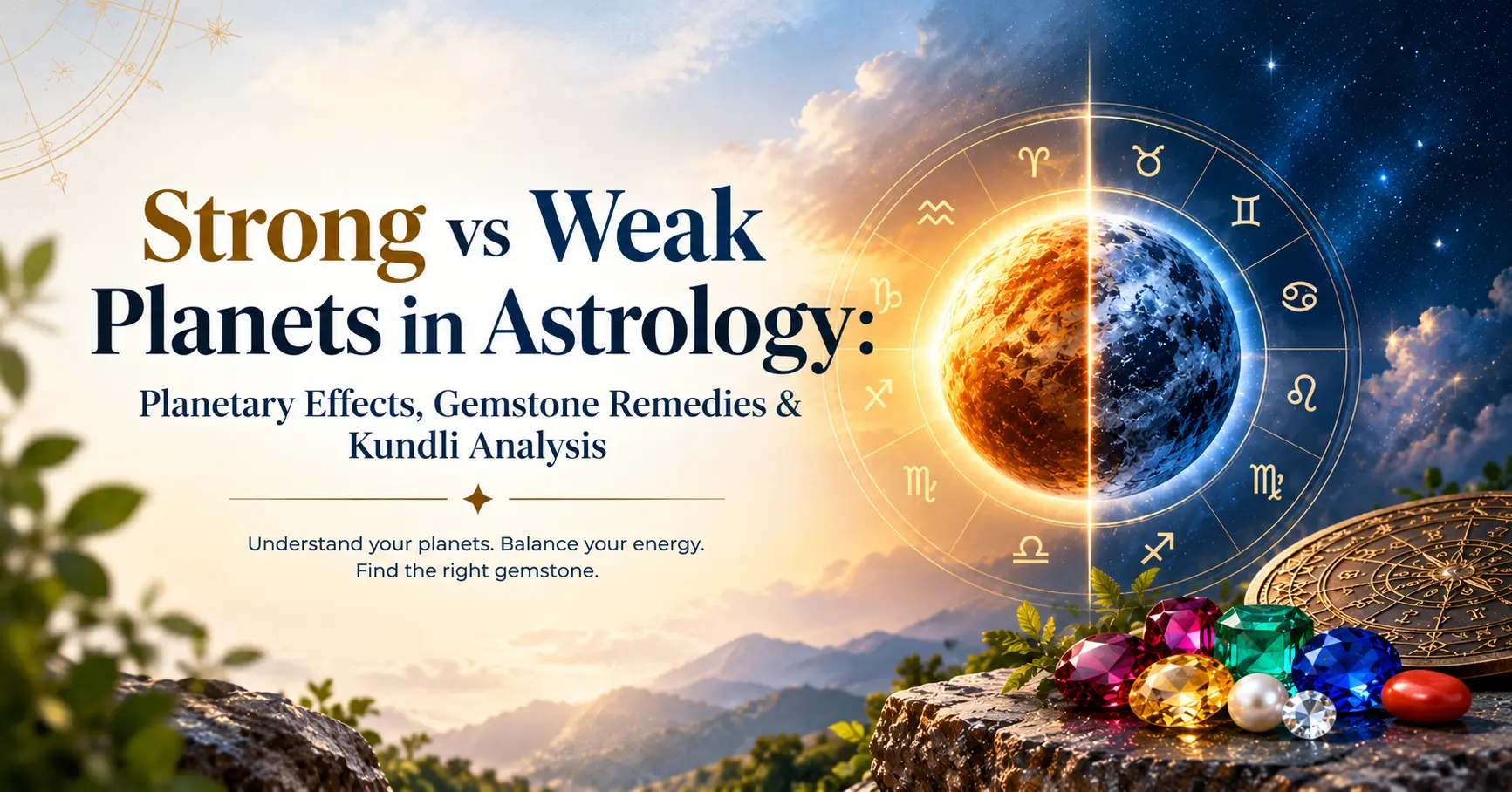
Have you ever wondered why astrologers describe a planet as strong or weak in a birth chart? In Vedic astrology, planetary strength is an important part of understanding a Kundli. It helps astrologers interpret how different planets may express their traditional qualities and influence various areas of life.
However, planetary strength is not as simple as labelling one planet good and another bad. A strong planet may not always produce favourable results, and a weak planet does not automatically indicate difficulties. Its house placement, ownership, relationships with other planets, and the overall birth chart all matter.
This distinction also becomes important when discussing gemstone remedies. Ruby, Emerald, Yellow Sapphire and Blue Sapphire are traditionally associated with particular planetary influences, but choosing a gemstone involves more than identifying a weak planet.
Let's understand how strong and weak planets are interpreted in Vedic astrology, how astrologers assess planetary strength, and what to consider before exploring gemstone remedies.
What Are Strong and Weak Planets in Astrology?
In Vedic astrology, a planet's strength refers to its ability to express its astrological significance according to its position and other chart conditions.
A strong planet is traditionally considered to have greater capacity to deliver the results associated with its placement, house ownership and planetary relationships. A weak planet may be considered less capable of expressing certain qualities or delivering its expected results consistently.
For example, Mercury is associated with communication, reasoning, learning and analytical ability. An astrologer examine Mercury's strength to interpret these themes within a person's Kundli.
However, strength alone does not determine whether the results will be favourable. A planet can be strong but function as a challenging influence in a particular chart. Similarly, a weak planet may still participate in favourable combinations.
Therefore, understanding planetary strength in Vedic astrology requires a complete chart analysis rather than relying on a single placement.
How to Identify Strong and Weak Planets in a Kundli
Astrologers traditionally examine several factors when assessing planetary strength. No single factor should automatically determine the final interpretation.
1. Exaltation and Debilitation
Exaltation and debilitation describe particular zodiac sign placements traditionally associated with elevated or reduced planetary dignity.
For example, the Sun is exalted in Aries and debilitated in Libra under the classical sign-based system. Jupiter is exalted in Cancer and debilitated in Capricorn.
These placements are important indicators, but exaltation does not guarantee positive results, and debilitation does not automatically mean failure. House ownership, aspects, conjunctions and other chart conditions must also be considered.
2. Own Sign and Friendly or Enemy Signs
A planet occupying its own sign is traditionally considered to have a favourable level of sign dignity. Its placement in a friendly or enemy sign can also influence the interpretation.
For example, Mercury rules Gemini and Virgo, while Venus rules Taurus and Libra. Astrologers examine these relationships alongside the planet's house placement and other strength indicators.
Sign dignity is one part of the assessment, not a complete verdict on a person's future.
3. House Placement and House Lordship
The houses in a Kundli represent different life themes, including career, relationships, education, finances, family and personal development.
A planet's house placement indicates the area where its traditional symbolism may become relevant. Its house lordship also matters because a planet rules specific houses according to the ascendant.
This is why the same planet can be interpreted differently in two birth charts. A gemstone recommendation based only on a planet's general reputation may overlook its particular role in the individual's Kundli.
4. Planetary Aspects and Conjunctions
Planets can influence one another through aspects and conjunctions under traditional Vedic astrology principles.
An astrologer may examine whether a planet receives supportive or challenging influences, whether it is closely associated with another planet, and how these relationships affect its overall condition.
The interpretation depends on the planets involved and the wider chart configuration.
5. Shadbala in Astrology
Shadbala is a traditional system used to assess planetary strength through six broad categories: Sthana Bala, Dig Bala, Kala Bala, Cheshta Bala, Naisargika Bala and Drik Bala.
These categories consider factors such as positional strength, directional strength, temporal conditions, planetary motion and aspects.
Shadbala can add structure to a Kundli assessment, but it should not be treated as a standalone prediction of success or failure. Astrologers interpret it alongside house lordship, planetary dignity, divisional charts and other relevant factors.
6. Combustion, Retrogression and Divisional Charts
A planet is traditionally described as combust when it comes sufficiently close to the Sun under specified astrological calculations. Combustion may affect how the planet is interpreted, although the rules and significance vary by tradition.
Retrograde motion is another factor astrologers consider. A retrograde planet is not automatically weak or harmful; its interpretation depends on the complete chart.
Divisional charts, particularly the Navamsa, may also be examined to understand planetary dignity and other chart themes in greater detail.
Strong vs Weak Planets and Their Effects on Life
In traditional astrology, planetary strength is used to interpret different areas of life. These interpretations are symbolic frameworks, not scientifically established methods for predicting an individual's experiences.
- Career and professional growth: The Sun, Saturn, Mercury and Jupiter may be examined in relation to authority, discipline, communication, knowledge and professional responsibilities.
- Relationships: Venus, the Moon, Jupiter and the relevant relationship houses may be considered when interpreting affection, emotional connection and partnership.
- Finances: The second and eleventh houses, their rulers, Jupiter and other relevant planetary combinations may be examined in traditional financial interpretations.
- Education and decision-making: Mercury and Jupiter are commonly associated with reasoning, learning, judgement and knowledge.
- Confidence and personal initiative: The Sun and Mars are traditionally linked with self-expression, courage, motivation and action.
These themes cannot be assessed from one planet alone. An astrologer would normally examine the ascendant, relevant houses, planetary relationships and timing factors before interpreting the birth chart.
Effects of Strong and Weak Planets in Vedic Astrology
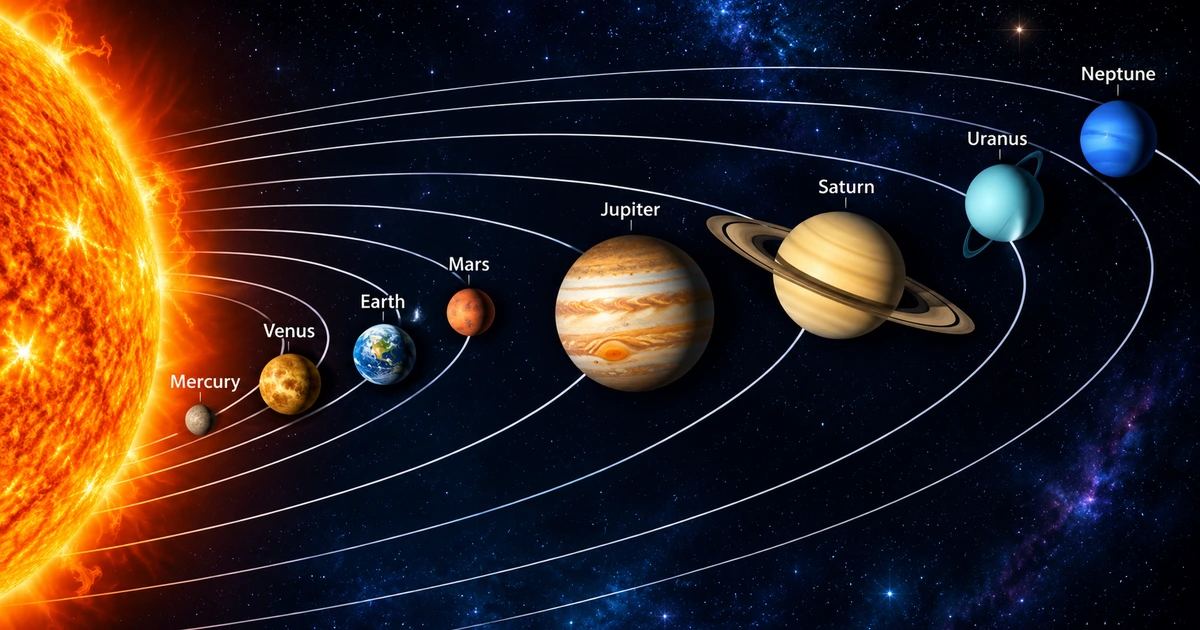
Each of the nine commonly discussed planetary influences has its own traditional symbolism. Their strength and condition are interpreted in the context of the individual Kundli.
Sun (Surya): Confidence and Authority
The Sun represents leadership, identity, authority and vitality in Vedic astrology. A well-supported Sun may traditionally indicate confidence and a willingness to take responsibility. A challenged Sun may be interpreted as difficulty expressing these qualities.
These associations do not establish a person's actual confidence, health or career prospects.
Traditional gemstone association: Ruby (Manik).
Moon (Chandra): Emotions and Mental Well-Being
The Moon is associated with emotions, adaptability, nurturing and the mind. Its sign, house, phase and planetary influences may be considered when interpreting emotional themes.
A difficult Moon placement should not be treated as a diagnosis of a mental health condition.
Traditional gemstone association: Pearl (Moti).
Mars (Mangal): Courage and Action
Mars represents energy, initiative, competition and assertiveness. Its condition is traditionally examined when interpreting determination, conflict and the ability to take action.
A strong Mars is not necessarily beneficial in every chart, particularly when its house ownership and relationships are challenging.
Traditional gemstone association: Red Coral (Moonga).
Mercury (Budh): Communication and Intelligence
Mercury is associated with communication, calculation, learning, reasoning and business-related skills. Astrologers examine its sign, house and relationships to understand these themes.
Traditional gemstone association: Emerald (Panna).
Jupiter (Guru): Wisdom and Knowledge
Jupiter is traditionally connected with knowledge, teaching, guidance, ethics and expansion. Its placement and house lordship are important when interpreting education, judgement and other Jupiter-related themes.
Traditional gemstone association: Yellow Sapphire (Pukhraj).
Venus (Shukra): Relationships and Comfort
Venus represents beauty, artistic expression, relationships, pleasure and material comforts in Vedic astrology. Its condition is interpreted alongside relevant houses and planetary relationships.
Traditional gemstone association: Diamond or White Sapphire in traditions that use these stones for Venus.
Saturn (Shani): Discipline and Responsibility
Saturn is associated with patience, structure, responsibility, limitations and sustained effort. Its placement may be interpreted in relation to duties, long-term commitments and delays.
Saturn is not automatically harmful when strong, nor is every challenging Saturn placement an indication of hardship.
Traditional gemstone association: Blue Sapphire (Neelam).
Rahu: Ambition and Unconventional Experiences
Rahu is a lunar node rather than a physical planet. In Vedic astrology, it is associated with ambition, worldly desires, unconventional paths and intense interests.
Its interpretation depends heavily on its placement, associations and the astrological tradition being followed.
Traditional gemstone association: Hessonite (Gomed).
Ketu: Detachment and Spiritual Inquiry
Ketu, the other lunar node, is traditionally linked with detachment, introspection, spiritual inquiry and unconventional experiences.
Its influence is interpreted through its house, sign, conjunctions and relationship with the rest of the chart.
Traditional gemstone association: Cat's Eye (Lehsunia).
Can a Strong Planet Give Negative Results?
Yes, according to traditional Vedic astrology, a strong planet can still be associated with challenging results.
One important concept is functional benefic and malefic status. A planet's role can change according to the ascendant and the houses it rules. A naturally benefic planet may have a challenging functional role in a particular chart, while a naturally malefic planet can have a constructive role under certain conditions.
For example, a planet may possess strong sign dignity but rule houses associated with difficulties for a particular ascendant. Its conjunctions, aspects and placement can further modify the interpretation.
Similarly, a debilitated planet may participate in a combination traditionally interpreted as modifying or mitigating its debility.
The practical lesson is simple: planetary strength must be assessed alongside planetary function. Strengthening a planet solely because it appears weak can therefore be an incomplete approach.
Gemstone Remedies for Weak Planets
Gemstones have a long-standing place in traditional Indian astrological practices. Certain stones are associated with particular planets, and some practitioners recommend them as symbolic remedies based on a person's birth chart.
Common associations include:
- Ruby with the Sun.
- Pearl with the Moon.
- Red Coral with Mars.
- Emerald with Mercury.
- Yellow Sapphire with Jupiter.
- Diamond or White Sapphire with Venus.
- Blue Sapphire with Saturn.
- Hessonite with Rahu.
- Cat's Eye with Ketu.
These associations are traditional beliefs, not scientifically established mechanisms for changing planetary influences or guaranteeing life outcomes.
A weak planet should not automatically be strengthened with a gemstone. If an astrologer considers a planet's functional role unfavourable, strengthening it may not be the approach they recommend within that tradition.
The decision may involve the ascendant, house lordship, planetary dignity, aspects, conjunctions and current or upcoming Dasha periods.
If you are exploring gemstones, you can browse the GemRishi gemstone collection for information about available stones. You can also read the guide to choosing the right gemstone before making a purchase.
How to Choose the Right Gemstone Through Kundli Analysis
Choosing a gemstone according to Kundli involves more than matching a zodiac sign with a stone.
A traditional assessment may consider:
- Birth details: Date, exact birth time and birthplace are used to prepare the birth chart.
- Ascendant and house lordship: These help establish the role of each planet in the chart.
- Planetary strength: Dignity, Shadbala, aspects, conjunctions and other relevant factors may be examined.
- Planetary relationships: The astrologer assesses how a planet interacts with other chart factors.
- Dasha periods: Traditional timing systems may be considered when interpreting which planetary themes are emphasised during a period.
Two people born under the same zodiac sign may therefore receive different gemstone recommendations.
Avoid selecting a stone solely because it is popular, expensive or associated with your Sun sign. Equally, be cautious of claims that a particular gemstone guarantees wealth, marriage, promotion or protection.
For more guidance, read Which Gemstone Is Suitable for Me?.
If you are considering a specific stone, GemRishi's guides to Yellow Sapphire for astrology and top gemstones traditionally recommended by astrologers offer additional reading.
Gemstone Remedies vs Other Traditional Astrological Remedies
Gemstones are not the only remedies discussed in Vedic astrology. Depending on their tradition, practitioners may also suggest mantra recitation, prayer, charity, fasting or other religious observances.
Some people find these practices meaningful because they support reflection, routine, devotion or a connection with their cultural traditions. Their spiritual significance can vary from person to person.
These practices should not be presented as scientifically verified methods for changing planetary effects. Nor should they replace appropriate medical, financial, legal or professional advice.
People interested in traditional gemstone rituals can explore Vedic Pran Pratishtha for Gemstones to learn about the cultural practices associated with preparing gemstones for use.
Common Myths About Strong and Weak Planets
Several misconceptions can lead to unnecessary worry or unsuitable gemstone purchases.
- Every weak planet is harmful: Not necessarily. Its house ownership, relationships and overall chart context matter.
- Every strong planet is beneficial: Strength describes capacity, not guaranteed favourable results.
- One gemstone suits everyone with the same zodiac sign: Traditional gemstone selection may differ according to the complete birth chart.
- Gemstones guarantee success: No gemstone has been scientifically established to guarantee wealth, marriage, career advancement or protection.
- One planetary placement explains an entire life: Even within Vedic astrology, interpretations involve multiple chart factors.
- A debilitated planet must always be strengthened: The planet's role in the chart should be evaluated before a traditional remedy is considered.
The best approach is to understand what an astrological interpretation actually means instead of making decisions based on fear or exaggerated promises.
Conclusion
Understanding strong vs weak planets in astrology requires more than identifying exalted, debilitated or favourably placed planets. Traditional Kundli analysis also considers house lordship, planetary relationships, Shadbala, divisional charts and timing factors.
A strong planet is not automatically good, and a weak planet does not automatically indicate problems. The interpretation depends on how the planet functions within the entire birth chart.
The same principle applies to gemstone remedies. Ruby, Emerald, Yellow Sapphire, Blue Sapphire and other planetary gemstones have established associations within traditional Vedic astrology, but selecting one requires a considered approach rather than a generalised recommendation.
Ultimately, planetary strength is a traditional astrological concept, not a scientifically validated predictor of personal outcomes. Learn about the tradition, understand gemstone quality and authenticity, and avoid treating any remedy as a guarantee of success.
Frequently Asked Questions
1. What is a strong planet in astrology?
A strong planet is one that has greater astrological strength according to traditional factors such as sign dignity, house placement, aspects and Shadbala. Strength does not automatically mean favourable results.
2. What is a weak planet in a Kundli?
A weak planet is one that may have reduced strength according to traditional astrological indicators. Its interpretation depends on its placement, house lordship and relationships with other planets.
3. How can I identify weak planets in my birth chart?
An astrologer may examine exaltation, debilitation, sign dignity, house placement, aspects, conjunctions, combustion, divisional charts and Shadbala. A single placement is not sufficient for a complete assessment.
4. Is an exalted planet always beneficial?
No. Exaltation is traditionally considered favourable for planetary dignity, but house ownership, afflictions and other chart conditions may modify the interpretation.
5. Can a strong planet give negative results?
According to Vedic astrology, yes. A strong planet may have a challenging functional role or be involved in combinations traditionally associated with difficulties.
6. Does a debilitated planet always cause problems?
No. Debilitation is one factor in planetary assessment. Other chart conditions, including certain combinations that traditionally modify debility, may change the interpretation.
7. What is the role of Shadbala in planetary strength?
Shadbala is a traditional six-part system for evaluating planetary strength. It considers positional, directional, temporal, motional, natural and aspect-related strength.
8. Can gemstones strengthen weak planets?
In traditional Vedic astrology, gemstones are sometimes recommended to support particular planetary influences. This is a cultural and astrological belief, not a scientifically established effect.
9. Should I wear a gemstone for every weak planet?
No. Traditional astrologers do not necessarily recommend strengthening every weak planet. Suitability depends on the planet's role and the complete birth chart.
10. How do astrologers select a gemstone according to a Kundli?
They may examine the ascendant, house lordship, planetary strength, aspects, conjunctions, divisional charts and Dasha periods before recommending a gemstone.
11. Can the wrong gemstone have negative astrological implications?
Some Vedic astrology traditions consider an unsuitable gemstone potentially unfavourable. This is a traditional interpretation, not a scientifically demonstrated effect. The financial cost and risk of buying an unsuitable or misrepresented stone are practical concerns.
12. Are gemstone remedies scientifically proven?
No reliable scientific evidence establishes that astrological gemstones change planetary influences or guarantee life outcomes. Their use for astrological purposes belongs to traditional and cultural belief systems.
Have Questions Regarding This Gemstone?
Connect 1-on-1 with GemRishi’s certified Vedic gemologists on WhatsApp for personalized birth chart recommendations, lab certificate verification, or custom jewelry quotes.
Gemrishi
Gemrishi is a certified gemologist and Vedic astrology scholar at GemRishi with over 15 years experience in natural gemstone origin authentication.