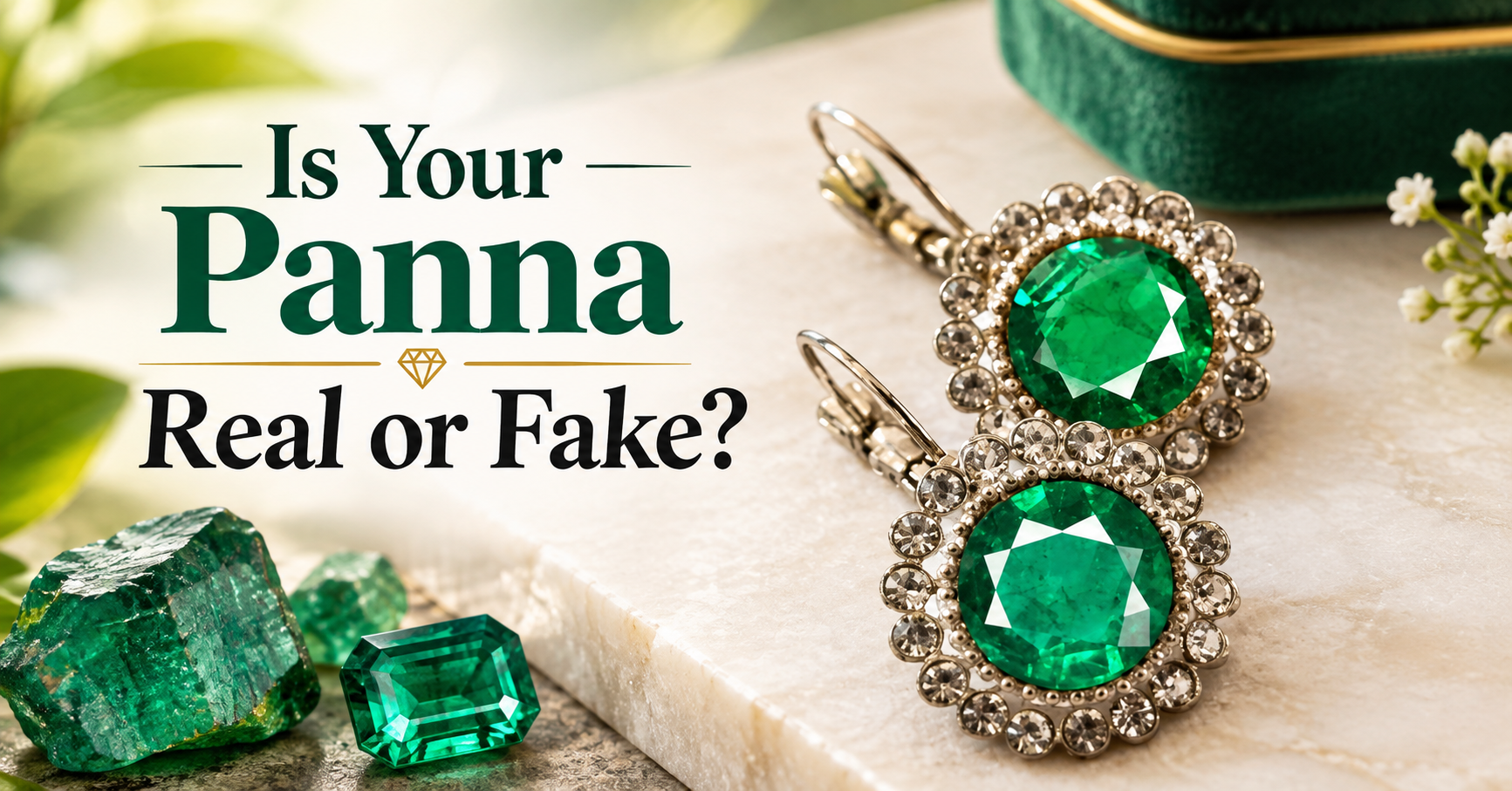
Are Lab-Grown Emeralds Real Emeralds? Differences Between Natural and Lab-Grown Emeralds
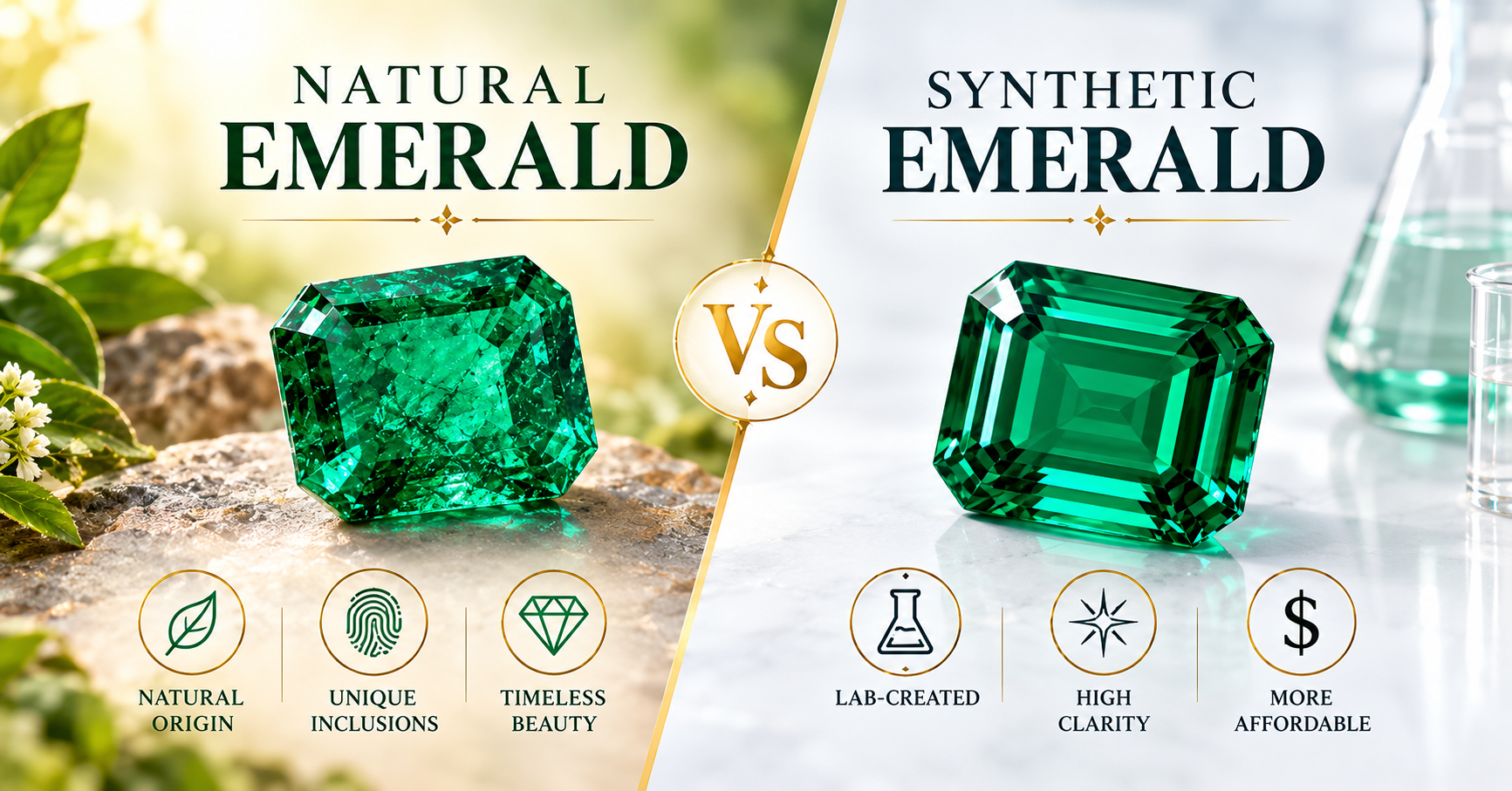
Emeralds have captivated gemstone lovers for centuries with their rich green colour, natural character, and timeless appeal. Today, however, buyers have more choices than ever before. Alongside natural emeralds, the market offers laboratory-grown emeralds that can look remarkably similar, often leaving people wondering whether they are purchasing a genuine gemstone or an imitation.
So, are lab-grown emeralds real emeralds? Yes. Lab-grown emeralds are genuine emerald material created in a laboratory, but they are not natural emeralds formed inside the Earth. The distinction matters because origin, rarity, treatments, and market value can differ considerably.
Whether you are exploring emerald jewellery, comparing gemstone prices, or searching for an authentic Panna stone, understanding these differences can help you make a more confident purchase.
In this guide, we will explain how lab-grown emeralds are made, how they compare with natural emeralds, what distinguishes them from imitations, and what to check before buying an emerald.
Explore the GemRishi homepage to discover gemstones, jewellery, and educational resources for making informed gemstone choices.
What Are Lab-Grown Emeralds?
Lab-grown emeralds, also called laboratory-created or synthetic emeralds, are produced using specialised processes that recreate the conditions needed for emerald crystal growth. Instead of developing naturally through geological processes over long periods, these gemstones grow in a controlled laboratory environment.
Emerald is a green variety of beryl, a mineral whose chemical formula is beryllium aluminium silicate. Its characteristic green colour is primarily associated with trace amounts of chromium and, in some emeralds, vanadium.
Laboratory-grown emeralds have essentially the same principal chemical composition and crystal structure as their natural counterparts. This is what separates them from green glass or other materials that simply imitate emerald's appearance.
However, being chemically similar does not mean having the same origin or market value. A laboratory-grown emerald is not a natural, earth-mined emerald, and sellers should clearly disclose this distinction.
If you are exploring natural gemstones, browse the GemRishi gemstone collection to learn about different gemstone varieties, colours, and traditional uses. You can also read about green gemstones and their meanings to discover how emeralds compare with other green stones.
Are Lab-Grown Emeralds Real or Fake?
The answer depends on what you mean by “real.”
From a gemological perspective, a properly identified laboratory-grown emerald is a genuine synthetic emerald because it has the essential characteristics of emerald material. It is not automatically fake simply because it was created by humans.
However, if you specifically mean a natural emerald formed within the Earth, a lab-grown emerald does not meet that description.
It helps to distinguish three categories:
- Natural emeralds: Form naturally through geological processes and are mined from the Earth.
- Lab-grown emeralds: Created in a laboratory with essentially the same principal chemical composition and crystal structure as natural emeralds.
- Emerald imitations: Materials such as green glass or other gemstones that resemble emerald but have a different composition.
All three may look green and attractive, but they are not interchangeable.
For buyers, the most important consideration is transparency. A laboratory-grown stone can be a suitable choice for certain jewellery preferences, but it should never be sold or described in a way that misleads someone into believing it is a natural emerald.
The Gemological Institute of America (GIA) Emerald Buyer's Guide provides further information about emerald characteristics, identification, and the distinctions buyers should understand.
For a practical look at identifying natural Panna and recognising imitations, read GemRishi's guide to identifying an original Panna stone.
How Are Lab-Grown Emeralds Made?
Laboratory-grown emeralds are produced using specialised crystal-growth techniques. Two established methods are hydrothermal growth and flux growth.
Hydrothermal Growth
The hydrothermal method recreates certain conditions associated with natural mineral formation. Nutrient materials dissolve in a heated solution, and emerald crystals grow under controlled temperature and pressure conditions.
This method can produce crystals with characteristics similar to those of natural emeralds. The process requires specialised equipment, technical expertise, and careful control of growth conditions.
Flux Growth
In the flux method, a material called a flux helps dissolve the ingredients needed for crystal growth. As conditions change, emerald crystals develop from the solution.
Flux-grown emeralds may contain internal features associated with their growth process. Gemologists can study these features alongside other evidence when determining whether an emerald is natural or laboratory-grown.
Neither method makes the resulting gemstone a natural, earth-mined emerald. The stone's origin remains laboratory-created, regardless of how closely its appearance resembles a natural specimen.
Lab-Grown Emeralds vs Natural Emeralds: What Is the Difference?
Although laboratory-grown and natural emeralds share important gemological properties, several differences matter to buyers.
1. Origin and Formation
The fundamental difference is where the gemstone forms.
Natural emeralds develop through geological processes involving the right combination of elements and conditions. They are found in gemstone-producing regions such as Colombia, Zambia, and Brazil.
Lab-grown emeralds are created in controlled laboratory environments. Their growth takes place under managed conditions rather than through natural geological formation.
If you want a natural Panna for collecting or traditional astrological purposes, confirm the stone's natural origin rather than relying on its green colour or appearance.
You can learn more about natural emerald origins in GemRishi's guide to Zambian vs Colombian emeralds.
2. Colour and Appearance
Both natural and laboratory-grown emeralds can display beautiful green hues. Their colour may range from lighter green to deep, saturated green, depending on the individual stone.
Some laboratory-grown emeralds have excellent visual clarity, while natural emeralds often contain internal inclusions formed during their geological development. Nevertheless, appearance varies considerably in both categories.
A vivid green colour does not prove that an emerald is natural. Similarly, visible inclusions do not conclusively establish natural origin.
For this reason, photographs, visual inspection, and seller descriptions should be considered alongside reliable identification documentation.
If you enjoy exploring coloured gemstones, the GemRishi gemstone collection is a useful starting point for discovering the different colours and varieties available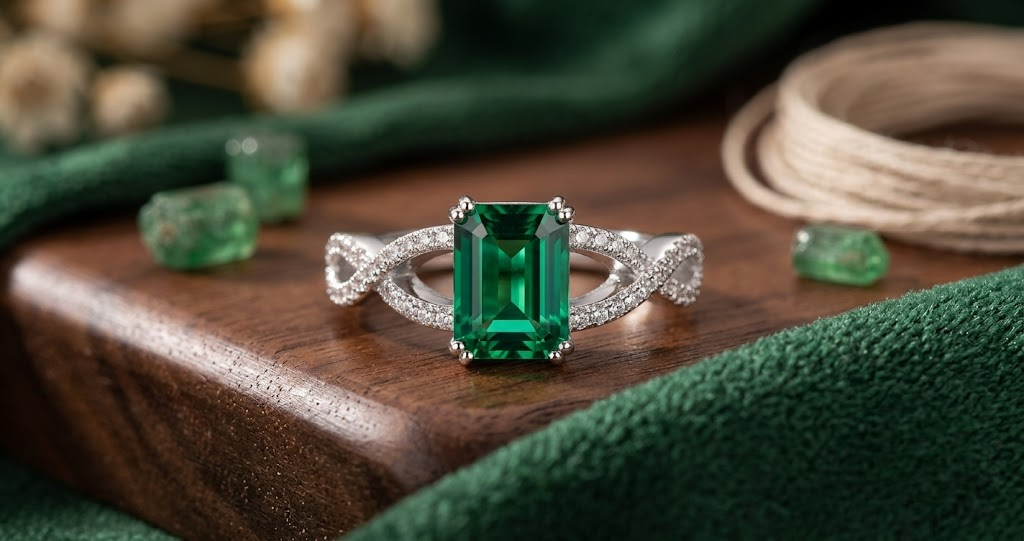 3. Inclusions and Clarity
Natural emeralds commonly contain inclusions, sometimes forming delicate internal patterns known as jardin, the French word for garden. These features are part of the character of many natural emeralds.
Lab-grown emeralds can also contain inclusions, but some may display microscopic features associated with laboratory growth. Trained gemologists examine these characteristics using specialised instruments.
It is important not to assume that every clean-looking emerald is synthetic or that every included emerald is natural. Reliable identification depends on several features considered together.
For more guidance on assessing natural Panna stones, read GemRishi's guide to identifying an original Panna stone.
4. Rarity and Market Value
Natural emeralds vary in rarity and quality. Exceptional colour, clarity, size, condition, and documented origin can contribute to their desirability.
Lab-grown emeralds can be produced through controlled manufacturing processes, so they generally do not carry the same natural rarity as comparable natural stones. Their prices can therefore be lower, although actual prices depend on quality, size, manufacturing method, and the seller.
Neither category has a single fixed price. A fair comparison requires looking at the individual gemstone's characteristics rather than comparing carat weight alone.
If resale or long-term collecting is important to you, remember that laboratory-grown emeralds and natural emeralds occupy different market categories. Neither a high purchase price nor a laboratory report guarantees future appreciation.
For a broader understanding of the factors that influence gemstone selection, explore GemRishi's complete gemstone buying guide.
5. Treatments and Certification
Natural emeralds are frequently clarity-enhanced using oils or other filling materials. Such treatment does not automatically make a natural emerald fake, but it can affect its value and care requirements.
Lab-grown emeralds may also undergo treatments, depending on how they are produced and finished.
Buyers should ask two separate questions: Is the emerald natural or laboratory-grown, and has it received any detectable treatment?
A suitable gemological report can help establish the gemstone's identity and disclose relevant findings. For a significant purchase, use a reputable laboratory and verify that the report corresponds to the actual stone.
GemRishi's guide to untreated vs heated gemstones provides additional context about gemstone treatments and why disclosure matters when choosing a stone.
Lab-Grown Emeralds vs Imitation Emeralds
One of the biggest sources of confusion is the difference between synthetic emeralds and imitation emeralds.
A synthetic emerald has essentially the same principal chemical composition and crystal structure as a natural emerald. An imitation only attempts to reproduce its appearance.
For example, green glass may be used to make emerald-look jewellery. Other green gemstones can also be chosen as substitutes because of their colour.
These materials are not necessarily poor choices for fashion jewellery. Their suitability depends on the buyer's preferences and how honestly they are described.
The problem arises when an imitation is sold as an emerald or a laboratory-grown stone is misrepresented as a natural one.
Before buying, look for clear product descriptions that specify whether the gemstone is natural, laboratory-grown, or an imitation. If the seller uses vague language such as “real-looking emerald,” ask for clarification.
For more information about natural gemstone identification, visit GemRishi's emerald authenticity guide.
Are Lab-Grown Emeralds a Good Choice for Jewellery?
Lab-grown emeralds may appeal to buyers who appreciate emerald's green appearance and want to explore options at different price points.
They can be considered for rings, pendants, earrings, and other jewellery, provided the stone is appropriately set and cared for. Their suitability depends on the individual stone, workmanship, and how the jewellery will be worn.
Natural emeralds may be preferable for buyers who specifically value geological origin, natural rarity, collecting, or the traditional significance associated with a natural Panna stone.
Neither option is automatically the right choice for everyone. A jewellery buyer may prioritise appearance and budget, while a collector may place greater importance on natural origin and documentation.

If you are exploring gemstone rings and jewellery, browse GemRishi's jewellery collection for design inspiration.
For natural emeralds used in traditional astrological practices, GemRishi's Emerald (Panna) wearing guide explains considerations commonly discussed in Vedic astrology. These traditional beliefs should be understood separately from scientifically established gemstone properties.
How to Choose the Right Emerald Before Buying
Whether you prefer a natural emerald or a laboratory-grown stone, make the decision after checking the details rather than relying on appearance alone.
Confirm the origin. Ask whether the stone is natural or laboratory-grown and ensure the description is clearly stated on the invoice or product documentation.
Examine the colour and clarity. Look for a colour and level of transparency that appeal to you. Remember that natural emeralds often have inclusions, and clarity alone cannot confirm origin.
Ask about treatments. Find out whether the gemstone has undergone clarity enhancement or another treatment. Request supporting information if the seller makes a claim such as “untreated.”
Check the documentation. For valuable purchases, consider an independent report from a reputable gemological laboratory. Confirm the report number and match the details to the gemstone.
Compare prices fairly. Consider origin, colour, clarity, cut, carat weight, treatment, and documentation together. A lower price is not proof of poor quality, and a higher price is not proof of authenticity.
Buy from a transparent seller. A trustworthy seller should answer questions about the stone's identity, origin, treatments, and return policy without making exaggerated promises.
For more practical advice, explore GemRishi's complete gemstone buying guide and emerald care and cleaning guide.
You can also return to the GemRishi gemstone collection to explore available natural gemstone options.
Frequently Asked Questions About Lab-Grown Emeralds
1. Are lab-grown emeralds real emeralds?
Yes. Lab-grown emeralds are genuine synthetic emerald material with essentially the same principal chemical composition and crystal structure as natural emeralds. However, they are created in laboratories rather than formed naturally in the Earth.
2. Are lab-grown emeralds fake?
No, not when they are correctly identified and honestly sold as laboratory-grown emeralds. They are different from imitation materials such as green glass, which only resemble emerald.
3. What is the difference between natural and lab-grown emeralds?
Natural emeralds form through geological processes, while lab-grown emeralds are produced in controlled laboratory conditions. They can share similar gemological properties, but their origin, rarity, and market value differ.
4. Are lab-grown emeralds cheaper than natural emeralds?
They are generally less expensive than comparable natural emeralds because they do not have the same geological rarity. However, prices vary according to quality, size, growth method, and seller.
5. Can you tell the difference between natural and lab-grown emeralds by looking at them?
Not reliably in every case. Some visual characteristics can provide clues, but professional identification may require magnification and specialised gemological testing.
6. Do lab-grown emeralds have the same chemical composition as natural emeralds?
They have essentially the same principal chemical composition and crystal structure when properly identified as synthetic emeralds. Trace elements, inclusions, and growth characteristics may vary.
7. Do lab-grown emeralds have inclusions?
Yes, some do. Their inclusions may reflect the growth process, and their appearance varies depending on the method and conditions used. The presence of inclusions does not automatically prove natural origin.
8. Are lab-grown emeralds suitable for rings?
Yes, they can be used in rings and other jewellery. The stone's quality, setting, and intended use should be considered, and the jewellery should be cared for appropriately.
9. Do lab-grown emeralds have resale value?
They may have resale value, but this depends on demand, quality, condition, and the buyer. They generally occupy a different market from natural emeralds, and future resale prices are not guaranteed.
10. Is a lab-grown emerald the same as a treated natural emerald?
No. A treated natural emerald forms in the Earth and later receives a treatment, often to improve apparent clarity. A lab-grown emerald is created in a laboratory. Origin and treatment are separate characteristics.
11. Can a lab-grown emerald be used as Panna in Vedic astrology?
Traditional Vedic astrological practices commonly distinguish natural gemstones from laboratory-grown alternatives. People seeking Panna for astrological purposes should confirm the stone's origin and consult a knowledgeable practitioner if that is important to their decision. Astrological effects are not scientifically established.
12. What should I check before buying an emerald online?
Confirm whether it is natural or laboratory-grown, ask about treatments, review the actual stone's photographs and specifications, verify available laboratory documentation, and understand the seller's return policy. Avoid relying on colour or price alone.
Final Thoughts
Lab-grown emeralds are real emerald material, but they are not natural emeralds. Understanding this distinction makes it easier to compare gemstones according to appearance, origin, quality, price, and intended use.
For some buyers, a laboratory-grown emerald may be an appealing jewellery choice. Others may specifically want a natural emerald because of its geological origin, rarity, or traditional significance.
Whichever option you choose, prioritise accurate descriptions, transparent treatment disclosures, and reliable documentation. A well-informed gemstone purchase begins with knowing exactly what you are buying.
To explore natural gemstones and learn more about their characteristics, visit the GemRishi homepage or browse the complete gemstone collection.
Have Questions Regarding This Gemstone?
Connect 1-on-1 with GemRishi’s certified Vedic gemologists on WhatsApp for personalized birth chart recommendations, lab certificate verification, or custom jewelry quotes.
Gemrishi
Gemrishi is a certified gemologist and Vedic astrology scholar at GemRishi with over 15 years experience in natural gemstone origin authentication.