How to Identify an Original Panna (Emerald) Stone: The Ultimate Buyer's Guide
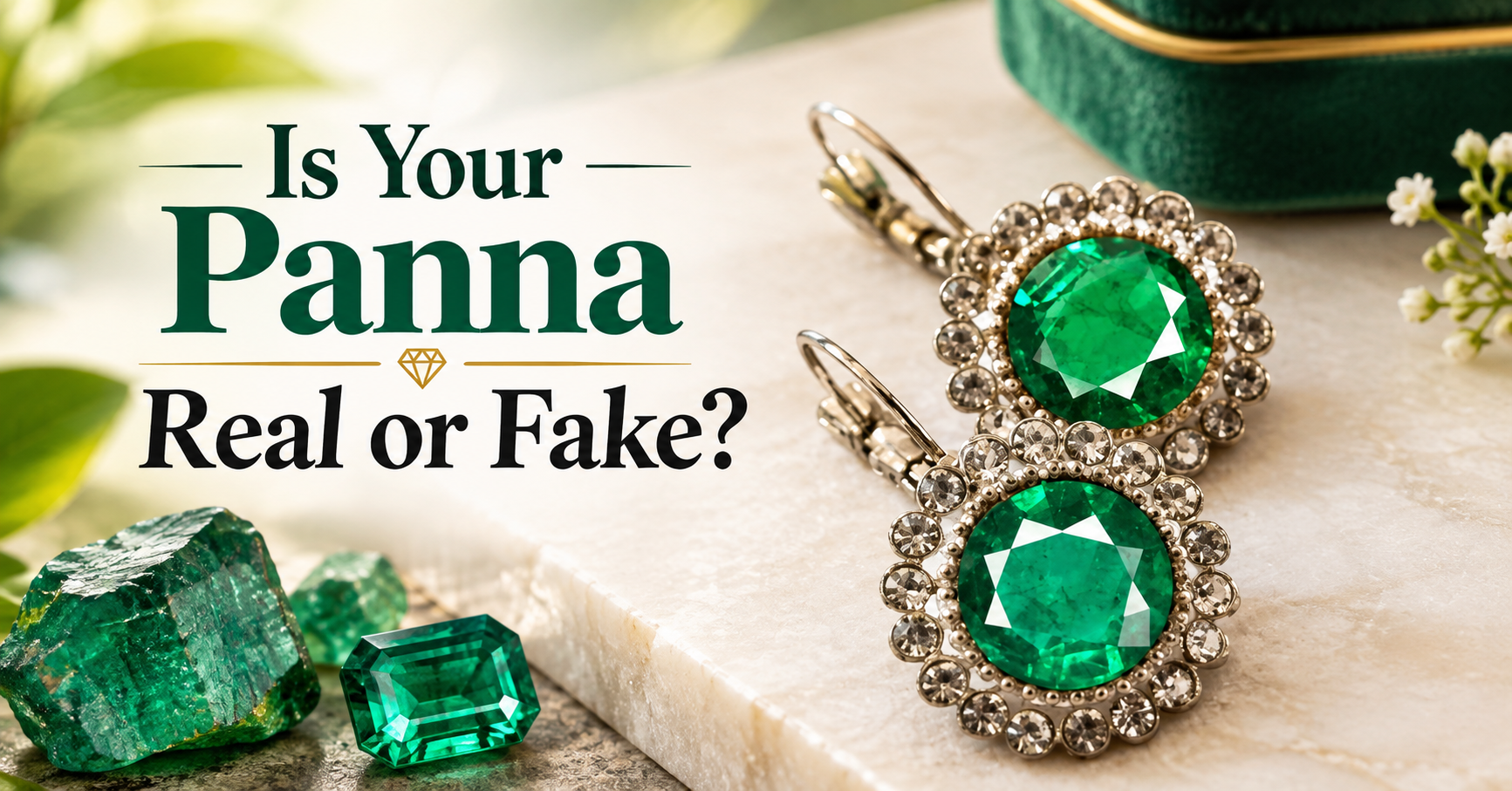
Buying a Panna stone is an important decision for anyone interested in natural gemstones, fine jewellery, or traditional Vedic astrology. Known as emerald in English, Panna is admired for its refreshing green colour, distinctive inclusions, and long-standing cultural significance. However, with natural emeralds, laboratory-grown stones, and imitation gemstones available in the market, knowing what you are purchasing is essential.
A stone may look beautiful in a photograph or under bright shop lighting, but appearance alone cannot establish its authenticity. Two emeralds can look remarkably similar while differing considerably in origin, treatment, quality, and price.
So, how can you identify an original Panna stone before buying it? The most reliable approach combines careful visual inspection, transparent seller information, an appropriate gemstone identification report, and an understanding of what makes emeralds different from other green stones.
In this guide, we will explain the important signs to look for, common identification mistakes, and practical steps that can help you make a more informed purchase.
What Is a Panna (Emerald) Stone?
Panna is the traditional Indian name for emerald, a green variety of the mineral beryl. Its characteristic colour is mainly associated with trace amounts of chromium and, in some emeralds, vanadium. Emeralds are valued for their green to bluish-green appearance, and their colour can vary from stone to stone.
Natural emeralds form through geological processes over long periods. They are found in several countries, including Colombia, Zambia, Brazil, and other gemstone-producing regions. Each deposit can produce stones with different colour characteristics, inclusions, and overall quality.
In Vedic astrology, Panna is traditionally associated with Budh, or Mercury. People who follow astrological gemstone practices may select an emerald according to their beliefs and individual guidance. These traditional associations should be understood separately from scientifically established gemstone properties.
Before purchasing, remember one important distinction: a genuine emerald is not necessarily untreated, flawless, or exceptionally expensive. Authenticity, natural origin, treatment status, and overall quality are separate considerations.
How to Identify an Original Panna Stone
Identifying a genuine emerald involves examining several characteristics together. No single visual feature can conclusively prove that a stone is natural.
1. Examine the Colour Carefully
Colour is one of the first things buyers notice when examining a Panna stone. Emeralds commonly range from green to bluish green, with differences in hue, saturation, and lightness.
A desirable emerald often displays a lively, well-distributed green colour without appearing excessively dark. However, genuine emeralds do not all have the same shade. Natural variations are normal, and colour preferences can differ between buyers.
When examining a stone, look at it under neutral daylight or balanced white lighting. Rotate it gently and observe whether the colour remains reasonably consistent from different angles.
Be cautious if a seller insists that one particular shade automatically proves authenticity. Green glass, dyed stones, and other materials can imitate emerald's appearance. Conversely, a genuine emerald with a lighter or less saturated colour should not automatically be dismissed as fake.
Colour helps you assess appearance and quality, but it cannot independently confirm natural origin.
2. Look for Natural Inclusions
One of the most recognisable characteristics of emeralds is the presence of internal inclusions. These may appear as fine lines, tiny crystals, cloudy areas, or delicate, garden-like patterns.
Gem specialists sometimes refer to this natural internal landscape as jardin, the French word for garden. Such features develop as the gemstone forms and can provide useful clues during professional examination.
Natural emeralds commonly contain visible inclusions, although their quantity, size, and appearance vary. Some inclusions have little effect on the stone's beauty, while others can reduce transparency or structural integrity.
A jeweller's loupe can help you inspect the stone more closely. Look for internal features rather than judging the gemstone only by its polished surface.
However, there is an important limitation: inclusions do not automatically prove that an emerald is natural. Laboratory-grown emeralds can also contain internal features, and some imitation materials may contain bubbles or other imperfections.
Likewise, a relatively clean-looking emerald is not automatically fake. The correct identification depends on the combination of microscopic features and other gemological evidence.
3. Check Transparency and Clarity
Transparency describes how clearly light passes through a gemstone. Emeralds range from relatively transparent to more included or cloudy.
When assessing a potential purchase, observe how the stone handles light. Does it appear lively, or does it look excessively cloudy? Are there large fractures reaching the surface? Does the stone show enough transparency for its colour to be appreciated?
These observations help assess quality, but they cannot establish authenticity by themselves. Genuine emeralds can have significant inclusions, and clarity can be improved through treatments.
A seller should be willing to explain the stone's clarity and disclose any known treatments. Do not assume that an emerald with excellent clarity must be synthetic or that an included emerald must be natural.
For a meaningful comparison, examine multiple stones under similar lighting conditions rather than relying on photographs taken with different cameras or filters.
4. Inspect the Cut, Shape, and Surface
Emeralds are commonly fashioned into rectangular or square step cuts, often called emerald cuts. Oval, round, pear, and other shapes are also available.
A well-executed cut can improve the way the gemstone displays its colour and brilliance. The facet arrangement, symmetry, polish, and proportions all influence its appearance.
Examine the surface for noticeable chips, scratches, and damage around the edges. Pay particular attention to fractures that reach the surface because they may affect durability.
Still, cut and polish are not authenticity tests. Genuine emeralds can have uneven cuts, and imitation stones can be polished to a high standard.
Think of the cut as one part of your quality assessment rather than proof of natural origin.
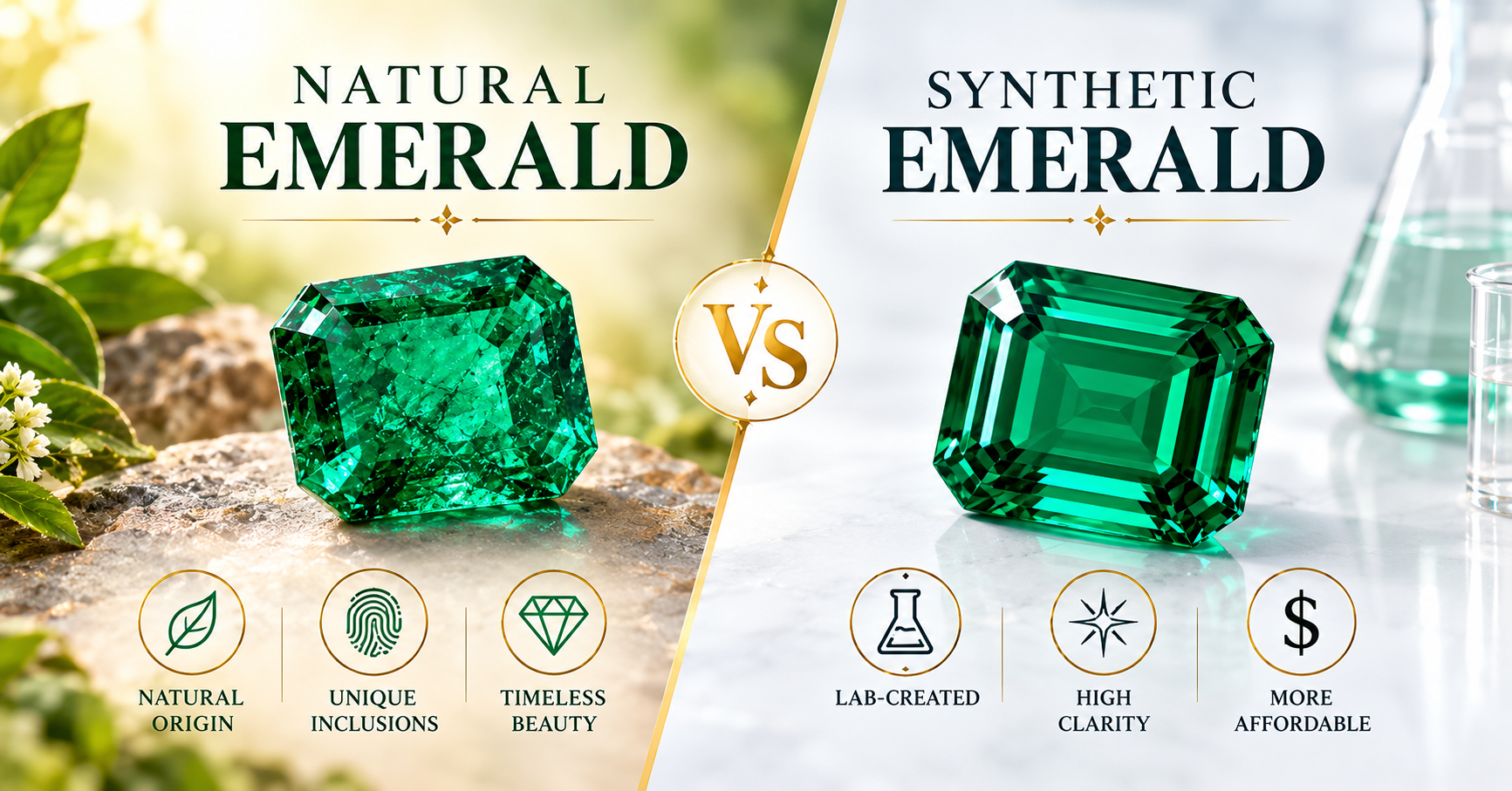
Natural Emerald vs Laboratory-Grown Emerald vs Imitation Stone
Understanding these three categories is one of the most important steps in choosing an original Panna stone.
Natural Emerald
A natural emerald forms in the Earth through geological processes. It may contain natural inclusions and may undergo treatments to improve the appearance of its clarity.
Natural emeralds can vary considerably in quality and value. Their price depends on factors such as colour, transparency, clarity, carat weight, cut, origin when reliably established, and treatment status.
If you specifically want a natural Panna for jewellery or astrological use, ask the seller to confirm its natural origin in writing and provide a suitable identification report.
Laboratory-Grown Emerald
A laboratory-grown emerald is produced by humans under controlled conditions rather than forming naturally in the Earth. It has essentially the same principal chemical composition and crystal structure as natural emerald.
Laboratory-grown emeralds are genuine emerald material in the gemological sense, but they are not natural-origin emeralds. They may look very similar to natural stones, and identifying the difference can require specialised examination.
If your requirement is specifically for a natural Panna stone, a laboratory-grown emerald is not an equivalent substitute, even if its colour and appearance are attractive.
The seller should clearly disclose terms such as laboratory-grown, laboratory-created, or synthetic emerald. These descriptions should not be confused with a natural emerald that has received a clarity treatment.
Imitation Emerald
An imitation emerald is a different material made or selected to resemble emerald. Examples include green glass, dyed materials, and other gemstones used as substitutes.
An imitation may look attractive and can be suitable for fashion jewellery when sold honestly. The concern arises when it is misrepresented as a natural emerald.
Some imitations can appear convincing to an inexperienced buyer. For this reason, appearance, colour, and price alone should not determine your decision.
The key question is not simply whether the stone looks green and beautiful. It is whether the material matches the description provided by the seller.
Can You Identify an Original Panna Stone at Home?
You can carry out a preliminary visual inspection at home, but you cannot reliably confirm natural emerald origin using household tests alone.
Start by examining the gemstone under neutral lighting. Use a jewellery loupe if available, check for visible damage, and compare the seller's description with the accompanying documentation.
You can also ask the seller for a clear photograph of the gemstone, its measurements, carat weight, and any available laboratory report. If the stone is already mounted in jewellery, remember that the setting may limit the areas that can be examined.
Avoid testing methods that could damage the stone or give you false confidence.
The water test: Placing an emerald in water does not establish whether it is natural. Many different materials can behave similarly.
The scratch test: Do not scratch the gemstone with a knife, pin, or another hard object. Such tests can damage the stone or its setting and cannot reliably distinguish all emeralds from imitations.
The sunlight test: A stone's appearance in sunlight is not conclusive evidence of authenticity. Lighting conditions can change how colour and transparency appear.
The bubble test: Bubbles can provide clues in some materials, but their presence or absence is not a universal test for emerald identification.
These methods may be popular in informal buying advice, but none replaces professional gemological testing.
For an expensive purchase, a laboratory report is a much safer basis for your decision than a home experiment.
Why Gemstone Certification Matters
A suitable gemstone identification report provides more dependable information than visual inspection alone.
For a Panna purchase, look for documentation that addresses whether the stone is natural or laboratory-grown and identifies any detectable treatments. A report may also record the stone's weight, dimensions, shape, colour, and other identifying characteristics.
Not every document described as a certificate provides the same level of analysis. Ask which laboratory issued it, what tests were performed, and which conclusions the report actually supports.
Where possible, verify the report number directly with the issuing laboratory. Check that the gemstone's description and measurements correspond to the stone you are purchasing.
Do not assume that every report guarantees a particular market value, astrological suitability, or geographic origin. Origin opinions are specialised conclusions and may not be possible for every stone.
The Gemological Institute of America (GIA) explains that its coloured-stone identification reports can identify whether an emerald is natural or laboratory-grown and disclose detectable treatments. You can read its Emerald Buyer's Guide for additional information.
Certification is particularly valuable when buying a high-value gemstone, when the seller makes specific claims about natural origin, or when an untreated emerald is being offered at a premium price.
Are Treated Emeralds Original or Fake?
This is a common source of confusion for first-time buyers.
Many natural emeralds undergo clarity enhancement, often involving oils, resins, or other filling substances introduced into surface-reaching fractures to make them less noticeable. The presence of such treatment does not, by itself, mean the gemstone is fake.
Instead, three separate questions should be considered: Is the stone an emerald? Is it natural or laboratory-grown? Has it received any treatment?
A natural emerald may be treated and still be a genuine natural emerald. A laboratory-grown emerald may have a similar appearance but a different origin. An imitation may be made from another material entirely.
Treatment disclosure matters because the type and extent of enhancement can influence value, care requirements, and buyer expectations. Untreated emeralds can command premiums when their quality and natural status are independently established.
If a seller advertises a Panna as completely untreated, ask for supporting documentation rather than relying solely on verbal assurances.
What Determines the Price of an Original Panna Stone?
There is no single price that applies to every genuine emerald. Two stones of similar weight can have very different values.
Colour is an important factor, particularly its hue, saturation, and tone. Transparency and clarity also matter, as do cut quality, carat weight, and the overall visual appeal of the gemstone.
Treatment status can significantly influence price. A natural emerald with substantial clarity enhancement should not automatically be valued the same as a comparable-quality stone with no detectable treatment.
Geographic origin may influence demand for certain stones, but a country name alone does not guarantee superior quality. Reliable origin determination may require specialised laboratory analysis.
Before comparing prices, ensure that you are comparing stones with similar characteristics and documentation. A low price does not prove that a gemstone is fake, just as a high price does not prove that it is genuine.
Ask for an itemised price, the actual stone's weight, treatment disclosure, return conditions, and documentation before making a decision.
Where Should You Buy a Genuine Panna Stone?
Choose a seller who communicates clearly about gemstone identity, natural origin, treatments, pricing, and return policies.
A trustworthy buying experience should leave you with enough information to understand exactly what you are purchasing. Be cautious of sellers who refuse reasonable questions, promise that a simple test guarantees authenticity, or pressure you to buy immediately.
If you are exploring emerald options, you can visit GemRishi to learn about its gemstone offerings and browse the emerald category through the Emerald Collection. Check the available listings, stone details, certification information, and current terms before ordering.
When contacting a seller, ask whether the specific stone is natural or laboratory-grown, whether it has undergone clarity enhancement, and whether the accompanying report can be verified independently.
If you intend to wear Panna for astrological reasons, you may also wish to discuss traditional selection criteria with a knowledgeable adviser. However, astrological recommendations and gemstone authenticity are different matters, and neither should replace the other.
A well-informed purchase is not simply about finding the greenest stone or the lowest price. It is about matching the gemstone's documented characteristics with your requirements and budget.
Frequently Asked Questions
1. How can I identify an original Panna stone?
Begin by examining its colour, transparency, inclusions, and overall condition. These observations can help you assess its appearance, but they cannot conclusively prove natural origin. For greater confidence, obtain an identification report from a reputable gemological laboratory.
2. Does an original emerald always contain inclusions?
No. Many natural emeralds have visible inclusions, but their appearance and quantity vary. Some natural emeralds are relatively clear, while laboratory-grown stones can also contain inclusions. Internal features must be interpreted by a qualified gemologist.
3. Is a treated Panna stone genuine?
Yes, a natural emerald can be genuine even if it has received a clarity treatment. Treatment does not automatically make an emerald fake. Buyers should understand the type and extent of any enhancement and whether it has been disclosed.
4. What is the difference between natural and synthetic emerald?
A natural emerald forms through geological processes, whereas a synthetic or laboratory-grown emerald is produced in a laboratory. Both can share the same principal chemical composition and crystal structure, but their origins differ.
5. Can a jeweller identify an original Panna without certification?
An experienced gemologist may be able to identify many emeralds using specialised instruments and examination techniques. However, for a significant purchase, an independent laboratory report provides stronger documented evidence than an informal visual opinion alone.
6. Is a flawless Panna stone always fake?
No. A relatively clean natural emerald is possible, although eye-clean stones are uncommon. Clarity alone cannot establish whether a stone is natural, laboratory-grown, or an imitation.
7. Does a higher price guarantee a genuine Panna?
No. Price reflects many factors and is not proof of authenticity. Confirm the gemstone's identity, origin category, treatment disclosure, documentation, and return conditions before paying a premium.
8. Which certification should I ask for when buying an emerald?
Ask for a report from a reputable gemological laboratory that identifies the material, determines whether it is natural or laboratory-grown, and discloses detectable treatments. Verify the report with the issuing laboratory and ensure it corresponds to the actual stone.
Final Thoughts
Learning how to identify an original Panna stone starts with understanding that beauty and authenticity are not the same thing. Colour, inclusions, transparency, and cut can help you evaluate an emerald's appearance, but no simple home test can reliably confirm that it is a natural gemstone.
The most responsible approach is to understand the difference between natural emeralds, laboratory-grown emeralds, and imitations, request clear treatment disclosures, and verify appropriate documentation before purchasing.
Whether you are buying Panna for jewellery, collecting, or traditional astrological purposes, take your time, compare stones carefully, and ask questions whenever information is unclear. A genuine, well-documented purchase begins with informed decisions and a seller who is willing to provide transparent answers.
Have Questions Regarding This Gemstone?
Connect 1-on-1 with GemRishi’s certified Vedic gemologists on WhatsApp for personalized birth chart recommendations, lab certificate verification, or custom jewelry quotes.
Gemrishi
Gemrishi is a certified gemologist and Vedic astrology scholar at GemRishi with over 15 years experience in natural gemstone origin authentication.