How to Wear Lapis Lazuli (Lajward) According to Vedic Astrology: Benefits, Rules & Precautions
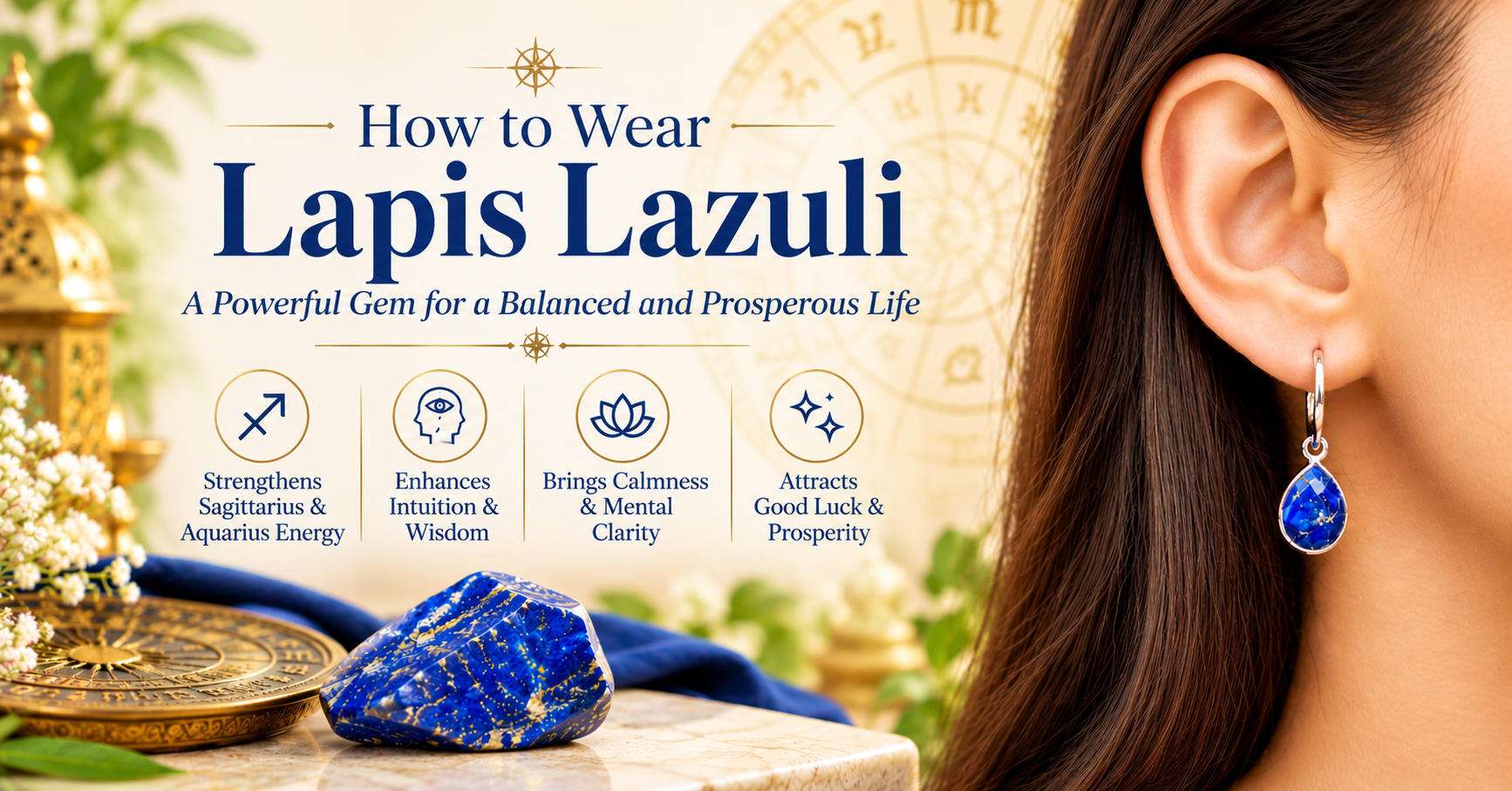
Lapis Lazuli has been valued for thousands of years.It is not just because of its beautiful blue colour but also because of the meaning different cultures have attached to it. Ancient Egyptians used this stone in jewellery, ornaments and religious objects. Its deep blue appearance, often marked with tiny golden specks, made it especially popular among royalty. Today, it is known as Lajward in Hindi and Urdu and is appreciated by people interested in gemstones, jewellery and astrology.
In Vedic astrology, Lapis Lazuli is associated with Saturn (Shani) in certain traditions. Saturn represents discipline, patience, responsibility and the results of hard work. Because of this association, some people consider Lajward when looking for a gemstone connected with focus, wisdom and personal growth. It is also sometimes described as an alternative to Blue Sapphire (Neelam), although the two stones are quite different.
If you are planning to wear Lapis Lazuli, you may have questions about which finger is suitable, whether silver or gold is better, which day to choose and what mantra to recite. These details are worth understanding before selecting the stone. Let's look at how Lajward is traditionally worn and what you should keep in mind.
What Is Lapis Lazuli (Lajward)?
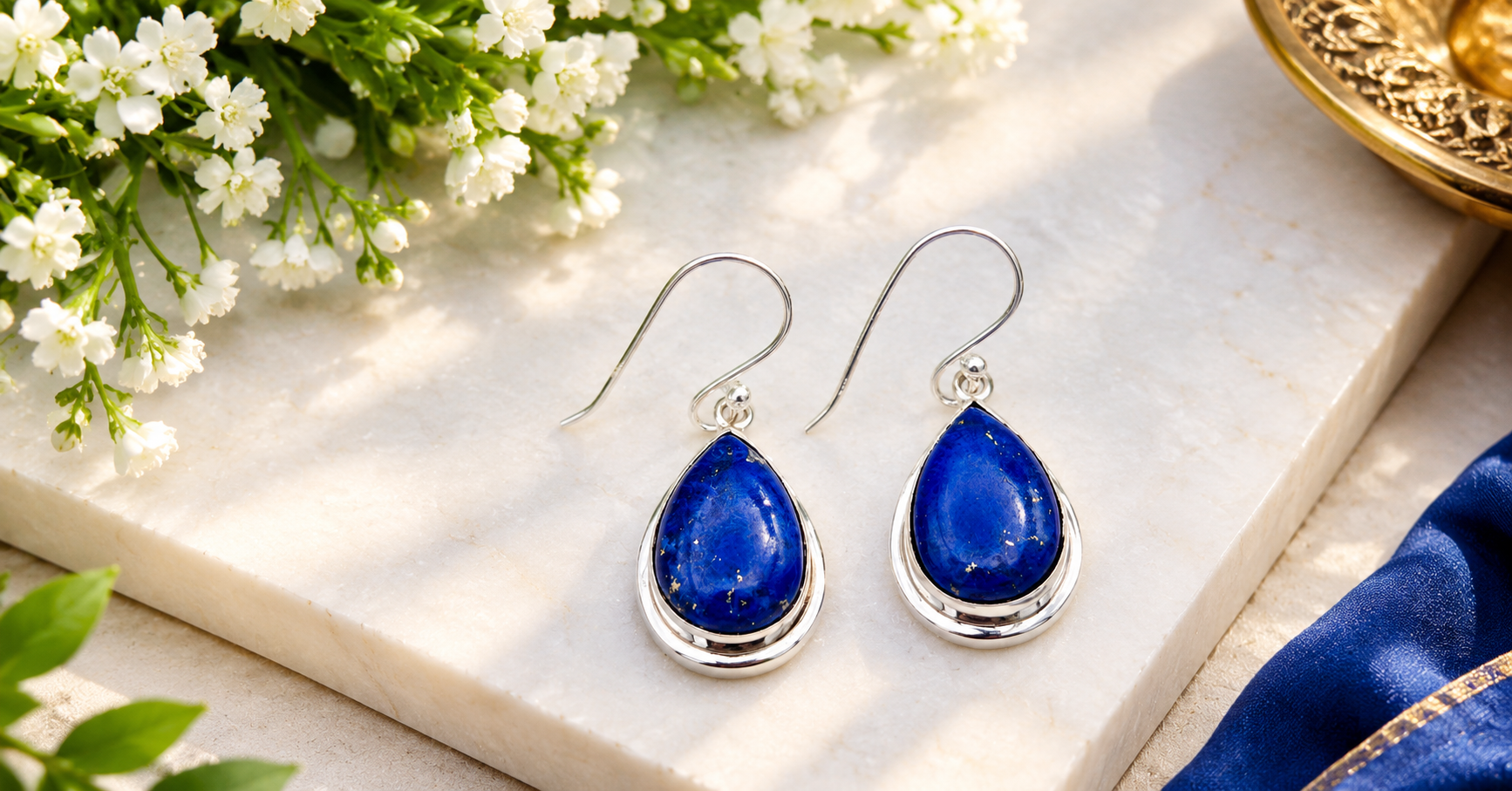
Lapis Lazuli is a beautiful, opaque blue gemstone that is actually a natural rock composed of several minerals. Its characteristic blue colour comes mainly from lazurite, while golden metallic-looking flecks are usually pyrite. Some specimens also contain white calcite patterns.
This gemstone is mostly recognised by its rich royal blue, violet-blue or slightly greenish-blue appearance. The finest-quality material is traditionally associated with Afghanistan, particularly the Badakhshan region.The region has been known for its lapis lazuli deposits for centuries.
Lapis Lazuli has an individual appearance unlike trasparent gemsotnes. Some stones display a relatively uniform blue colour, while others have noticeable golden specks or white patterns. These natural features give every piece its own character.
Coming to Its history, Lapis Lazuli was highly valued by ancient Egyptian, Mesopotamian and other civilisations. It appeared in jewellery, royal ornaments, decorative carvings and religious objects. Its deep blue shade was also used to produce the famous ultramarine pigment, which became valuable among European artists.
Today, Lapis Lazuli is used in rings, pendants, bracelets and other jewellery designs. People also appreciate it for its traditional spiritual and astrological associations.
Astrological Significance of Lapis Lazuli in Vedic Astrology
In certain gemstone traditions, Lapis Lazuli is associated with Saturn, also known as Shani. In Vedic astrology, Saturn represents discipline, patience, responsibility, karma, perseverance and the results of sustained effort.
Saturn is traditionally regarded as a planet that teaches people through experience. Its influence is often interpreted in connection with professional responsibilities, personal commitments, delays, hard work and long-term achievements.
Lapis Lazuli is sometimes considered a Saturn-associated gemstone or an alternative for individuals who are exploring options beyond Blue Sapphire. Its deep blue appearance is also one reason for its traditional association with Saturn.
However, it is important to understand the difference between Lapis Lazuli and Blue Sapphire. Neelam is the primary gemstone traditionally associated with Saturn in Vedic astrology, whereas Lapis Lazuli is considered an alternative in some traditions. The two stones have different mineral compositions, gemological properties and market values.
If you are interested in understanding Saturn's primary gemstone, explore Natural Blue Sapphire (Neelam) at GemRishi.
Astrological recommendations should always consider the complete birth chart rather than relying only on a person's zodiac sign. Saturn's position, ascendant, planetary relationships and current dasha period may all influence the recommendation.
Traditional Benefits of Wearing Lapis Lazuli
Lapis Lazuli has been associated with several positive qualities in different spiritual and astrological traditions. These beliefs make it particularly interesting to people who value gemstones beyond their decorative appeal.
Here are some of the qualities traditionally associated with wearing Lajward.
1. Encourages Focus and Concentration
Lapis Lazuli is traditionally associated with mental clarity and concentration. People who appreciate its spiritual significance often connect it with the ability to organise thoughts, approach situations calmly and remain focused on important responsibilities.
In this context, the gemstone is sometimes chosen by students, professionals and individuals who want to develop greater consistency in their daily routines.
2. Associated with Wisdom and Better Judgement
Throughout history, Lapis Lazuli has been connected with wisdom, knowledge and intellectual development. Its traditional symbolism makes it popular among people who value learning and thoughtful decision-making.
Some spiritual traditions also associate the stone with self-awareness and the ability to understand different perspectives.
3. Traditionally Linked with Professional Discipline
Since Lapis Lazuli is associated with Saturn in certain astrological practices, it is sometimes connected with discipline, patience and professional responsibility.
Saturn represents steady effort rather than immediate rewards. For this reason, Lajward is traditionally considered by people who want to remain committed to their professional goals and responsibilities.
4. Supports Spiritual Awareness
Lapis Lazuli has a long history of use in spiritual jewellery and ceremonial objects. It is traditionally associated with inner awareness, meditation and spiritual understanding.
Some traditions also connect its blue colour with the throat and third-eye chakras. These associations make it a popular choice among people interested in meditation and spiritual practices.
5. Associated with Calmness and Emotional Balance
Another commonly discussed association of Lapis Lazuli is emotional balance. Its traditional symbolism is connected with peaceful thinking, self-expression and a more thoughtful approach to difficult situations.
It is sometimes selected by people who appreciate its association with calmness and self-understanding.
Important: These benefits describe traditional astrological and spiritual beliefs. There is no established scientific evidence that wearing Lapis Lazuli directly improves concentration, career performance, health or emotional well-being.
Who Should Wear Lapis Lazuli According to Astrology?
Lapis Lazuli is sometimes recommended for people whose birth charts support Saturn-related gemstone remedies. However, it is not necessary that everyone associated with a particular zodiac sign should wear it.
In traditional astrology, Capricorn (Makar) and Aquarius (Kumbh) are ruled by Saturn. Therefore, people born under these signs may be interested in exploring Lapis Lazuli and other Saturn-associated gemstones.
However, the suitability of a gemstone depends on more than the Sun sign or Moon sign.
An astrologer may examine:
- The ascendant or Lagna.
- Saturn's position in the birth chart.
- Saturn's relationship with other planets.
- The houses ruled and occupied by Saturn.
- The current Mahadasha and Antardasha.
- The overall planetary combinations in the horoscope.
If you are unsure which gemstone is appropriate for your horoscope, read Which Gemstone Is Suitable for Me? before making a decision.
How to Wear Lapis Lazuli the Right Way According to Vedic Astrology
If an astrologer recommends Lapis Lazuli for you, understanding the traditional wearing method can help you follow the practice correctly.
The following guidelines describe commonly followed Saturn-related gemstone traditions. Exact recommendations may differ between astrologers and regional practices.
1. Choose a Natural and Good-Quality Lapis Lazuli
The first step is selecting a genuine Lapis Lazuli stone. A good-quality specimen generally displays an attractive, rich blue colour with naturally occurring pyrite flecks.
While selecting the stone, pay attention to:
- Colour: Look for an appealing deep blue or royal blue shade.
- Pyrite: Small, naturally distributed golden flecks can add to its appearance.
- Calcite: Excessive white patches or streaks may reduce its visual appeal.
- Surface: Check for noticeable cracks, chips and uneven polishing.
- Treatment: Ask whether the gemstone has been dyed, waxed, impregnated or otherwise enhanced.
Do not assume that every dark blue stone is natural Lapis Lazuli. Some imitations and treated materials can resemble genuine specimens.
Always purchase from a reliable gemstone seller who provides clear information about the stone and its treatments. You can explore the GemRishi gemstone collection to understand the different gemstones available for jewellery and astrological purposes.
2. Choose the Right Metal and Jewellery Setting
The choice of metal is another consideration in traditional gemstone-wearing practices.
Silver is commonly preferred in some Saturn-related gemstone traditions. However, gold and other metals may also be used depending on the astrologer's recommendation and jewellery design.
Lapis Lazuli can be worn in different forms:
- Ring: A traditional choice for people who prefer wearing a gemstone on their finger.
- Pendant: Suitable for those who prefer a visible gemstone ornament around the neck.
- Bracelet: A convenient jewellery option for everyday styling, subject to proper care.
Unlike some astrological ring traditions, there is no universal requirement that every Lapis Lazuli setting must expose the gemstone directly to the skin. If skin contact is part of your prescribed ritual, discuss the appropriate setting with your jeweller.
3. Which Finger Should You Wear Lapis Lazuli On?
In traditional Saturn-related gemstone practices, the middle finger is associated with Saturn. So, Lapis Lazuli rings are sometimes recommended for the middle finger.It is not hard and fast rule that you must wear this in middle finger.
The right or left hand may depend on the astrological tradition being followed and the individual's horoscope.
It is better not to select the finger simply because it is commonly recommended online. If you are wearing Lajward for astrological purposes, follow the specific guidance provided by your astrologer.
If you are wearing it only as a jewellery accessory, you can choose a comfortable finger and setting according to your personal preference.
4. Which Day Is Best to Wear Lapis Lazuli?
Saturday is traditionally associated with Saturn (Shani) in Vedic astrology. For this reason, astrologers recommend Saturday for beginning to wear Lapis Lazuli.
The exact time may vary depending on the tradition and the prescribed ritual. Some practices consider the morning hours after sunrise, while others follow a particular auspicious time selected through a Panchang.
Rather than treating one fixed time as compulsory, follow the muhurat recommended by your astrologer.
5. Which Mantra Should You Chant While Wearing Lapis Lazuli?
In Saturn-related gemstone traditions, devotees commonly recite a mantra dedicated to Shani before wearing a Saturn-associated gemstone.
One commonly used mantra is:
ॐ शं शनैश्चराय नमः
Om Sham Shanaishcharaya Namah
You may traditionally recite this mantra 108 times while offering a prayer to Lord Shani.
The purpose of this practice is to express devotion and seek blessings through a traditional spiritual ritual. The mantra and repetition count may vary according to individual religious practices and astrological guidance.
6. How to Purify Lapis Lazuli Before Wearing It?
Some traditional gemstone rituals include purification or Pran Pratishtha before wearing a gemstone.
If you follow this practice, you may place the stone on a clean cloth, offer flowers, light a diya and recite the prescribed mantra.
However, take care when physically cleaning Lapis Lazuli. It has a hardness of approximately 5–6 on the Mohs scale and may be affected by certain chemicals, solvents and treatments.
Avoid soaking the stone overnight in raw milk, using harsh cleaning products or exposing it to unnecessary heat. A soft cloth and gentle cleaning with mild, soapy water are generally safer options. Dry it carefully after cleaning.
For a better understanding of traditional gemstone rituals, read Gemstone Pran Pratishtha: Vedic Rituals, Mantras and Astrological Significance.
Important Precautions Before Wearing Lapis Lazuli
Although Lapis Lazuli is admired for its appearance and traditional associations, a few precautions can help you make a better choice.
Do not treat it as an exact replacement for Neelam: Lapis Lazuli is considered a Saturn-associated alternative in some traditions, but it is not mineralogically or astrologically identical to Blue Sapphire.
Check astrological suitability: Do not wear it only because your zodiac sign is Capricorn or Aquarius. A complete birth-chart assessment is preferable when selecting a gemstone for astrological purposes.
Understand gemstone treatments: Some Lapis Lazuli stones are dyed or treated to improve their appearance. Ask the seller for treatment disclosure before purchasing.
Protect it from chemicals: Avoid perfumes, detergents, cosmetics, alcohol-based cleaners and other harsh substances coming into direct contact with the stone.
Store it carefully: Keep Lapis Lazuli separately from harder gemstones to reduce the risk of scratches. Remove rings during activities that may expose them to knocks or abrasion.
If you are comparing different astrological gemstones, GemRishi's complete gemstone buying guide can help you understand quality, suitability and important purchasing considerations.
Lapis Lazuli vs Blue Sapphire: Are They the Same?
Lapis Lazuli and Blue Sapphire are both admired for their blue colour, but they are entirely different gemstones.
Lapis Lazuli is a rock composed mainly of lazurite, calcite and pyrite. Blue Sapphire belongs to the corundum mineral family and is valued for its hardness, durability and rich blue colour.
In traditional Vedic astrology, Blue Sapphire is the primary gemstone associated with Saturn, while Lapis Lazuli is considered an alternative in certain gemstone traditions.
There are also significant differences in their physical properties. Lapis Lazuli has a Mohs hardness of around 5–6, whereas Blue Sapphire has a hardness of 9. This makes Blue Sapphire considerably more resistant to scratching.
Therefore, the two stones should not be considered interchangeable simply because both are blue or share a traditional association with Saturn.
If you are deciding between them, consider your purpose, budget, jewellery requirements and astrological recommendation before choosing.
Conclusion
Lapis Lazuli, also known as Lajward, is a gemstone with a remarkable history and a distinctive deep blue appearance. Its association with wisdom, discipline, spiritual awareness and Saturn has made it an interesting choice among gemstone enthusiasts and followers of Vedic astrology.
If you wish to wear it for astrological purposes, pay attention to the quality of the stone, the recommended finger, metal, day and mantra. Most importantly, do not rely only on general zodiac recommendations. The suitability of an astrological gemstone should be considered in relation to the complete birth chart.
For jewellery purposes, choose a natural-looking, well-finished stone that matches your personal style and take proper care of it.
At GemRishi, you can explore a wide range of natural gemstones and learn more about their characteristics, traditional significance and selection. Visit GemRishi to discover gemstones that combine natural beauty with centuries of cultural and astrological heritage.
Frequently Asked Questions About Wearing Lapis Lazuli
1. Which finger should I wear a Lapis Lazuli ring on?
According to some traditional Saturn-related gemstone practices, Lapis Lazuli is worn on the middle finger because this finger is associated with Shani. However, the recommended hand and finger may differ according to the astrologer's guidance.
2. Which day is considered best for wearing Lapis Lazuli?
Saturday is traditionally associated with Saturn and is commonly considered an appropriate day for wearing Lapis Lazuli in Saturn-related practices. The exact time may depend on the individual's horoscope and the prescribed muhurat.
3. Can everyone wear Lapis Lazuli?
Lapis Lazuli can be worn as jewellery according to personal preference. However, if you are choosing it for astrological purposes, its suitability should be checked according to your birth chart rather than assuming that it is appropriate for everyone.
4. Is Lapis Lazuli associated with Saturn (Shani)?
Yes. In certain Vedic gemstone traditions, Lapis Lazuli is associated with Saturn (Shani). Saturn is traditionally connected with discipline, patience, karma, responsibility and long-term achievements.
5. Which zodiac signs can wear Lapis Lazuli?
Capricorn (Makar) and Aquarius (Kumbh) are traditionally ruled by Saturn, so people belonging to these signs may explore Lapis Lazuli. However, the complete birth chart should be considered before making an astrological recommendation.
6. Which mantra should I chant while wearing Lapis Lazuli?
The mantra commonly associated with Saturn is "Om Sham Shanaishcharaya Namah" (ॐ शं शनैश्चराय नमः). In some traditions, it is recited 108 times as part of a gemstone-wearing ritual.
7. Can I wear Lapis Lazuli with Blue Sapphire?
There is no universal rule that these gemstones must or must not be worn together. If you are wearing both for astrological purposes, consult an astrologer to understand whether the combination is appropriate for your horoscope. For jewellery purposes, consider the design and comfort of the combination.
8. Is Lapis Lazuli a substitute for Blue Sapphire?
Lapis Lazuli is considered an alternative to Blue Sapphire in certain astrological traditions. However, it is not identical to Neelam in composition, hardness or traditional astrological status. The suitability of either gemstone should be considered separately.
9. Can I wear Lapis Lazuli as a pendant or bracelet?
Yes. Lapis Lazuli is commonly used in pendants, bracelets, rings and other jewellery. If you are wearing it as a traditional astrological remedy, follow your astrologer's advice regarding the setting and method of wearing.
10. How do I identify genuine Lapis Lazuli?
Natural Lapis Lazuli generally has a rich blue appearance, with possible golden pyrite flecks and white calcite patterns. However, appearance alone cannot confirm authenticity because dyed stones and imitations are also available. Buy from a reliable seller and request appropriate gemological verification.
11. Can I wear Lapis Lazuli every day?
You can wear Lapis Lazuli regularly, but it requires some care because its hardness is approximately 5–6 on the Mohs scale. Avoid rough handling, strong chemicals, heat and contact with harder gemstones. Pendants may be more practical for frequent wear than rings.
12. How should I clean and maintain Lapis Lazuli jewellery?
Use a soft cloth and, when necessary, gentle cleaning with mild soapy water. Avoid ultrasonic cleaners, harsh chemicals, prolonged soaking and sudden temperature changes. Store it separately to prevent scratches and damage.
13. Does Lapis Lazuli improve career and financial success?
In traditional astrological beliefs, Lapis Lazuli is associated with Saturn and qualities such as discipline, patience and perseverance. Some people connect these qualities with professional development. However, there is no scientific evidence that wearing this gemstone directly guarantees career growth or financial success.
Have Questions Regarding This Gemstone?
Connect 1-on-1 with GemRishi’s certified Vedic gemologists on WhatsApp for personalized birth chart recommendations, lab certificate verification, or custom jewelry quotes.
Gemrishi
Gemrishi is a certified gemologist and Vedic astrology scholar at GemRishi with over 15 years experience in natural gemstone origin authentication.