Yellow Sapphire for Astrology: What to Consider Before Wearing Pukhraj
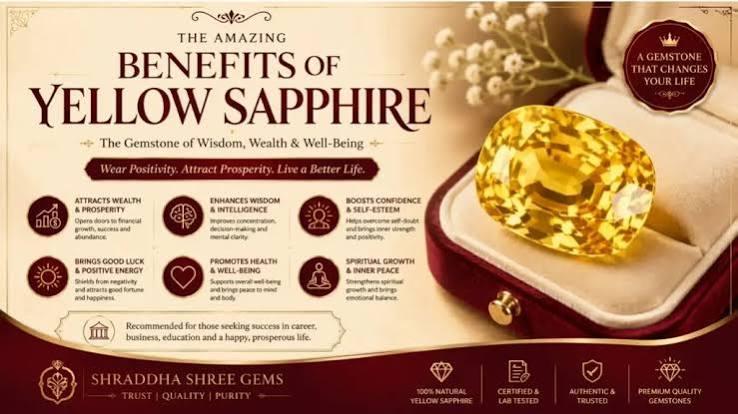
Yellow Sapphire, popularly known as Pukhraj, is one of the most well-known gemstones in Vedic astrology. Traditionally associated with Jupiter (Guru/Brihaspati), it is believed to represent wisdom, prosperity, knowledge, growth, fortune, and spiritual development.
However, wearing Yellow Sapphire simply because it is considered a lucky gemstone is not always recommended. In Vedic astrology, gemstone suitability is generally determined by studying an individual's birth chart, ascendant, Jupiter's placement, planetary strength, house ownership, aspects, and dasha periods.
If you are considering wearing Pukhraj for astrological purposes, there are several important factors to evaluate before purchasing or wearing the gemstone.
Important: Astrological gemstone recommendations are based on traditional Vedic astrology beliefs and should not be considered a substitute for medical, financial, or professional advice.
What Is Yellow Sapphire (Pukhraj)?
Yellow Sapphire is a precious variety of the corundum mineral family, the same family that includes Ruby and Blue Sapphire. It is naturally available in shades ranging from pale yellow to vibrant golden yellow.
In Vedic astrology, Yellow Sapphire is associated with Jupiter, one of the most significant planets in the Navagraha system.
Jupiter is traditionally connected with:
- Wisdom and higher knowledge
- Education and learning
- Wealth and prosperity
- Fortune and expansion
- Marriage and family life
- Spiritual growth
- Leadership and guidance
- Optimism and confidence
You can learn more about choosing an authentic gemstone through GemRishi's guide on Natural Yellow Sapphire (Pukhraj) for Vedic Astrology.
1. Check Whether Yellow Sapphire Is Suitable for Your Birth Chart
The first and most important consideration is astrological suitability.
Yellow Sapphire is traditionally recommended when Jupiter is considered beneficial for the individual but may be weak or require strengthening in the birth chart.
An astrologer may examine:
- Ascendant or Lagna
- Jupiter's house placement
- Jupiter's sign
- Jupiter's strength
- Planetary aspects on Jupiter
- Jupiter's conjunctions
- Functional benefic or malefic status
- Mahadasha and Antardasha
- The overall planetary configuration
Therefore, your zodiac sign alone should not determine whether you should wear Pukhraj.
A gemstone that is beneficial for one person's horoscope may not necessarily be suitable for another.
2. Understand the Connection Between Pukhraj and Jupiter
Yellow Sapphire is traditionally considered the gemstone of Guru or Jupiter.
Jupiter represents expansion, wisdom, learning, prosperity, guidance, and fortune in Vedic astrology. Consequently, Pukhraj is traditionally associated with strengthening or supporting favorable Jupiter influences.
It is commonly considered in connection with areas such as:
Education and Knowledge
Jupiter is associated with higher education, wisdom, teachers, philosophy, and knowledge. Pukhraj is traditionally considered by students, teachers, scholars, and individuals pursuing higher learning.
Wealth and Prosperity
Jupiter is traditionally connected with abundance, financial growth, and prosperity. For this reason, Yellow Sapphire is often considered by people seeking improvement in financial and professional areas.
Marriage and Relationships
In certain astrological situations, Jupiter is associated with marriage, family life, guidance, and stability. Yellow Sapphire is therefore traditionally recommended in some charts for relationship and marriage-related concerns.
GemRishi also discusses the traditional connection between Yellow Sapphire, relationships, marriage, and Jupiter in its guide on Yellow Sapphire for Love and Relationships.
3. Choose a Natural Yellow Sapphire
If you are purchasing Yellow Sapphire for astrological use, authenticity should be one of your biggest considerations.
The market contains different materials that can resemble natural Pukhraj, including:
- Synthetic Yellow Sapphire
- Yellow Topaz
- Citrine
- Glass imitations
- Treated gemstones
A natural Yellow Sapphire is a naturally occurring variety of corundum. Treatment status should also be clearly disclosed when purchasing a gemstone.
For astrological purposes, many traditional practitioners prefer natural gemstones with minimal or no treatment.
Read GemRishi's detailed guide on Natural Yellow Sapphire for Vedic Astrology before making a purchase.
4. Pay Attention to Color and Clarity
The color of Yellow Sapphire can range from light yellow to intense golden yellow.
When choosing a gemstone, look for:
- Attractive natural yellow color
- Good transparency
- Good brilliance
- Reasonable clarity
- No major cracks or severe fractures
- Good overall appearance
However, color alone cannot prove that a gemstone is natural.
A gemstone may look beautiful but still be synthetic or treated. This is why laboratory certification is an important consideration when purchasing an expensive Yellow Sapphire.
5. Always Ask for a Gemstone Certificate
Certification can provide important information about the gemstone's identity and treatment status.
Before buying an expensive Pukhraj, check whether the laboratory report identifies the stone as:
Natural Yellow Sapphire / Natural Corundum
The report may also provide information about:
- Natural or synthetic origin
- Treatment status
- Weight
- Measurements
- Color
- Other gemological characteristics
Avoid relying solely on verbal promises such as "100% original" or "astrologically powerful." A reliable laboratory report provides much stronger documentation.
You can also read GemRishi's guide on how to identify an original Yellow Sapphire from a fake.
6. Consider the Origin of the Yellow Sapphire
Yellow Sapphires are found in different locations around the world, including Sri Lanka, Madagascar, Myanmar, Thailand, and Australia.
Ceylon Yellow Sapphire, from Sri Lanka, is particularly popular because of its attractive yellow colors, transparency, and overall gem quality.
However, origin should not be the only factor used to determine whether a gemstone is suitable for astrology.
The gemstone's:
- Natural status
- Treatment
- Color
- Clarity
- Cut
- Carat weight
- Certification
- Overall quality
should also be considered.
7. Select the Appropriate Carat Weight
Another important consideration is the weight of the Yellow Sapphire.
Traditional astrology practices sometimes recommend gemstone weight based on factors such as body weight and horoscope requirements. However, there is no single weight that is universally suitable for everyone.
For example, choosing a larger gemstone does not automatically mean better astrological results.
The recommended weight should ideally be determined after considering the individual's birth chart and the astrologer's recommendation.
GemRishi's Yellow Sapphire Wearing Vidhi guide also discusses traditional approaches to selecting Pukhraj weight.
8. Know the Traditional Day and Time to Wear Pukhraj
Thursday is traditionally associated with Jupiter (Guru) and is therefore commonly considered the preferred day for wearing Yellow Sapphire.
Traditional practices generally recommend wearing Pukhraj:
- On Thursday
- During the morning
- After sunrise
- During an astrologically suitable time
- After performing the traditional purification and energization process
Some traditions also consider Guru Hora and the lunar phase when selecting the exact time.
The appropriate timing can vary depending on the individual's horoscope and astrological tradition.
For a detailed step-by-step process, read Yellow Sapphire (Pukhraj) Wearing Vidhi: Day, Finger, Mantra & Correct Method.
9. Choose the Right Metal
Yellow Sapphire is traditionally set in yellow gold.
Some traditional practices may also consider alternatives such as Panchdhatu depending on the individual's horoscope and the astrologer's recommendation.
A properly designed ring should securely hold the gemstone while following the traditional setting recommended for astrological use.
10. Know the Traditional Finger for Yellow Sapphire
Pukhraj is traditionally associated with the index finger, which is connected with Jupiter in many Vedic astrology practices.
However, the exact hand and wearing method can differ between traditions and individual astrological recommendations.
Therefore, it is better not to blindly follow a general rule if you are wearing the gemstone specifically as an astrological remedy.
11. Purification and Energization of Yellow Sapphire
Traditional Vedic gemstone practices may include purification and energization before wearing Pukhraj.
A commonly followed process involves:
- Cleaning the gemstone or ring.
- Placing it in a clean purification mixture according to one's tradition.
- Keeping the gemstone in a clean prayer space.
- Offering traditional items such as yellow flowers or turmeric.
- Praying to Guru or Brihaspati.
- Chanting a Jupiter mantra.
- Wearing the gemstone according to the recommended time and method.
GemRishi's Pukhraj Wearing Vidhi guide provides a detailed explanation of the traditional purification, mantra, and wearing process.
12. Do Not Buy Pukhraj Based Only on Price
The price of Yellow Sapphire can vary significantly.
Factors affecting its value include:
- Natural or synthetic origin
- Treatment status
- Color
- Clarity
- Carat weight
- Cut
- Origin
- Certification
- Overall quality
An extremely low-priced stone advertised as a premium natural Yellow Sapphire should be approached carefully.
Likewise, an expensive gemstone is not automatically a high-quality or suitable astrological stone.
The goal should be to find the right combination of authenticity, quality, certification, and astrological suitability.
13. Be Careful With Treated and Synthetic Stones
One of the most important considerations before purchasing Yellow Sapphire is understanding treatment.
Some gemstones may undergo treatments to improve their color or clarity, while synthetic stones are manufactured in laboratories.
These stones can sometimes look very similar to natural gemstones to an untrained buyer.
Therefore, if your purpose is astrological use, clearly communicate this to the seller and ask for proper gemological documentation.
14. Who Should Consider Wearing Yellow Sapphire?
According to traditional Vedic astrology, Pukhraj may be considered for individuals when Jupiter is favorable in their horoscope but requires strengthening.
It may traditionally be associated with people seeking support in areas such as:
- Higher education
- Wisdom and knowledge
- Career growth
- Financial prosperity
- Marriage
- Family life
- Leadership
- Spiritual development
- Personal growth
However, there is no universal list of people who should wear Yellow Sapphire.
The complete birth chart should be considered before using a strong planetary gemstone as a remedy.
Yellow Sapphire and Zodiac Signs
Yellow Sapphire is sometimes popularly recommended for Jupiter-ruled signs such as Sagittarius and Pisces.
However, wearing Pukhraj should not be decided solely by Sun sign or Moon sign.
A complete Vedic birth chart provides more information about whether Jupiter is favorable and whether strengthening it is appropriate.
This is particularly important because gemstone astrology is based on the functional role of a planet in an individual's horoscope, rather than simply the planet's general reputation.
Common Mistakes to Avoid When Buying Pukhraj
Before purchasing Yellow Sapphire for astrological purposes, avoid these common mistakes:
Mistake 1: Choosing a Stone Only Because It Looks Yellow
Color alone cannot establish authenticity.
Mistake 2: Buying Without Certification
A gemstone certificate can help verify important gemological details.
Mistake 3: Assuming Bigger Is Always Better
Carat weight should be selected according to the individual's requirements rather than simply choosing the largest affordable stone.
Mistake 4: Following Generic Zodiac Recommendations
Your complete birth chart is more informative than a generic zodiac-based recommendation.
Mistake 5: Ignoring Treatment Information
Always ask whether the gemstone has been treated and whether the treatment is disclosed on the laboratory report.
Mistake 6: Buying Only on the Basis of Price
A low price can sometimes indicate differences in quality, treatment, origin, or authenticity.
Yellow Sapphire vs Other Yellow Gemstones
Not every yellow gemstone is Yellow Sapphire.
For example:
GemstoneMineral FamilyTraditional Astrological AssociationYellow Sapphire (Pukhraj)CorundumJupiterCitrine (Sunela)QuartzSometimes considered a Jupiter substituteYellow TopazTopazSometimes considered as an alternativeSynthetic Yellow SapphireLaboratory-created corundumNot equivalent to a natural gemstone for traditional purposes
If you are specifically looking for Pukhraj, make sure the gemstone is identified as natural Yellow Sapphire rather than simply being sold as a "yellow gemstone."
Frequently Asked Questions About Yellow Sapphire Astrology
Is Yellow Sapphire good for everyone?
No. According to traditional Vedic astrology, Yellow Sapphire should be selected based on the individual's birth chart and Jupiter's astrological position.
Which planet does Yellow Sapphire represent?
Yellow Sapphire is traditionally associated with Jupiter (Guru/Brihaspati).
Which day is best for wearing Pukhraj?
Thursday is traditionally considered the preferred day because it is associated with Jupiter.
Which finger is used for Yellow Sapphire?
The index finger is traditionally recommended for Pukhraj in many Vedic astrology practices.
Should Yellow Sapphire be worn in gold?
Gold is traditionally considered the preferred metal for Yellow Sapphire, although the exact recommendation can vary according to the horoscope and astrological tradition.
How can I identify an original Yellow Sapphire?
A professional gemological examination and reliable laboratory certificate are among the safest ways to establish whether a Yellow Sapphire is natural and to understand its treatment status. Visual tests alone are not conclusive.
Is Ceylon Yellow Sapphire good for astrology?
Ceylon Yellow Sapphire is highly popular because of its attractive color and clarity. However, origin should be considered alongside natural status, treatment, quality, certification, and astrological suitability.
Final Thoughts
Yellow Sapphire or Pukhraj is one of the most prominent gemstones associated with Jupiter in Vedic astrology. But choosing the right Pukhraj involves much more than selecting a beautiful yellow stone.
Before wearing Yellow Sapphire, consider your birth chart, Jupiter's position, gemstone authenticity, treatment status, color, clarity, carat weight, certification, origin, metal, finger, and traditional wearing procedure.
Most importantly, do not select an astrological gemstone solely because it is considered lucky for a particular zodiac sign. A personalized horoscope analysis can provide a more appropriate basis for deciding whether Jupiter should be strengthened.
If you are planning to purchase Pukhraj, explore the GemRishi Yellow Sapphire collection and review the available certified options before making your decision.
Have Questions Regarding This Gemstone?
Connect 1-on-1 with GemRishi’s certified Vedic gemologists on WhatsApp for personalized birth chart recommendations, lab certificate verification, or custom jewelry quotes.
Gemrishi
Gemrishi is a certified gemologist and Vedic astrology scholar at GemRishi with over 15 years experience in natural gemstone origin authentication.