Top Blue Semi-Precious Gemstones for Rings, Pendants and Bracelets
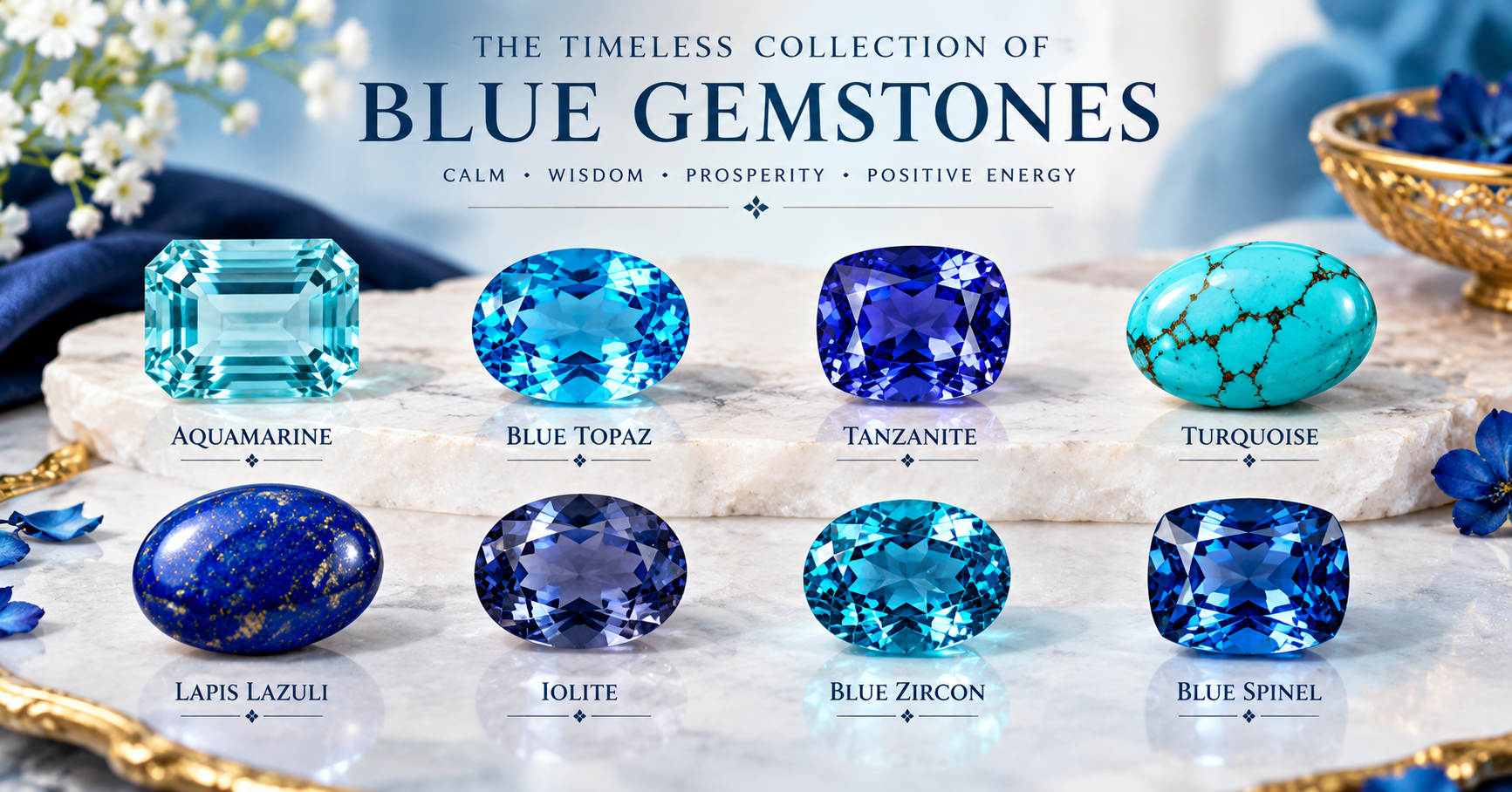
Blue gemstones have a distinctive appeal in jewellery. From the soft, ocean-like colour of aquamarine to the rich blue of blue topaz and the unusual blue-violet tones of tanzanite, each stone offers a different way to express personal style. Whether set in a statement ring, worn as a delicate pendant or designed into a bracelet, blue gemstones bring colour and character to everyday and occasion wear.
For jewellery buyers, choosing the right blue gemstone involves more than finding an attractive shade. Durability, gemstone quality, setting style, treatment disclosure and budget all influence the final choice. Some blue stones are suitable for frequently worn rings, while others are better protected in pendants or carefully designed bracelets.
This guide explores popular blue semi-precious gemstones, their distinguishing features, jewellery applications and the important factors to consider before buying.
What Are Blue Semi-Precious Gemstones?
Blue semi-precious gemstones are gem materials appreciated for their blue, blue-green or violet-blue colours. Popular examples include aquamarine, blue topaz, tanzanite, turquoise, lapis lazuli, iolite and blue zircon. Blue spinel is another attractive option for buyers looking for a durable gemstone with a blue appearance.
The traditional term semi-precious is widely used in jewellery retail, but it does not automatically mean that a gemstone is inexpensive or less desirable. Rarity, colour, clarity, carat weight, origin, treatments and overall quality can significantly affect its value.
Blue gemstones also differ in appearance. Transparent stones such as aquamarine and blue topaz offer brilliance and light reflection, while opaque materials such as lapis lazuli and turquoise create a bold, solid field of colour.
Explore the GemRishi gemstone collection to discover different gemstone varieties and colours before deciding which one suits your jewellery preferences.
1. Aquamarine: The Beauty of Ocean Blue
Aquamarine is a blue to blue-green variety of beryl, the same mineral family that includes emerald. Its name is associated with the colour of seawater, and its delicate appearance makes it a favourite for elegant gemstone jewellery.
The stone typically ranges from pale sky blue to a more saturated blue. Transparent aquamarine with good clarity is especially attractive in oval, emerald, pear and cushion cuts.
Best jewellery styles: Aquamarine works beautifully in pendants, cocktail rings, earrings and refined bracelets. Its hardness of 7.5–8 on the Mohs scale makes it suitable for many jewellery applications, although care is still necessary to prevent chips and scratches.
For everyday rings, a protective setting and thoughtful design can help preserve the gemstone. Aquamarine is an appealing choice for people who prefer understated colour rather than an intense, dark blue.
Discover the available stones in the GemRishi Aquamarine collection and learn more about their individual characteristics.
2. Blue Topaz: Bright Colour and Modern Appeal
Blue topaz is one of the most recognisable blue gemstones used in contemporary jewellery. Its colour can range from pale Sky Blue to vivid Swiss Blue and deep London Blue. These variations allow buyers to choose a shade that complements their preferred metal, clothing and personal style.
Blue topaz is often chosen for its attractive appearance and accessibility across a range of jewellery budgets. Much of the blue topaz sold commercially has undergone colour treatment, commonly involving irradiation followed by heat treatment. Buyers should check whether the seller clearly discloses treatments.
Best jewellery styles: Blue topaz suits silver-toned jewellery, white gold, yellow gold and contemporary geometric designs. Large faceted stones work well in statement rings and pendants, while smaller stones can add colour to bracelets.
With a Mohs hardness of 8, topaz resists scratching reasonably well. However, its cleavage means that a hard impact can cause splitting, so protective settings are worth considering, especially for rings worn frequently.
For a deeper understanding of the gemstone, read GemRishi's guide to topaz gemstone types, colours and characteristics.
3. Tanzanite: A Distinctive Blue-Violet Gemstone
Tanzanite stands out for its blue-to-violet appearance. Depending on lighting, viewing direction and cut, a stone may show a combination of blue, violet and purplish tones. This colour variation gives tanzanite a distinctive look compared with more consistently blue gemstones.
Tanzanite is a variety of the mineral zoisite and is associated with Tanzania, where it was discovered. Its relative rarity and striking colour have made it popular in fine jewellery.
Best jewellery styles: Tanzanite is particularly attractive in pendants, earrings and occasional-wear rings. Its Mohs hardness of approximately 6–7 makes it more vulnerable to scratches and impact than sapphire or blue topaz.
For this reason, a tanzanite pendant can be a practical choice for someone who wants to appreciate the stone's colour without exposing it to as much daily contact. Tanzanite is commonly heat-treated to enhance its familiar blue-violet colour, so treatment information should form part of the buying decision.
Read more about this gemstone in GemRishi's guide to tanzanite meaning, traditional associations and buying considerations.
4. Turquoise: Natural Character and Artistic Style
Turquoise is known for its opaque blue to blue-green colour, often accompanied by brown or dark matrix patterns. Unlike transparent faceted gemstones, turquoise has a distinctive surface appearance that works especially well in artistic and handcrafted jewellery.
Its character varies considerably from one piece to another. Some stones have an even, vivid blue colour, while others display intricate matrix patterns that make every piece look different.
Best jewellery styles: Turquoise is well suited to statement rings, beaded bracelets, pendants and bohemian-inspired designs. It pairs naturally with silver, textured metalwork and earthy materials.
Turquoise is relatively soft, with a Mohs hardness of around 5–6, and can be porous. It may be affected by cosmetics, oils, chemicals and prolonged exposure to moisture. Stabilised or otherwise treated turquoise is common in the market, so ask about treatments and care requirements before purchasing.
Explore the GemRishi gemstone collection for gemstone options, including turquoise, and compare their characteristics before making a choice.
5. Lapis Lazuli: Deep Blue with Golden Details
Lapis lazuli is a blue rock valued for its rich colour and occasional golden flecks of pyrite. Its appearance differs from that of transparent gemstones, offering a deep, opaque blue that can look especially striking in jewellery with clean lines or traditional craftsmanship.
Historically associated with decorative arts and jewellery, lapis lazuli continues to appeal to buyers who prefer strong colour over sparkle.
Best jewellery styles: Lapis lazuli works particularly well in pendants, cabochon rings, beads and bracelets. Its opaque surface makes it suitable for polished domes, inlays and carved designs.
With a Mohs hardness of approximately 5–5.5, lapis lazuli requires more careful handling than harder gemstones. Avoid harsh cleaning products and ultrasonic cleaners unless a qualified professional confirms they are appropriate for the particular piece. Ask whether the stone has been dyed, waxed or otherwise treated.
Lapis lazuli is also featured among the varieties discussed in GemRishi's article on gemstones associated with positive energy, which explores traditional gemstone symbolism.
6. Iolite: Subtle Blue with Violet Undertones
Iolite is an attractive option for buyers who want something different from the more familiar blue gemstones. Its colour can range from blue to violet-blue, and its appearance may change noticeably with the viewing direction because of strong pleochroism.
This optical property can make iolite particularly interesting in faceted jewellery. The best cut for an individual stone helps display its colour effectively.
Best jewellery styles: Iolite suits delicate rings, pendants and earrings, especially designs that allow light to enter the stone. With a Mohs hardness of around 7–7.5, it can be used in jewellery, but it should be protected from hard knocks.
Iolite is worth considering for someone looking for an elegant blue gemstone with a less conventional appearance.
7. Blue Zircon: Sparkle and Strong Light Performance
Natural blue zircon is appreciated for its brilliance and noticeable dispersion, which can create colourful flashes of light. It should not be confused with cubic zirconia, a synthetic diamond simulant; natural zircon is a distinct gemstone mineral.
Blue zircon is commonly produced by heat treatment of suitable zircon material. As with other treated gems, buyers should seek clear disclosure rather than assuming the colour is untreated.
Best jewellery styles: Blue zircon can look beautiful in pendants, earrings and carefully designed rings. Its hardness varies across the zircon range, generally around 6–7.5 on the Mohs scale, and it can be brittle and susceptible to abrasion. Protective settings and careful cleaning are important for long-term wear.
For jewellery lovers who value sparkle, blue zircon offers a different visual effect from the softer, more subdued look of turquoise or lapis lazuli. You can also explore GemRishi's article on Opal vs Zircon: beauty, brilliance, value and durability for further gemstone education.
How to Choose the Best Blue Gemstone for Your Jewellery
The best blue gemstone depends on where and how you plan to wear it. A stone that works well in a pendant may need more protection when placed in a ring.
Choose According to Durability
For rings worn frequently, blue topaz, aquamarine and blue spinel offer useful hardness, while tanzanite, turquoise, lapis lazuli and blue zircon generally need more careful handling. Hardness alone does not determine durability; toughness, cleavage, treatment stability and the security of the setting matter too.
Consider Colour, Cut and Clarity
Look at the gemstone in natural and indoor lighting where possible. A pale blue stone may feel delicate and understated, while a saturated blue can create a bolder appearance. Transparent stones often benefit from a cut that balances brilliance and colour, whereas opaque gemstones are frequently shaped into cabochons or polished beads.
For transparent stones, visible inclusions, colour distribution and cut quality can influence appearance and price. For opaque stones, surface finish, pattern and colour consistency may be more important.
Match the Stone with the Metal
Blue gemstones pair well with several jewellery metals. White gold and silver can emphasise cool blue tones, while yellow gold creates a warmer contrast. Rose gold offers a softer, contemporary look with lighter blue and blue-green stones.
Choose the combination based on the gemstone's shade, your existing jewellery and whether you want the stone to blend into an everyday look or become the main feature.
Check Treatments and Authenticity
Before buying a blue gemstone online, read the product description carefully. Ask whether the stone is natural, laboratory-grown or a simulant, and whether any colour or clarity treatments have been applied. These categories are not interchangeable, and accurate disclosure helps buyers make informed comparisons.
For valuable purchases, consider an appropriate gemological report from a reputable laboratory. A report can help identify the material and disclose certain treatments, although the scope depends on the report and testing performed.
GemRishi's complete gemstone buying guide provides additional guidance on gemstone quality, treatment, certification and selection.
Blue Gemstone Rings, Pendants and Bracelets: Which Should You Choose?
A blue gemstone ring makes a strong visual statement and can suit both everyday outfits and special occasions. For frequent wear, prioritise durability, a secure setting and a design that protects the stone's edges.
A blue gemstone pendant offers versatility and often exposes the stone to fewer impacts than a ring. Aquamarine, blue topaz and tanzanite can all work well, depending on the desired colour and level of care.

Blue gemstone bracelets range from delicate designs with small faceted stones to bold turquoise or lapis lazuli beads. Because bracelets regularly contact hard surfaces, consider the stone's toughness, the quality of the stringing or setting and the care it will need.
For more inspiration, explore GemRishi's article on vibrant gemstones and modern jewellery trends. You can also read this comparison of Blue Sapphire vs Tanzanite to understand how two popular blue gemstones differ in colour, durability and jewellery suitability.
If you are considering a darker, more intense blue, GemRishi's guide to Blue Sapphire colours and their differences offers more information about sapphire shades and quality.
Final Thoughts
Blue semi-precious gemstones offer an impressive range of colours, textures and design possibilities. Aquamarine brings a soft, ocean-inspired look; blue topaz adds vivid colour; tanzanite offers blue-violet depth; turquoise and lapis lazuli bring opaque character; and iolite and blue zircon provide distinctive alternatives.
The right choice comes down to your preferred colour, jewellery style, budget and expectations for everyday wear. By checking gemstone identity, treatments, durability and craftsmanship before buying, you can choose a piece that combines lasting appeal with informed value.
Explore the GemRishi gemstone collection and visit GemRishi online to discover gemstone options and find inspiration for your next jewellery purchase.
Frequently Asked Questions
1. What are the most popular blue semi-precious gemstones?
Popular choices include aquamarine, blue topaz, tanzanite, turquoise, lapis lazuli, iolite and blue zircon. Blue spinel is another option for buyers seeking a durable, faceted blue gemstone.
2. Which blue gemstone is best for everyday rings?
Blue topaz, aquamarine and blue spinel can be suitable for everyday rings when well cut and securely set. The final choice should consider toughness, cleavage, treatment and the wearer's lifestyle.
3. Is blue topaz a natural gemstone?
Yes, topaz is a natural mineral, and natural blue topaz exists. However, much of the blue topaz sold commercially has been treated to produce its blue colour. Buyers should check the seller's treatment disclosure.
4. Which blue gemstone is best for pendants?
Aquamarine, blue topaz and tanzanite are attractive pendant choices. A pendant generally experiences fewer impacts than a ring, although its gemstone still requires suitable care and a secure setting.
5. Are blue semi-precious gemstones expensive?
Prices vary widely depending on the gemstone species, colour, clarity, size, treatments, rarity and craftsmanship. Some blue topaz jewellery is relatively accessible, while fine tanzanite and aquamarine can command higher prices.
6. What is the difference between aquamarine and blue topaz?
Aquamarine is a blue to blue-green variety of beryl, while blue topaz is the blue variety of topaz. Both can be transparent and faceted, but their colour characteristics, treatments and visual appearance differ.
7. Is turquoise suitable for daily jewellery?
Turquoise can be worn regularly with care, but its relative softness and porosity make it more vulnerable to scratches, chemicals and moisture. Protective settings and appropriate cleaning are important.
8. What is the difference between lapis lazuli and a transparent blue gemstone?
Lapis lazuli is an opaque blue rock that may contain golden pyrite flecks and lighter mineral patterns. Aquamarine and blue topaz are transparent minerals that typically display light transmission and faceted brilliance.
9. Which blue gemstone is best for bracelets?
Blue topaz and aquamarine can suit carefully designed bracelets, while turquoise and lapis lazuli are popular for beaded styles. Since bracelets frequently contact surfaces, choose a durable construction and follow the stone's care requirements.
10. How can I tell if a blue gemstone is genuine?
Appearance alone cannot reliably establish gemstone identity or treatment. Review the seller's disclosure, ask for appropriate documentation and obtain an independent gemological assessment for valuable stones when necessary.
11. Do all blue gemstones have astrological benefits?
No scientific evidence establishes that wearing a blue gemstone guarantees astrological, financial or health benefits. Some traditions assign particular meanings to gemstones, but these should be understood as cultural or spiritual beliefs rather than proven outcomes.
12. How should I clean blue gemstone jewellery?
Cleaning depends on the gemstone and any treatments it has received. Mild soap, lukewarm water and a soft brush may be suitable for some stones, but porous or fragile gems may need different care. Follow the seller's instructions or consult a qualified jeweller.
Have Questions Regarding This Gemstone?
Connect 1-on-1 with GemRishi’s certified Vedic gemologists on WhatsApp for personalized birth chart recommendations, lab certificate verification, or custom jewelry quotes.
Gemrishi
Gemrishi is a certified gemologist and Vedic astrology scholar at GemRishi with over 15 years experience in natural gemstone origin authentication.