Opal vs Zircon: Beauty Meets Brilliance—Which Gemstone Wins?
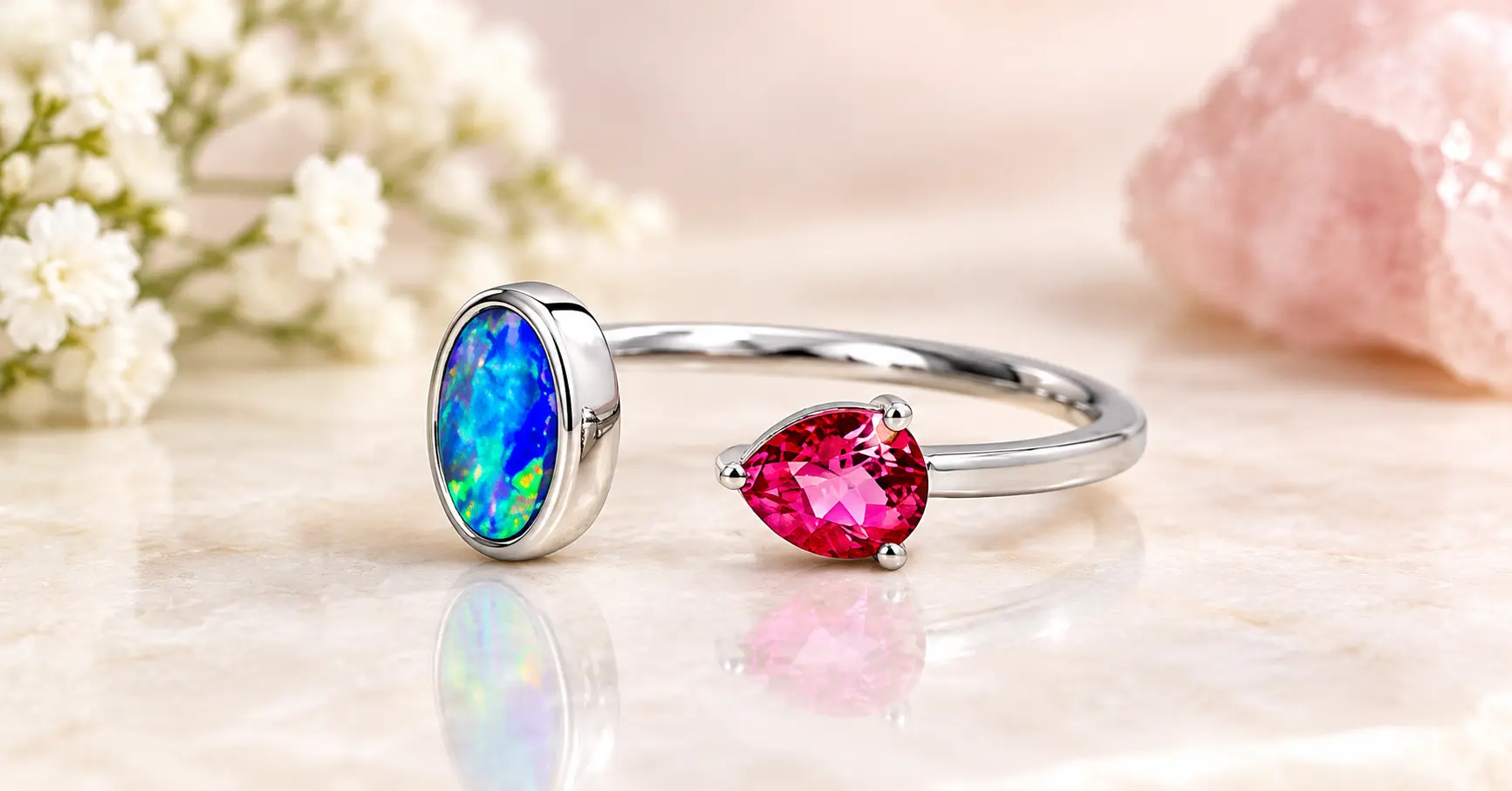
Opal is famous for its mesmerizing play-of-color, with flashes that can reveal blue, green, yellow, orange, and red across its surface. Zircon, on the other hand, is all about brilliance and fire, reflecting light with bright flashes that can sometimes remind people of diamond.
Some gemstones catch your eye because they sparkle.Others hold your attention because they seem to change every time the light moves. Opal and Zircon belong to both worlds, but in very different ways.
So, when it comes to Opal vs Zircon, which gemstone wins? The answer depends on whether you value individuality and color play or brilliance and sparkle.
This guide is all about the Opal vs Zircon gemstone . Let take a closer look on these Gemstone in detail.
Opal vs Zircon: What Makes Them Special?
Opal is a hydrated silica gemstone and is unlike almost any other gem. Its beauty comes from tiny silica structures that interact with light to create its famous play-of-color. No two natural opals are exactly alike, which gives each stone its own personality.
Zircon is a natural gemstone with an impressive optical personality of its own. It occurs in colors including blue, red, green, yellow, and brown, while colorless Zircon is particularly known for its brilliance and flashes of rainbow-like fire.
In simple terms, Opal mesmerizes with changing color, while Zircon impresses with sparkle.
Color and Beauty: Opal Takes a Different Approach
If color is what attracts you to gemstones, Opal is hard to ignore.Its variation in color is so impressive.
Other gemstones that have one dominant body color, precious .Opal can display a moving spectrum of colors across its surface.
This gemstone can show flashes of blue, green, orange, yellow, or red. The intensity, pattern, and range of these colors are important factors when evaluating Opal quality.
Zircon offers a different kind of beauty. It comes in a surprisingly wide range of colors, with blue Zircon being particularly popular. Fine red, green, and blue examples can be especially desirable.
So if you love an artistic gemstone that looks different from different angles, Opal has the edge. If you prefer a gemstone with strong color combined with brilliant faceted sparkle, Zircon may be more appealing.
Brilliance and Fire: Zircon Shines
Zircon has high refractive indices and dispersion, giving it impressive brilliance and fire. Its strong double refraction can also create fascinating visual effects through its facets that attracts you . Colorless Zircon has historically even been confused with diamond because of its bright appearance.
Opal doesn't sparkle in quite the same way. Its charm comes from play-of-color rather than traditional faceted brilliance.
That means the winner depends on what you mean by beauty:
Opal = colorful movement.
Zircon = brilliant sparkle and fire.
Durability: Which Gemstone Is Stronger?
This is an important consideration if you're planning to wear your gemstone frequently.
Opal has a Mohs hardness of approximately 5 to 6.5, and its toughness ranges from poor to fair. It can scratch or break more easily than many harder gemstones and should be worn with care. GIA recommends gentle cleaning with warm, soapy water and warns that sudden temperature changes and high heat can cause some opals to fracture.
Zircon is generally the more practical option when durability and faceted jewelry are important, although it still requires proper care. GIA recommends warm, soapy water and does not recommend ultrasonic or steam cleaning for Zircon.
For an everyday ring that may experience frequent knocks, neither should simply be treated like Sapphire or Diamond. A protective setting and sensible wear habits can make a significant difference.
Rarity and Value: Which One Is More Valuable?
With Opal, play-of-color is one of the biggest factors. Bright, vivid patterns with strong color and attractive distribution can make a stone considerably more desirable. The range of colors, pattern, clarity, body color, size, and overall appearance all contribute to value.
Zircon's value depends on factors including color, clarity, cut, size, and quality. Fine Zircon in larger sizes can be rare, while certain colors are particularly sought after.
Rather than asking which gemstone is automatically more expensive, it makes more sense to compare stones of similar quality and evaluate their individual characteristics.
Meaning and Symbolism
Beyond their physical beauty, both gemstones have developed their own symbolic identities.
Opal is often associated with creativity, imagination, transformation, emotional expression, and individuality. As the October birthstone, it also has a long history of fascination and folklore.
Zircon, meanwhile, is traditionally connected with qualities such as wisdom, prosperity, confidence, and protection in various gemstone traditions. It is also one of the recognized December birthstones.
These meanings are part of cultural and traditional gemstone beliefs rather than scientifically established effects.
Opal vs Zircon for Jewelry
The type of jewelry you want can make the decision much easier.
Opal is beautiful in:Pendants,Pendants, Earrings, Statement rings, Artistic and unconventinal designs
Its unique play-of-color makes it especially attractive when the gemstone itself is meant to be the centerpiece.
Zircon works beautifully in: Rings, Earrings Pendants, Classical gemstone jwelery,Designs where brilliance matters.
Its faceted appearance can give jewelry a particularly lively sparkle.
Natural Opal vs Zircon: What Should Buyers Check?
Whatever gemstone you choose, don't make your decision based on color alone.
For Opal, look closely at the intensity and pattern of the play-of-color, the body color, clarity, and whether the stone is solid Opal, a doublet, or a triplet.
For Zircon, pay attention to color, clarity, cut, carat weight, and whether any treatment has been disclosed.
Certification can also be valuable when you're purchasing a significant gemstone. A reputable report can help confirm what the gemstone is and identify detectable treatments.
So, Which Gemstone Wins?
Choose Opal if you want individuality, fascinating color play, and a gemstone that feels artistic and one-of-a-kind.
Choose Zircon if you want brilliance, rainbow-like fire, strong faceted sparkle, and a wider choice of colors.
If your priority is unique beauty, Opal may win your heart.
If your priority is brilliance and sparkle, Zircon makes a compelling choice.
And if you're choosing for everyday jewelry, don't forget to consider durability and setting design alongside appearance.
Explore Natural Gemstones with GemRishi
Finding the right gemstone is about more than choosing the prettiest stone. Color, quality, authenticity, treatment, durability, and purpose all matter.
At GemRishi, you can explore a curated range of natural gemstones while learning more about their characteristics, traditional significance, and how to choose them wisely.A dedicated team of astrologers will suggest you the best gemstones that is perfectly alligns with you .
Whether you're drawn to the magical color play of Opal or the brilliant fire of Zircon, choosing a quality gemstone can make your jewelry feel far more personal.
Final Thoughts
Opal and Zircon prove that beauty doesn't have to look the same.
Opal catches the eye with flashes of shifting color, while Zircon creates its impact through brilliance and fire. One feels mysterious and artistic; the other feels bright and energetic.
So, Opal vs Zircon—which gemstone wins?
The real winner is the one that matches your style, jewelry needs, and idea of beauty. If you want a gemstone that feels completely individual, choose Opal. If sparkle and brilliance are what you love most, Zircon deserves a closer look.
Have Questions Regarding This Gemstone?
Connect 1-on-1 with GemRishi’s certified Vedic gemologists on WhatsApp for personalized birth chart recommendations, lab certificate verification, or custom jewelry quotes.
Gemrishi
Gemrishi is a certified gemologist and Vedic astrology scholar at GemRishi with over 15 years experience in natural gemstone origin authentication.