Do Rubies Increase in Value? The Truth About Ruby Investment
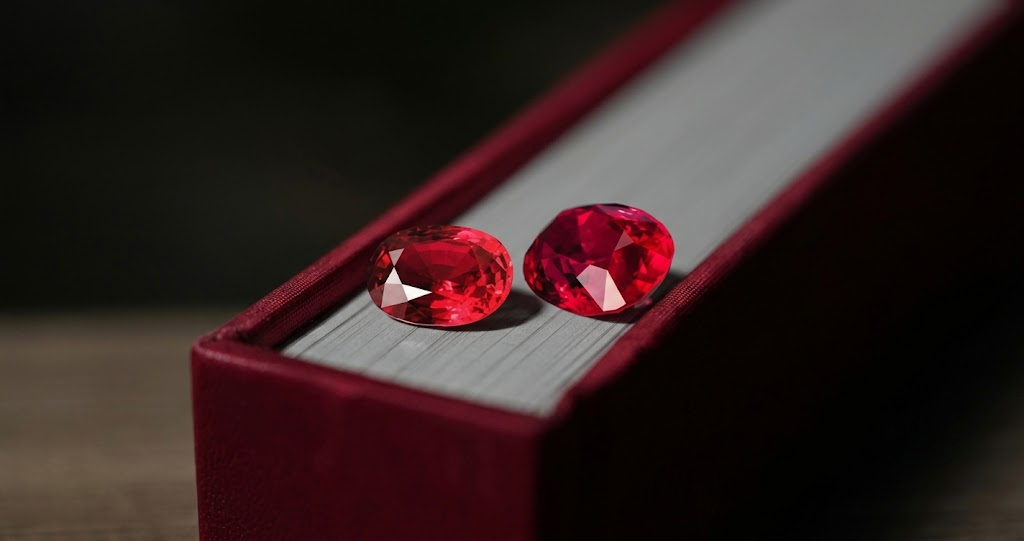
A ruby is more than just a beautiful red gemstone. For centuries, exceptional rubies have been admired for their rarity, intense color, and timeless appeal, making them highly desirable among jewellery lovers and collectors. But when a ruby comes with a significant price tag, an important question naturally comes to mind: can rubies increase in value over time? The answer is not as simple as buying a natural ruby today and expecting its price to rise tomorrow. Ruby value depends on several factors, including color, clarity, carat weight, origin, treatment, rarity, certification, and overall quality. In fact, two rubies that look similar at first glance can have dramatically different values. This is why understanding what makes a ruby rare and desirable is essential before making a high-value purchase. In this guide, we will explore whether natural rubies can appreciate in value, which qualities are most important, what affects resale potential, and what buyers should consider before treating ruby as a long-term collectible asset.
Can Rubies Increase in Value?
Yes, high-quality natural rubies can increase in value, but this should not be treated as a guaranteed investment return.The intense color, and timeless appeal and attractive nature oftenly increases its value due to high demands.
The ruby market is highly selective. Exceptional stones are rare, and their value can be influenced by changing collector demand, market conditions, provenance, origin, and certification.
A commercial-quality ruby purchased today should not automatically be expected to become significantly more expensive in the future.
Investment Potential is much stronger as this gemstone has :
- Natural origin
- Excellent color
- Strong transparency
- Attractive clarity
- Good cutting
- Larger size
- Minimal or no treatment
- Desirable origin
- Reliable laboratory certification
- Strong rarity and collector appeal
This is one reason why simply buying the largest ruby you can afford is not necessarily the smartest strategy.
A smaller but exceptional ruby can be considerably more desirable than a much larger stone with poor color, heavy treatment, or low transparency.
You can explore GemRishi's Ruby (Manik) collection to understand the types of natural rubies available in the market.
What Makes a Ruby Valuable?
When discussing ruby investment, it helps to understand the factors that determine value.
1. Color Is One of the Biggest Factors
Color is one of the most important characteristics and uniqueness of a ruby gemstone.
Fine rubies are generally admired for their strong, vivid red color, attractive nature and lively appearance are the significant factor for people.
A ruby that appears dull, overly brownish, or excessively dark may be less desirable than a stone with a vibrant and balanced red.
Some exceptional rubies are associated with the famous term "pigeon blood", which refers to a highly desirable red color.
However, buyers should be careful about treating the name alone as a guarantee of value.
The actual gemstone still needs to be evaluated for its color quality transparency, treatment origin, and certification.
2. Natural Ruby vs Synthetic Ruby
This is one of the most important distinctions for anyone considering ruby as a long-term store of value.
Natural rubies form through geological processes within the Earth.
Synthetic or lab-grown rubies are created in controlled laboratory environments.
Although synthetic rubies can have similar chemical and physical properties to natural rubies, their market positioning and rarity are very different.
Natural gemstones are naturally limited. Laboratory-created stones can be produced repeatedly.
That difference can have a major impact on collectability and resale potential.
If you are purchasing a ruby specifically for investment or collection purposes, always ask whether the gemstone is:
- Natural
- Synthetic
- Treated
- Untreated
- Filled
- Certified
GemRishi's guide on Lab-Grown Ruby vs. Natural Ruby provides a useful comparison between these two categories.
3. Treatment Can Affect Ruby Value
Treatment is another major consideration that people must look for.
Many rubies in the market undergo treatment to improve their appearance. Heat treatment, for example, may improve color and clarity.
Treatment itself does not automatically mean th ruby is worthless. The property must be preserved.
However, treatment status should always be disclosed, because it can influence rarity and market value.
An exceptional natural ruby with no indications of treatment can be considerably rarer than a similar-looking treated stone.
For an investment-oriented purchase, ask:
- Has the ruby been heated?
- Is there evidence of fracture filling?
- Has glass filling been used
- Is the treatment disclosed on the certificate?
- Is the stone natural?
- Does the laboratory report support the seller's claims?
For more insight into how origin, treatment, color, and quality influence ruby value, read GemRishi's Mozambique Ruby vs Burma Ruby guide.
4. Why Untreated Rubies Can Be Especially Valuable
Imagine two rubies that look almost identical to the untrained eye.
One has been treated to improve its appearance.
The other is a natural ruby with excellent color and no indications of treatment.
The second stone may be considerably rarer.
This is where the idea of rarity becomes important.
For collectors, rarity can be just as important as beauty.
An untreated ruby with exceptional color, good transparency, strong clarity characteristics, and substantial size can attract significant attention.
That does not mean every untreated ruby is automatically expensive.
Quality still comes first.
An untreated ruby with poor color may not be more desirable than a beautifully colored treated ruby for ordinary jewellery purposes.
5. Does Ruby Origin Affect Its Value?
Yes, origin can matter—but it should never be considered in isolation.
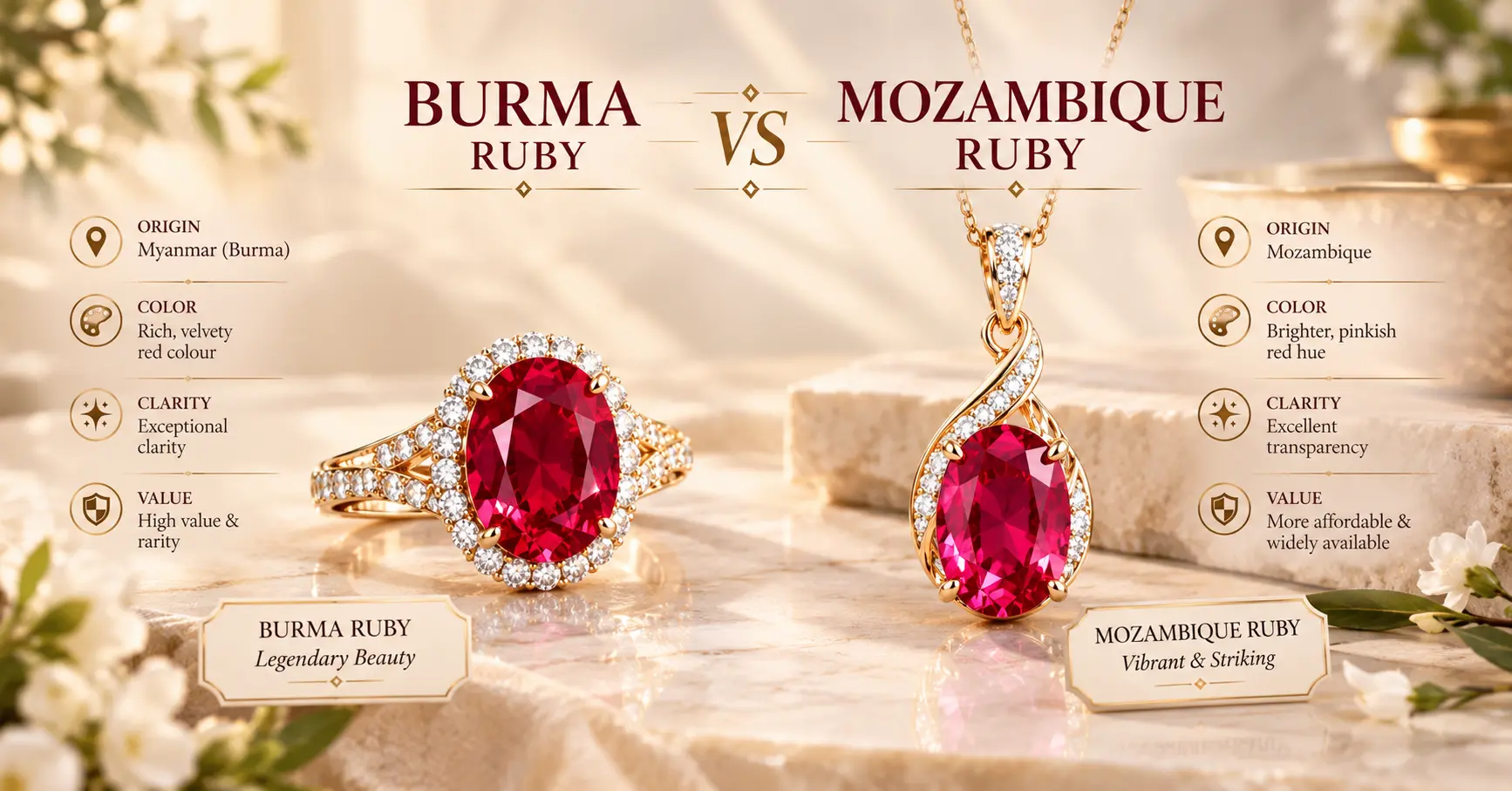
Two of the most famous ruby origins are Burma (Myanmar) and Mozambique.
Burmese rubies, hve fine material from the historic Mogok region, have a long-standing reputation among collectors.
Mozambique, meanwhile, has become one of the world's important modern ruby sources and can produce impressive stones with vivid red color and attractive transparency.
However, the origin name alone does not determine value.
A high-quality Mozambique ruby may be more desirable than an average-quality Burmese ruby.
Similarly, an exceptional Burmese ruby with outstanding color, rarity, and documentation may command a significant premium.
GemRishi's detailed Burma Ruby vs Mozambique Ruby comparison explores these differences in greater detail.
6. Why Large Rubies Are Not Always Better
It is easy to assume that a larger gemstone automatically means a better investment.
That is not necessarily true.
A 10-carat ruby with poor color and low transparency may have much less appeal than a smaller ruby with exceptional color and rarity.
When assessing a ruby, consider the complete picture:
Color
Is the red vibrant and attractive?
Transparency
Does light move through the stone well?
Clarity
Are inclusions distracting or acceptable?
Cut
Does the cutting help display the color and brilliance?
Treatment
Has the stone been treated?
Origin
Can its geographic origin be established?
Certification
Is there a reliable laboratory report?
Size
How rare is this combination of quality and carat weight?
The goal should be quality per carat, not simply the highest carat number.
7. Certification Matters More When the Price Gets Higher
If you are spending a significant amount on a ruby, a laboratory report is one of the most useful documents you can have.
A reputable gemological report can help establish important information about the stone, such as its natural or synthetic status and treatment characteristics.
For higher-value rubies, origin reporting can also be particularly important when available and scientifically determinable.
Without proper documentation, it can be difficult for a buyer to independently verify a seller's claims.
GemRishi highlights laboratory certification as an important part of gemstone purchasing and lists recognized laboratories within its gemstone policies.
You can also learn more about GemRishi's approach through its About Us page.
8. Ruby Investment vs Ruby Jewellery
There is an important difference between buying a ruby as jewellery and buying one as a potential investment or collectible.
If you are buying jewellery, you may prioritize:
- Beautiful color
- Attractive design
- Wearability
- Personal preference
- Budget
If you are buying primarily for collection or potential long-term value, you may place greater emphasis on:
- Natural origin
- Rarity
- Excellent color
- Treatment status
- Provenance
- Certification
- Exceptional size and quality
This distinction is important.
A beautiful ruby ring can be a wonderful purchase without necessarily being an investment-grade gemstone.
In fact, jewellery retail prices include craftsmanship, metal, design, branding, and other costs that may not be fully recovered if the piece is resold.
9. What About Ruby Resale Value?
This is where buyers should be realistic.
Purchase price and resale price are not necessarily the same.
A gemstone bought from a retailer may include margins, certification costs, jewellery-making costs, taxes, and other expenses.
If you later decide to sell it, the buyer may evaluate the gemstone according to current wholesale or market conditions rather than what you originally paid.
Therefore, you should not purchase a ruby simply because you expect to sell it for a guaranteed profit.
Instead, think of an exceptional ruby as a rare tangible asset with potential long-term value, rather than a guaranteed financial investment.
10. Which Rubies Have the Strongest Investment Potential?
If your primary objective is long-term collectability, look for a combination of characteristics rather than one single feature.
A particularly interesting ruby may have:
Natural origin + exceptional color + strong transparency + desirable size + minimal/no treatment + reputable certification + desirable origin/provenance.
The more unusual that combination becomes, the greater the potential collector appeal.
For example, an exceptional natural ruby with vivid red color and excellent transparency may attract much more attention than an ordinary ruby of similar weight.
This is why experienced gemstone buyers often focus on rarity and quality rather than size alone.
How to Buy a Ruby With Long-Term Value in Mind
If you are considering a ruby purchase with future value in mind, follow this checklist.
Step 1: Decide Your Purpose
Are you buying for:
- Jewellery?
- Personal collection?
- Astrological use?
- Heirloom?
- Potential long-term value?
Your answer will influence what you should prioritize.
Step 2: Choose Natural Ruby
If rarity and collectability are important, make sure the stone is clearly identified as natural.
Do not rely only on appearance.
Step 3: Examine the Color
Look for an attractive, vivid red with good saturation and visual life.
Step 4: Understand Treatment
Ask specifically about heating and any other enhancement.
Step 5: Check Certification
For an expensive gemstone, request an independent laboratory report.
Step 6: Compare Stones
Don't purchase the first ruby you see.
Compare color, clarity, transparency, treatment, cut, origin, certification, and price.
Step 7: Keep Your Documentation
Keep the original laboratory report, purchase invoice, photographs, and any origin documentation.
These records can become useful if the gemstone is evaluated or sold later.
Step 8: Avoid Emotional Buying
A ruby can be beautiful enough to make you want to buy immediately.
Take a step back.
Compare it objectively before spending a large amount.
How to Judge Ruby Value Before Buying
A simple way to think about a ruby's potential is:
Authenticity → Quality → Rarity → Certification → Provenance → Market Demand
If the first step fails, everything else becomes questionable.
A natural ruby with excellent quality and reliable documentation has a much stronger foundation than a poorly documented stone sold mainly on a dramatic description.
You can also use GemRishi's Carat to Ratti Converter when comparing gemstone weights expressed in carats and ratti.
Can Astrological Ruby Also Be an Investment?
This requires a little separation between two purposes.
In Vedic astrology, Ruby or Manik is traditionally associated with the Sun.
If you are purchasing Ruby for astrological purposes, the priority should be whether the gemstone is appropriate for your birth chart and whether it meets suitable gemological standards.
Investment considerations are separate.
A gemstone should not be purchased for astrological use simply because someone claims that it will appreciate in value.
Similarly, an expensive ruby is not automatically the right astrological ruby.
GemRishi's Ruby Stone Meaning & Wearing Guide explains the traditional astrological considerations around Ruby.
Where Should You Buy a Ruby?
The seller matters.
When purchasing a potentially high-value ruby, look for a gemstone retailer that provides:
- Clear gemstone disclosure
- Natural/synthetic identification
- Treatment information
- Laboratory certification
- Transparent policies
- Detailed gemstone specifications
- Return options
GemRishi provides information about its certified gemstone locations and showrooms for buyers who prefer an in-person experience.
For custom jewellery, buyers can also explore GemRishi's custom jewellery service.
Final Verdict: Do Rubies Increase in Value?
Some rubies absolutely can increase in value—but quality and rarity are everything.
The strongest candidates are not simply the biggest or most expensive stones.
They are exceptional natural rubies with a combination of:
- Outstanding color
- Good transparency
- Attractive clarity
- Desirable size
- Minimal or no treatment
- Strong rarity
- Reliable certification
- Desirable origin or provenance
- Collector demand
For most buyers, the smartest approach is to think of Ruby first as a rare and beautiful gemstone, and only then consider its potential as a long-term store of value.
If you find an exceptional natural ruby that you genuinely appreciate, have its authenticity and treatment independently documented, and purchase it at a sensible market price, you may own something that becomes increasingly desirable over time.
But remember one important rule:
Buy quality, not hype.
A ruby's future value is built on what makes the stone genuinely rare—not simply on a seller's promise that its price will rise.
Frequently Asked Questions
Do natural rubies increase in value?
High-quality natural rubies can appreciate over time, particularly when they combine exceptional color, rarity, size, desirable treatment characteristics, and reliable certification. However, appreciation is not guaranteed.
Which ruby is best for investment?
Exceptional natural rubies with vivid color, strong transparency, good clarity, minimal or no treatment, larger size, and reputable certification generally have stronger collector appeal.
Are untreated rubies more valuable?
An untreated natural ruby can be particularly rare and valuable when it also has excellent color and quality. However, untreated status alone does not guarantee a high value.
Is Burmese Ruby a good investment?
Exceptional Burmese rubies can have strong collector appeal because of their history, rarity, and renowned color. However, the quality of the individual stone remains more important than origin alone.
Is Mozambique Ruby valuable?
Yes. Mozambique produces natural rubies across a wide range of qualities, including exceptional stones. Value depends on the individual ruby's color, clarity, treatment, size, cut, and certification.
Is a bigger ruby always worth more?
No. Color, transparency, treatment, clarity, rarity, and overall quality can be more important than carat weight alone.
Should I buy Ruby as a financial investment?
Ruby can be considered a collectible luxury asset, but it should not be treated as a guaranteed financial investment. Buyers should understand the risks, liquidity limitations, and differences between retail and resale value.
Does certification increase ruby value?
Certification can increase buyer confidence by documenting important characteristics such as natural origin and treatment status. For high-value rubies, reputable independent documentation is particularly useful.
Can lab-grown rubies increase in value?
Lab-grown rubies generally do not have the same rarity and collector positioning as exceptional natural rubies because they can be produced in controlled environments. Their value proposition is primarily different from that of rare natural stones.
Conclusion
Ruby has been admired for centuries for its intense red beauty, rarity, and symbolism.
Today, it also attracts collectors and buyers interested in the long-term value of natural gemstones.
But ruby investment is not about buying any red gemstone and waiting for its price to rise.
It is about understanding quality, rarity, treatment, origin, certification, and market demand.
If you are considering a ruby purchase with long-term value in mind, take your time. Compare stones. Ask questions. Verify the certificate. Understand the treatment. And most importantly, buy a gemstone whose quality you can appreciate even if its market price never changes.
That is what makes a ruby purchase much more meaningful—and potentially much more rewarding in the long run.
Have Questions Regarding This Gemstone?
Connect 1-on-1 with GemRishi’s certified Vedic gemologists on WhatsApp for personalized birth chart recommendations, lab certificate verification, or custom jewelry quotes.
Gemrishi
Gemrishi is a certified gemologist and Vedic astrology scholar at GemRishi with over 15 years experience in natural gemstone origin authentication.