Lab-Grown Ruby vs. Natural Ruby for Vedic Astrology: Does Synthetic Manik Actually Work?
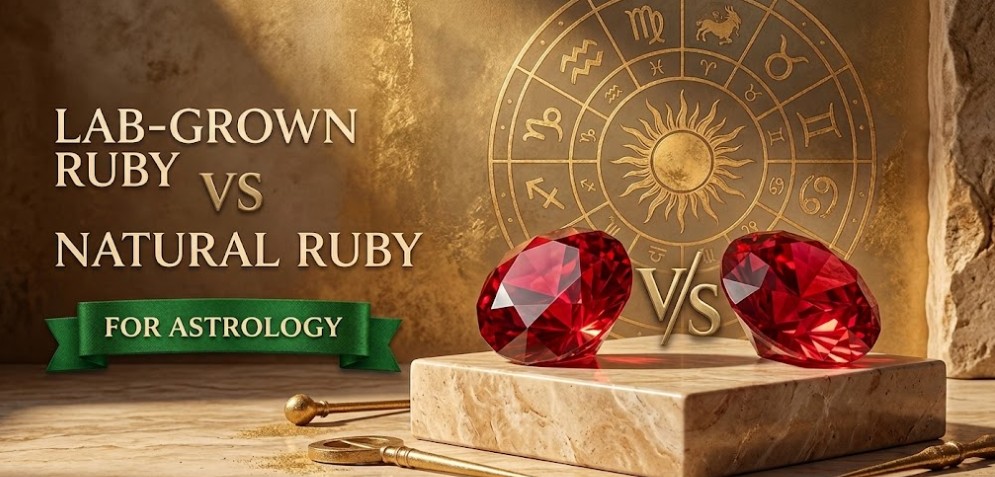
If you place an unheated Burmese natural ruby next to a high-grade hydrothermal lab-grown ruby, even an experienced eye using a standard 10x jeweler’s loupe might pause.
Chemically, both are corundum (Al2O3). Both owe their fiery crimson saturation to trace chromium, and both score a solid 9 on the Mohs hardness scale.
Yet, when entering the realm of Jyotish (Vedic Astrology) and planetary remedies for Surya (the Sun), one question defines your outcome: Can a factory-synthesized crystal deliver the astrological power of a real Manikya stone?
The short, definitive answer according to classical gemological and Vedic principles is no. While lab-created rubies excel as affordable, eye-clean jewelry, they do not channel planetary energies for astrological remediation.
The Science vs. The Spirit: Why Formation Governs Astrological Potency
To understand why synthetic stones fall flat in Jyotish, we have to look past simple chemical formulas and examine how energy accumulates in matter.

Why Vedic Astrology Rejects Synthetic Rubies for Surya Remedies
In Vedic cosmology, the Sun represents Atmakaraka - the soul, authority, vitality, fatherhood, executive presence, and self-confidence. Wearing a gemstone is not a passive decorative act; it acts as a crystalline prism filtering specific cosmic rays directly into your aura.
- The Missing Telluric Life Force (Prana): Classical texts like the Garuda Purana and Brihat Samhita emphasize that gemstones derive their planetary resonance from geological birth. A natural ruby spends epochs absorbing the electromagnetic pulses of the Earth. A machine-grown crystal produced in 14 days lacks this organic crystalline memory.
- Flawlessness vs. Natural Inclusions: Lab-grown stones are engineered to look "too perfect." Authentic, astrologically potent rubies contain natural structural fingerprints (rutile needles or "silk"). These subtle natural variations prove the gem grew unhurried in nature.
- The Cosmic Relay Analogy: Think of an authentic untreated ruby as a tuned satellite receiver for solar frequencies. A synthetic ruby is an exact plastic model of that dish- it looks identical on a shelf, but it cannot pick up the signal.
When Should You Buy Which?
Choosing between natural and lab-created comes down strictly to your purchase intent.
Choose a Lab-Grown Ruby if:
- Your goal is purely aesthetic, everyday jewelry or a modern red-carpet look.
- You want a 3-to-5-carat deep red stone on a strict budget.
- You are not looking for an astrological remedy, planetary balancing, or heirloom investment.
Choose a Natural, Certified Ruby (Manikya) if:
- You are wearing the gemstone for a Vedic remedy recommended by an astrologer to strengthen your Sun (Surya Graha).
- You seek real-world astrological results: leadership authority, mental vitality, professional recognition, and paternal harmony.
- You value authentic rarity, natural origin provenance (such as Burma, Mozambique, or Madagascar), and long-term tangible value.
The GemRishi Checklist: How to Ensure Your Astrological Ruby Is 100% Genuine
The gemstone market frequently blurs lines between synthetic, heavily treated, and natural stones. Protect your investment with these non-negotiable checks:
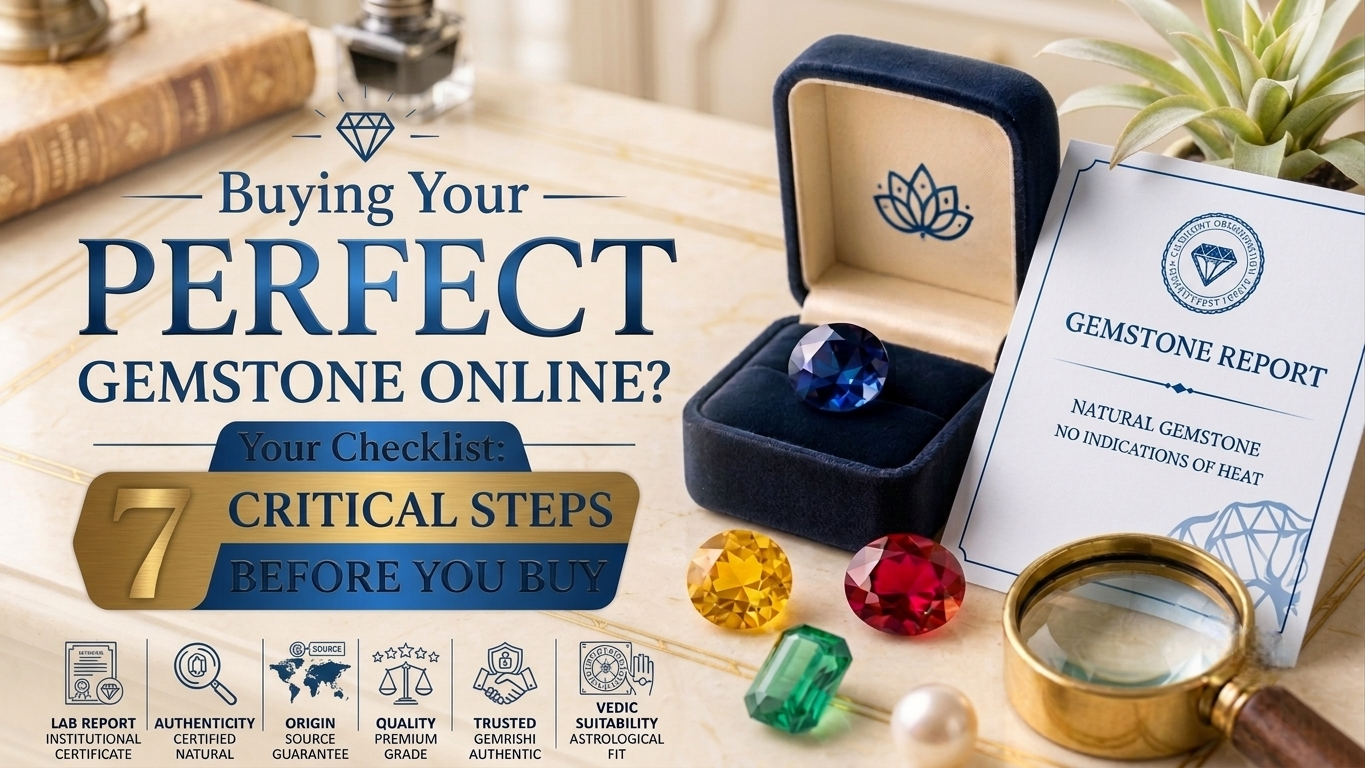
- Insist on Independent Lab Reports: A certificate should explicitly say "Natural Corundum - Ruby" with possibly origin and treatment status clearly specified (e.g., No Heat or Standard Thermal Enhancement). Beware of certificates that state "Ruby" without disclosing whether it is synthetic or fracture-filled.
- Beware of Glass-Filled Rubies: Low-grade natural corundum filled with lead-glass looks vibrant but is brittle, chemically altered, and astrologically dead.
- Verify the Chain of Custody: High-stakes astrological purchases require transparent provenance tracking, from raw crystal extraction to the final unheated cut.
To Know More about Rubies, visit www.gemrishi.com
Detailed video by Dr Rishi Verma, Founder, GemRishi.com : https://www.youtube.com/watch?v=qWx5_H8yTDw
Frequently Asked Questions: Natural vs. Lab-Grown Ruby for Astrology
1. Can a lab-grown ruby be used for Vedic astrology (Jyotish)?
- No. While lab-grown rubies match natural rubies chemically and optically, they lack the millions of years of telluric geological incubation in the Earth's mantle required to absorb and channel planetary cosmic rays (Prana) for Surya (Sun) remedies.
2. What is the main difference between natural and synthetic rubies?
- Natural rubies form inside the Earth under immense heat and pressure over millions of years, featuring natural inclusions like rutile silk and fingerprint patterns. Synthetic rubies are grown in factory reactors within 2 to 6 weeks, resulting in artificial growth lines (curved striae) or unnatural, sterile clarity.
3. Will wearing a lab-grown ruby cause negative astrological side effects?
- No. A lab-grown ruby will not harm you or attract negative energy. Because it lacks natural earth resonance, it simply acts as neutral costume jewelry with zero astrological impact.
4. Are heated natural rubies acceptable for astrological remediation?
- Classical Jyotish prefers completely untreated, unheated (aprakritik) rubies. However, mild traditional thermal heating to enhance clarity is generally accepted, provided no foreign chemicals, fluxes, or lead-glass fillings are infused into the stone.
5. What is a glass-filled ruby, and is it suitable for astrology?
- A glass-filled ruby is low-grade, heavily fractured natural corundum infused with lead glass to artificially enhance clarity and color. It is structurally fragile, chemically altered, and considered astrologically ineffective (dead stone).
6. Which natural ruby origins are best for Vedic astrology?
- While Burmese (Myanmar) rubies are traditionally considered the highest quality for astrological potency due to their deep color saturation. High-grade untreated rubies from Mozambique, Madagascar, Tanzania, Afghanistan, Cambodia, and Sri Lanka (Ceylon) are also effective choices.
7. How much carat weight should I wear for a Sun remedy?
- Vedic gemology generally recommends wearing a stone with a weight equivalent to roughly 1/12th of your body weight in Ratti (typically between 5 to 8 carats for adults), or depending on the recommendation of your astrologer.
8. How should an astrological ruby (Manikya) be worn?
- An astrological ruby should be set in 18K/22K Gold or Copper with an open-back setting so the gem touches the skin. It is traditionally energized (Pran Pratishtha) and worn on the ring finger of the working hand on a Sunday morning during Shukla Paksha (waxing moon).
9. How can I confirm if my ruby is 100% natural and untreated?
- Always insist on an independent laboratory certificate from a recognized gemological authority (such as IIGJ - GJEPC, GIA, IGI, or AGS). The report must explicitly state "Natural Corundum - Ruby" along with clear disclosures regarding origin and treatment status (e.g., "No Indications of Thermal Enhancement").
10. Why are natural rubies significantly more expensive than lab-created ones?
- Natural rubies are geologically scarce, especially in gem-quality, unheated grades, and command strong value appreciation over time. In contrast, lab-grown rubies can be mass-produced on demand, which leads to rapid market depreciation and negligible resale or heirloom value.
Have Questions Regarding This Gemstone?
Connect 1-on-1 with GemRishi’s certified Vedic gemologists on WhatsApp for personalized birth chart recommendations, lab certificate verification, or custom jewelry quotes.
Gemrishi
Gemrishi is a certified gemologist and Vedic astrology scholar at GemRishi with over 15 years experience in natural gemstone origin authentication.