Mozambique Ruby vs Burma Ruby: Which Is Best? Color, Quality, Value & Buying Guide
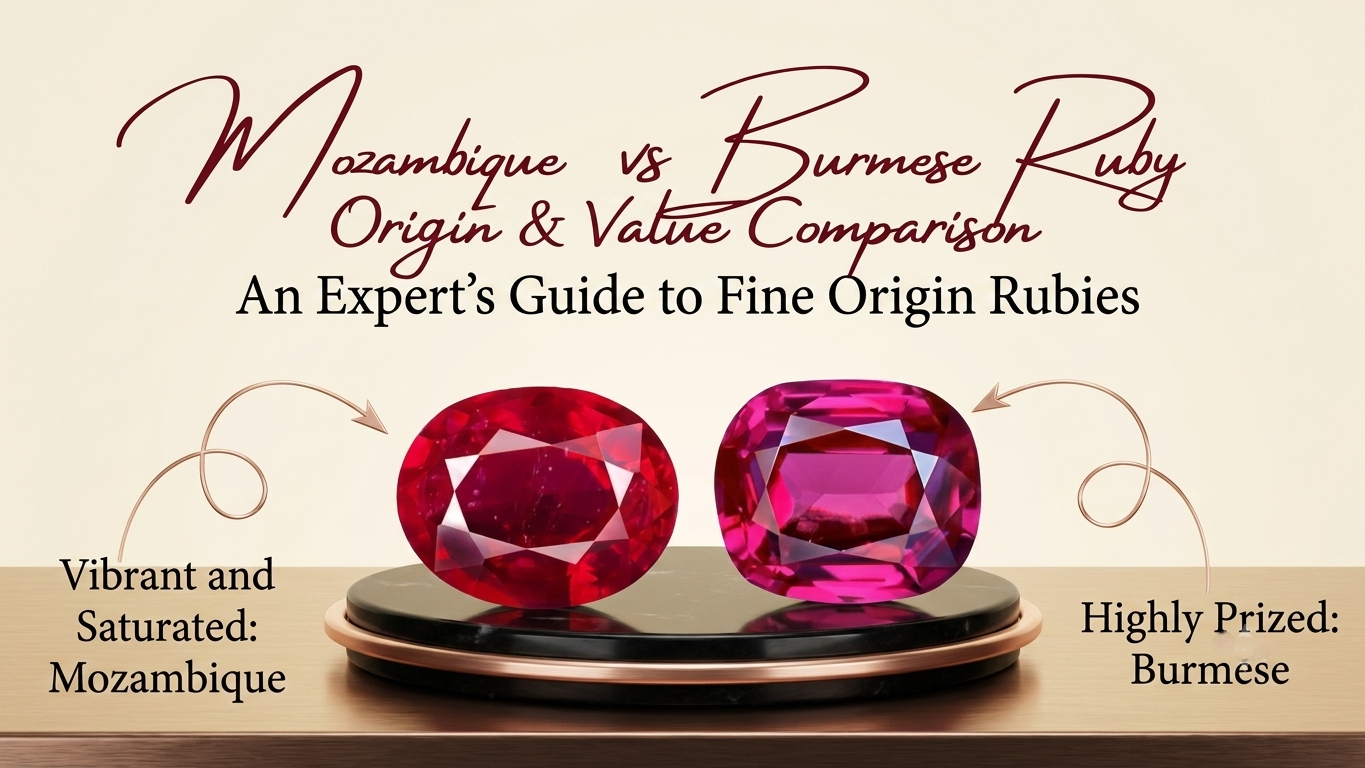
Ruby is one of the world's most treasured colored gemstones and is traditionally known as Manik or Manikya in Vedic astrology. Among the many ruby origins available today, Burma (Myanmar) and Mozambique are two of the most discussed.
Burmese rubies have a legendary reputation for their vivid red color, rarity, and historical importance. Mozambique, on the other hand, has emerged as a major source of fine-quality natural rubies and offers exceptional stones in a wide range of colors and sizes.
But which ruby is actually better?
The answer is not simply "Burma" or "Mozambique." The quality of an individual ruby matters more than its origin alone. Color, clarity, treatment, transparency, cut, size, certification, and rarity all influence a ruby's beauty and value.
In this guide, we compare Mozambique Ruby vs Burma Ruby to help you understand their differences and make a more informed buying decision.
What Is a Burma Ruby?
Burma Ruby, also called Burmese Ruby, refers to natural rubies originating from Myanmar, historically known as Burma.
Mogok in Myanmar has been famous for producing exceptional rubies for centuries. Fine Burmese rubies are particularly admired for their rich red to slightly purplish-red colors and attractive fluorescence.
The finest examples may display the highly prized "pigeon blood" red color.
Because exceptional Burmese rubies are rare, stones with outstanding color, clarity, size, and desirable treatment characteristics can command very high prices.
What Is a Mozambique Ruby?
Mozambique Ruby refers to natural ruby originating from Mozambique in southeastern Africa.
Mozambique has become one of the most important modern sources of ruby. The country produces rubies in a broad range of qualities, from commercial-grade stones to exceptional gems suitable for high-end jewelry.
Fine Mozambique rubies can display intense red and vivid red colors and can occur in larger sizes than many historically important ruby sources.
GemRishi also lists Ruby Mozambique among its gemstone offerings, making it an origin worth considering when exploring natural ruby options.
Explore GemRishi's Ruby collection
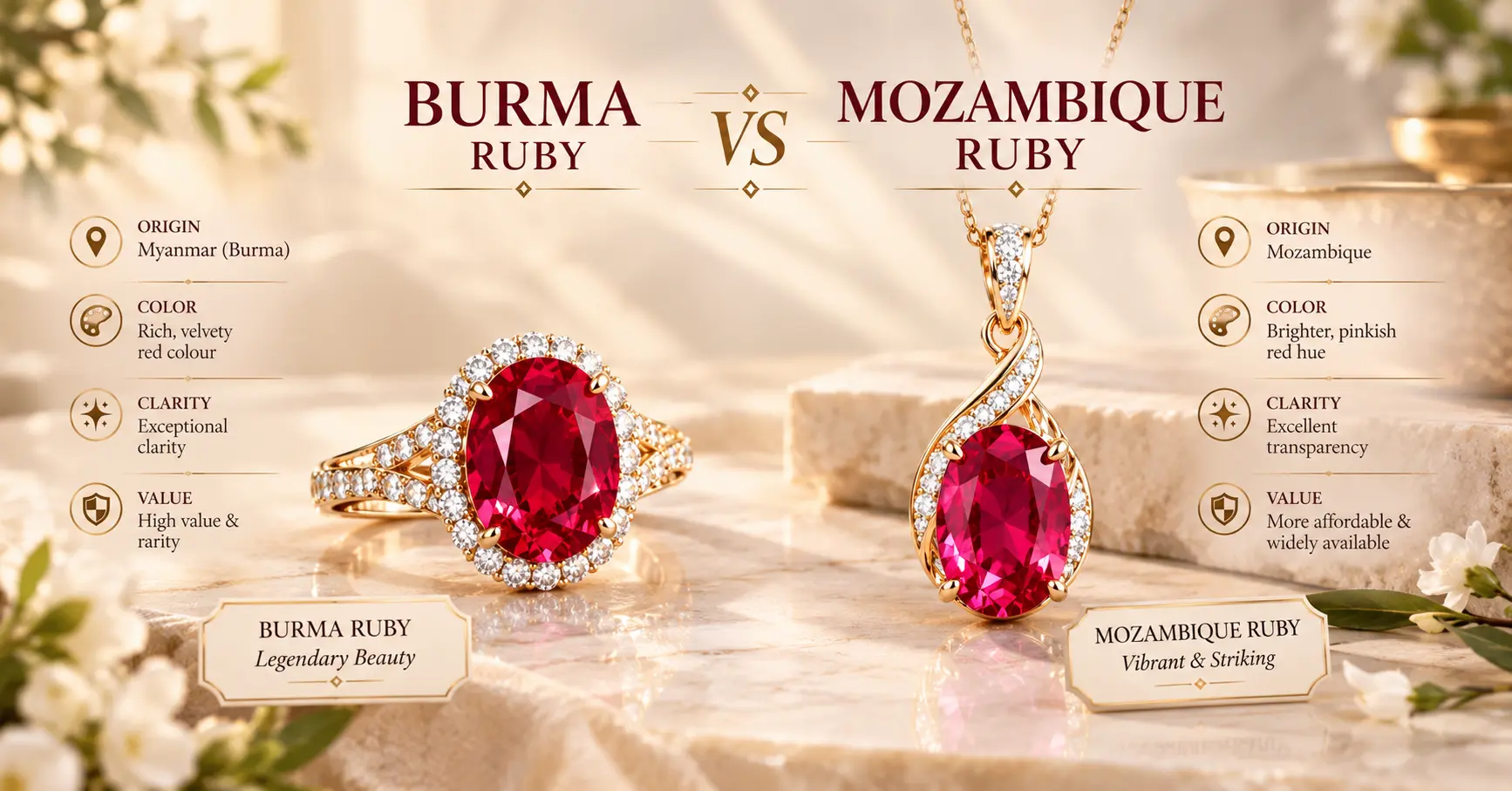
Burma Ruby vs Mozambique Ruby: Quick Comparison
FactorBurma RubyMozambique RubyOriginMyanmar (Burma)MozambiqueHistorical reputationExceptionalRelatively newer major sourceTypical color rangeRed to slightly purplish-redRed to vivid red, with varying tonesFine colorHighly prizedCan be exceptionally vividClarityCan range from included to relatively cleanCan range from included to relatively cleanAvailabilityFine stones can be very rareWider availability across qualitiesLarge stonesRare in exceptional qualityLarger stones can be availableMarket prestigeExtremely high for fine stonesStrong and growingValueExceptional stones can command very high pricesCan offer strong value depending on qualityAstrological useNatural ruby traditionally associated with the SunNatural ruby is also Ruby/ManikBest choiceDepends on the individual stoneDepends on the individual stone
1. Color: Which Ruby Has Better Color?
Color is arguably the most important factor when evaluating a ruby.
The most desirable rubies generally display a strong, vivid red with good saturation and attractive brightness.
Burma Ruby Color
Fine Burmese rubies are famous for their rich red color. Some exceptional stones display the highly coveted pigeon-blood appearance.
The finest examples can show:
- Vivid red color
- Strong saturation
- Attractive fluorescence
- Excellent visual intensity
- Desirable red-to-slightly-purplish-red tones
Mozambique Ruby Color
Mozambique rubies can also display highly attractive vivid red colors.
Some exceptional Mozambique rubies can rival the visual appeal of Burmese material, particularly when they combine strong saturation with good transparency and attractive fluorescence.
Therefore, it is inaccurate to assume that every Burmese ruby has better color than every Mozambique ruby.
A top-quality Mozambique ruby can be more desirable than an average-quality Burmese ruby.
2. Clarity: Which Origin Produces Cleaner Rubies?
Ruby is a naturally included gemstone, meaning that inclusions are common.
In fact, natural inclusions can provide important information about a ruby's formation and origin.
Burmese Ruby
Burmese rubies commonly contain natural inclusions such as:
- Rutile silk
- Mineral crystals
- Fluid inclusions
- Healing fractures
- Color zoning
Fine rubies with attractive transparency and good color are particularly valuable.
Mozambique Ruby
Mozambique rubies can also contain a variety of natural inclusions.
Depending on the deposit and individual stone, they may display:
- Mineral inclusions
- Rutile
- Fingerprint-like inclusions
- Color zoning
- Fractures and healed fissures
The important point is that clarity should be evaluated on the individual gemstone rather than judged purely by origin.
3. Treatment: One of the Most Important Buying Factors
When comparing Burma and Mozambique rubies, treatment is extremely important.
Many rubies available in the market are heated to improve their color and clarity.
Heat treatment is an established gemstone treatment, but it can significantly affect a ruby's market value.
An untreated ruby with excellent color and clarity can be considerably rarer and more valuable than a comparable-looking heated ruby.
When buying a ruby, ask:
- Is the ruby natural?
- Has it been heated?
- Is there evidence of lead-glass filling?
- Has the stone undergone other treatments?
- Does the certificate clearly state the treatment status?
GemRishi emphasizes the importance of independent laboratory certification and treatment disclosure when purchasing natural gemstones.
Read GemRishi's guide to natural vs lab-grown Ruby
4. Natural vs Synthetic Ruby
Another important distinction is between natural ruby and laboratory-created ruby.
Both natural and synthetic rubies are varieties of corundum, but their origins are different.
A natural ruby forms through geological processes over a very long period, whereas a synthetic ruby is created in a laboratory.
If you are buying a ruby for collection, investment, or traditional astrological purposes, make sure the gemstone is clearly identified as natural ruby.
Do not assume that a very clear and attractive ruby is automatically natural.
GemRishi's ruby guidance recommends relying on appropriate laboratory documentation rather than visual appearance alone.
Explore GemRishi's certified gemstones
5. Which Ruby Is More Valuable?
There is no fixed answer to whether Burma Ruby or Mozambique Ruby is more valuable.
Ruby value depends on several characteristics:
Color
Vivid, attractive red color generally increases desirability.
Clarity
Good transparency and fewer distracting inclusions can increase value.
Treatment
Untreated or minimally treated fine rubies are generally much rarer.
Size
Large rubies with exceptional color and quality are especially rare.
Cut
A well-proportioned cut can improve brilliance, color appearance, and overall beauty.
Origin
Origin can influence market perception and value, particularly when supported by a reputable laboratory report.
Certification
A reliable gemological report can provide important information about natural origin, treatment, and, where determinable, geographic origin.
6. Why Burma Ruby Is Considered So Special
Burma has a legendary place in ruby history.
The Mogok region has produced some of the world's most famous rubies, contributing significantly to Burmese ruby's reputation.
Fine Burmese rubies are prized for their:
- Exceptional red color
- Strong saturation
- Fluorescence
- Historical significance
- Rarity
- Collectibility
For collectors seeking historically important and exceptionally rare ruby material, a fine Burmese ruby can be an extraordinary choice.
However, the term "Burma Ruby" alone should not be interpreted as a guarantee of exceptional quality.
A ruby still needs to be evaluated on its individual characteristics.
7. Why Mozambique Ruby Is Becoming Increasingly Popular
Mozambique has become an important modern source of natural ruby.
One reason for its popularity is the availability of rubies across a broad range of sizes and qualities.
High-quality Mozambique rubies can offer:
- Strong red color
- Good saturation
- Attractive transparency
- Larger size options
- Excellent jewelry appeal
- Potentially strong value compared with exceptional Burmese material
This makes Mozambique an important origin for both jewelry buyers and gemstone collectors.
8. Which Ruby Is Better for Jewelry?
For jewelry, the best ruby is the one that provides the right combination of color, clarity, cut, durability, and treatment for your budget.
A Mozambique ruby can be an excellent choice for:
- Ruby rings
- Pendants
- Earrings
- Statement jewelry
- Collector pieces
- Custom gemstone jewelry
A Burmese ruby can be particularly attractive for:
- Fine jewelry
- Rare gemstone collections
- High-end ruby rings
- Collector-grade pieces
- Exceptional investment-quality stones
However, the quality of the actual stone should always take priority over the country name.
9. Which Ruby Is Better for Astrology?
In Vedic astrology, Ruby or Manikya is traditionally associated with the Sun (Surya).
From a traditional astrological perspective, the primary consideration is whether Ruby is suitable for the individual's birth chart.
The choice between Mozambique and Burma should not be made solely based on geographic origin.
For an astrological ruby, buyers should pay particular attention to:
- Natural origin
- Authenticity
- Treatment status
- Gemstone quality
- Appropriate weight
- Proper certification
- Horoscope suitability
GemRishi's astrological ruby guidance discusses natural ruby, certification, and traditional considerations for wearing Manik.
Read GemRishi's Ruby astrology guide
10. Pigeon Blood Ruby: Does Origin Matter?
"Pigeon blood" is a famous term associated with exceptionally desirable ruby color.
Historically, the term has been strongly associated with Burmese rubies, particularly fine Mogok material.
However, exceptional ruby color is not exclusive to Burma.
Mozambique has also produced rubies with highly saturated, vivid red color.
Therefore, buyers should not purchase a ruby solely because a seller uses the words "pigeon blood."
A reputable laboratory report and detailed examination of the gemstone are much more important.
11. Certification Is Essential When Buying an Expensive Ruby
A professional laboratory report can help establish important information about a ruby.
Depending on the laboratory and examination, a report may identify:
- Natural or synthetic origin
- Ruby variety
- Treatment status
- Geographic origin, when determinable
- Other gemological characteristics
For valuable Burmese or Mozambique rubies, origin determination can be especially important because geographic origin can significantly influence market value.
When buying an expensive ruby, consider requesting certification from a respected independent gemological laboratory.
GemRishi's gemstone buying guidance also emphasizes the importance of certification and transparency when purchasing valuable gemstones.
Read GemRishi's Gemstone Buying Guide
12. How to Choose Between Mozambique and Burma Ruby
Instead of asking only "Which origin is better?", use the following checklist.
Choose a Burma Ruby if:
- You value historical provenance.
- You are looking for a rare collector gemstone.
- You prefer the traditional prestige associated with Burmese rubies.
- The stone has exceptional color and quality.
- The origin is supported by a reputable laboratory report.
- The treatment status is clearly disclosed.
Choose a Mozambique Ruby if:
- You want a beautiful natural ruby from a major modern source.
- You are looking for strong red color.
- You want more options across different sizes and qualities.
- You are seeking an attractive alternative to expensive Burmese material.
- The individual gemstone offers excellent color, clarity, and transparency.
- The stone is properly certified.
13. Burma vs Mozambique Ruby: What Should You Prioritize?
When comparing two rubies, use this order of importance:
1. Natural authenticity
First determine whether the stone is natural ruby.
2. Treatment
Understand whether the stone has been heated or otherwise treated.
3. Color
Look for attractive, vivid, well-saturated red.
4. Transparency and clarity
Evaluate how the inclusions affect the stone's appearance.
5. Cut
A good cut can enhance the ruby's brilliance and overall appearance.
6. Carat weight
Larger fine-quality rubies are significantly rarer.
7. Origin
Burma or Mozambique can add important context, but origin should be considered alongside the stone's actual quality.
8. Certification
For expensive rubies, independent certification is extremely important.
Mozambique Ruby vs Burma Ruby: Final Verdict
So, which is better: Mozambique Ruby or Burma Ruby?
There is no universal winner.
Burma Ruby has unmatched historical prestige and is particularly famous for exceptional red color and rarity. A fine untreated Burmese ruby with outstanding color and transparency can be an extremely valuable collector gemstone.
Mozambique Ruby, however, has established itself as a major source of high-quality natural ruby. Exceptional Mozambique rubies can offer vivid color, impressive size, and excellent beauty, sometimes providing a compelling alternative to Burmese material.
The most important lesson is this:
Do not buy the origin. Buy the quality of the individual gemstone.
A superior Mozambique ruby can be a better purchase than an inferior Burmese ruby, while an exceptional Burmese ruby can command a premium because of its rarity, provenance, and quality.
Before making a purchase, compare the gemstone's color, clarity, treatment, transparency, cut, carat weight, certification, and origin report.
For buyers looking for natural Ruby/Manik, you can explore the GemRishi Ruby collection and compare available options based on your requirements.
Frequently Asked Questions
Is Mozambique Ruby better than Burma Ruby?
Not necessarily. Both origins can produce excellent rubies. The quality of the individual gemstone is more important than origin alone.
Is Burmese Ruby more expensive than Mozambique Ruby?
Fine Burmese rubies can command very high prices because of their rarity, historical prestige, and exceptional quality. However, prices vary greatly according to color, clarity, treatment, size, and certification.
Are Mozambique Rubies good quality?
Yes. Mozambique is an important source of natural ruby and can produce rubies with excellent red color, saturation, transparency, and jewelry appeal.
Is Burma Ruby better for astrology?
In traditional Vedic astrology, Ruby is associated with the Sun regardless of whether the natural ruby originates from Burma or Mozambique. Astrological suitability should be determined from the individual's birth chart rather than origin alone.
Which Ruby has the best color?
The most desirable rubies generally have vivid, strongly saturated red color with attractive transparency. Both Burmese and Mozambique rubies can exhibit exceptional color.
Should I buy an untreated Ruby?
An untreated natural ruby of excellent quality can be particularly rare and valuable. However, the decision should depend on your budget, purpose, quality requirements, and laboratory certification.
How can I verify a Burma or Mozambique Ruby?
For a valuable ruby, the safest approach is to obtain an independent gemological report that confirms whether the stone is natural, identifies treatment status, and, when possible, determines geographic origin.
Conclusion
Mozambique and Burma represent two of the most important ruby origins in the gemstone market.
Burma Ruby stands out for heritage, rarity, and exceptional examples of vivid red color. Mozambique Ruby stands out for its growing reputation, availability, and ability to produce impressive stones in a variety of sizes and qualities.
Whether you choose Burma or Mozambique, focus on what truly determines a ruby's quality: color, clarity, transparency, treatment, cut, size, authenticity, and certification.
For an astrological Ruby, also make sure that the gemstone is suitable according to your birth chart before wearing it as a planetary gemstone.
A beautifully colored, natural, well-certified ruby from either origin can be a remarkable addition to a fine jewelry or gemstone collection.
Have Questions Regarding This Gemstone?
Connect 1-on-1 with GemRishi’s certified Vedic gemologists on WhatsApp for personalized birth chart recommendations, lab certificate verification, or custom jewelry quotes.
Gemrishi
Gemrishi is a certified gemologist and Vedic astrology scholar at GemRishi with over 15 years experience in natural gemstone origin authentication.