Ruby Stone (Manik) Meaning & Wearing Guide: Benefits, Finger, Metal, Day & Weight
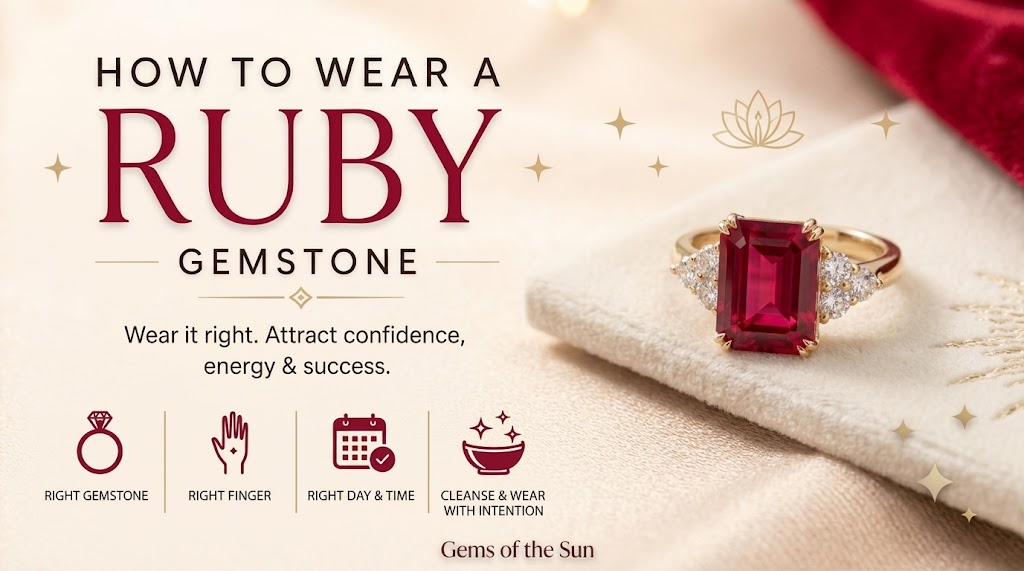
Ruby is one of the most admired gemstones in the world, known for its rich red color, rarity, and timeless appeal. In Vedic astrology, Ruby in vedic astrology is traditionally associated with the Sun (Surya) and is considered an important astrological gemstone.
It is also known as Manik, Manikya, or Chuni, Ruby is traditionally linked with qualities such as confidence, leadership, vitality, recognition, and determination. Traditional astrology considers factors such as the birth chart, planetary placement, gemstone quality, weight, metal, and wearing method.
In this guide, we will explore the meaning of Ruby, its traditional benefits, the correct finger and metal, suitable day and time, recommended weight, and important things to consider before wearing it.
What Is Ruby Stone?
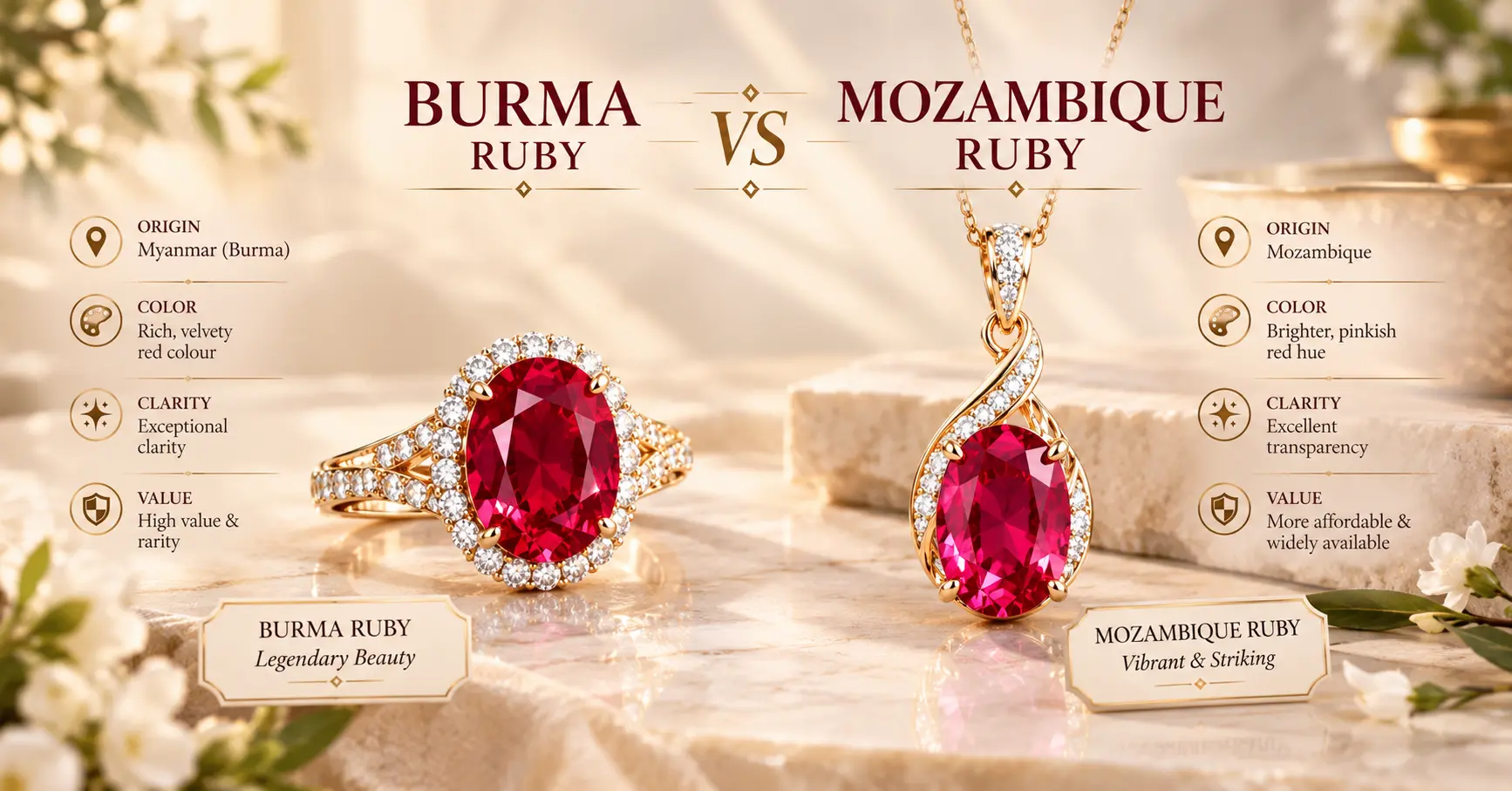
Ruby is a precious gemstone belonging to the corundum mineral family. Its red color is mainly caused by the presence of chromium. Fine-quality Ruby is valued for its vibrant color, transparency, rarity, and overall appearance.
Natural Rubies can vary from light pinkish-red to deep, vivid red. Some particularly valuable stones display a strong, lively red color with good transparency.
In Indian astrology and gemstone traditions, Ruby is known as Manik and is associated with the Sun.
For readers interested in exploring Ruby gemstones, you can browse the Ruby (Manik) collection at GemRishi.
Ruby Stone Meaning in Vedic Astrology
In Vedic astrology, Ruby represents the Sun (Surya), which is traditionally regarded as a symbol of authority, individuality, confidence, vitality, and self-expression.
The Sun is also associated with leadership, reputation, recognition, and one's sense of identity. Because of these associations, Ruby is traditionally recommended when strengthening the positive qualities represented by the Sun is considered appropriate in a birth chart.
However, Ruby is not automatically suitable for everyone. A gemstone recommendation is traditionally made after examining the individual's horoscope and the condition of the Sun.
Traditional Benefits of Ruby Stone
Ruby has been valued in gemstone traditions for centuries. In Vedic astrology, its potential benefits are traditionally associated with the qualities of the Sun.
1. May Support Confidence
Ruby is traditionally believed to encourage self-confidence and a stronger sense of individuality. It is often associated with courage and the ability to take initiative.
2. Associated With Leadership
Because the Sun represents authority and leadership, Ruby is traditionally connected with qualities such as decision-making, responsibility, and leadership.
3. Traditionally Linked With Recognition
Ruby is often associated with name, reputation, status, and recognition. According to traditional astrological beliefs, a well-suited Ruby may support these areas when the Sun is favorably placed.
4. May Encourage Determination
Ruby is traditionally regarded as a gemstone of vitality and willpower. It is believed to help encourage a more determined and purposeful approach toward goals.
5. Associated With Vitality
The Sun has traditionally been connected with vitality and life force. For this reason, Ruby is sometimes considered a gemstone that represents energy and enthusiasm.
6. Symbol of Authority and Self-Expression
Ruby's connection with the Sun makes it particularly associated with personal identity, authority, dignity, and the ability to express oneself confidently.
Note: These benefits come from traditional astrological beliefs and should not be considered scientifically proven effects.
Who Should Wear Ruby Stone?
Ruby is traditionally recommended for people whose birth charts indicate a favorable role for the Sun and who may benefit from strengthening its influence.
It is commonly associated with individuals in areas involving leadership, administration, authority, government, management, or public recognition. However, profession or zodiac sign alone should not be used as the only reason to wear Ruby.
A proper Vedic astrology assessment generally considers the Ascendant (Lagna), Sun's house placement, sign, strength, aspects, conjunctions, and planetary periods (Dasha) before recommending the gemstone.
Which Finger Should Ruby Be Worn On?
According to traditional Vedic gemstone practices, Ruby is generally worn on the ring finger.
For a ring, the gemstone should traditionally be set so that the Ruby makes proper contact with the finger. The setting and design should also allow the stone to receive adequate exposure rather than being completely covered from the back.
Astrologer after their calculation can suggest better way and right finger the Ruby should be weared in which finger
Which Metal Is Best for Ruby?
Ruby is traditionally worn in gold, as gold is commonly associated with the Sun.
Some gemstone traditions may also consider copper or other suitable metals depending on the astrological recommendation and jewelry design.
For a traditional astrological Ruby ring, gold is generally the first choice.
Which Day Should Ruby Be Worn?
Ruby is traditionally associated with Sunday, the day connected with the Sun.
Many Vedic gemstone traditions recommend wearing Ruby on Sunday, particularly during the morning hours.
The exact timing, however, may be selected according to the individual's horoscope and local astrological considerations.
What Is the Best Time to Wear Ruby?
Traditionally, Ruby is worn in the morning on Sunday.
Before wearing it, some practitioners follow a purification or energizing ritual. The gemstone may be cleaned and placed in a suitable ritual preparation according to one's tradition.
If you are wearing Ruby specifically for astrological purposes, following a personalized recommendation from a qualified Vedic astrologer is preferable to relying only on general rules.
How Many Carats of Ruby Should You Wear?
There is no universal Ruby weight that is suitable for everyone.
Traditional gemstone recommendations may consider the person's birth chart, body weight, planetary conditions on you and the quality of the gemstone when suggesting a suitable weight.
As a general principle, quality should not be ignored simply to obtain a larger gemstone. A smaller, natural, well-cut Ruby with good color and transparency may be more desirable than a larger stone of poor quality.
Before purchasing, ask the seller about:
- Natural or laboratory-created origin
- Treatments
- Carat weight
- Color and clarity
- Gemstone certification
- Country of origin, if claimed
- Any visible inclusions or fractures
You can also use the GemRishi Carat to Ratti Converter if you want to understand the relationship between carat and ratti measurements.
How to Wear Ruby Stone Correctly
If you have been advised to wear Ruby astrologically, a traditional wearing process may include the following steps:
- Choose a natural, good-quality Ruby from a reliable seller.
- Have it properly set in a suitable ring or pendant.
- Traditionally, use gold as the preferred metal.
- Clean the gemstone and jewelry before wearing.
- Wear it on a Sunday morning according to your chosen tradition.
- Place the ring on the traditional ring finger.
- Some practitioners recite a traditional Sun mantra during the wearing ceremony.
A commonly used Sun mantra is:
“Om Suryaya Namah”
If following a specific astrological tradition, use the mantra and ritual recommended by your astrologer.
How to Choose a Good Ruby?
Choosing the right Ruby is just as important as knowing how to wear it.
Natural Ruby
Natural Ruby is formed naturally within the earth and can contain inclusions. Natural origin can significantly influence its value.
Color
A lively, attractive red color is generally desirable. Extremely dark or overly brownish stones may be less appealing depending on the overall quality.
Clarity
Natural Rubies often contain inclusions. The goal is not necessarily to find a completely flawless stone but to look for a Ruby with good overall appearance and transparency.
Cut
A good cut helps the gemstone display its color and brilliance. Poor cutting can make even a good-colored Ruby look dull.
Treatments
Some Rubies undergo treatments to improve their color and clarity. Treatment does not automatically make a Ruby undesirable, but it should be properly disclosed to the buyer.
Certification
For an expensive Ruby, a reputable independent laboratory certificate can provide useful information about its natural or synthetic origin and treatments.
Natural Ruby vs Synthetic Ruby
Natural and laboratory-created Rubies can look remarkably similar, but they are not the same in terms of origin.
A natural Ruby forms naturally in the earth, while a synthetic Ruby is created in a laboratory but has essentially the same chemical composition and crystal structure as natural Ruby.
There are also Ruby imitations, which are different materials made to resemble Ruby.
Therefore, buyers should ask for clear disclosure of whether a gemstone is natural, synthetic, treated, or an imitation.
For more information, read the GemRishi guide Lab-Grown Ruby vs. Natural Ruby for Vedic Astrology.
Should You Wear Ruby Based Only on Your Zodiac Sign?
Not necessarily.
You may find Ruby recommendations based on zodiac signs, birth months, or Sun signs. However, traditional Vedic astrology generally takes a more detailed approach.
A gemstone can strengthen the qualities associated with a planet, so the planet's overall role in the birth chart matters.
For this reason, your zodiac sign alone should not be treated as a complete basis for choosing Ruby.
Ruby Birthstone vs Astrological Ruby
Ruby is traditionally recognized as the birthstone for July in modern birthstone traditions.
However, birthstone systems and Vedic astrological gemstone recommendations are two different concepts.
Someone may choose Ruby simply because it is their birthstone, while an astrologer may recommend or avoid Ruby based on the individual's horoscope.
Understanding this distinction can help prevent confusion when researching gemstone recommendations.
Who Should Avoid Wearing Ruby?
Ruby should not be considered a universally suitable gemstone.
In traditional astrology, it may be avoided when the Sun is considered unsuitable for strengthening in a person's birth chart. The exact reasoning depends on factors such as the Ascendant, planetary relationships, house placement, aspects, and Dasha.
If you are unsure whether Ruby is suitable for you, it is better to get your birth chart evaluated before making an astrological gemstone purchase.
Ruby Stone Care Tips
Ruby is a durable gemstone, but proper care will help maintain its appearance.
- Keep Ruby away from harsh chemicals.
- Avoid exposing jewelry unnecessarily to extreme heat.
- Store Ruby separately from softer gemstones to prevent scratching.
- Clean it gently with mild soapy water and a soft cloth.
- Avoid using harsh household cleaners.
- Have the setting checked occasionally to make sure the gemstone remains secure.
Common Mistakes to Avoid Before Wearing Ruby
Choosing Only by Color
A bright red appearance does not automatically mean the stone is valuable or natural.
Ignoring Treatments
Always ask whether the Ruby has been treated.
Buying Without Certification
For a high-value gemstone, an independent laboratory report can provide greater confidence about its identity and treatment status.
Choosing the Weight Without Guidance
More carats do not automatically mean better astrological suitability.
Following Generic Rules Blindly
Finger, metal, weight, and wearing method are often presented as fixed rules online. Traditional astrology, however, can involve individual horoscope analysis.
Frequently Asked Questions About Ruby Stone
What is Ruby called in Vedic astrology?
Ruby is commonly known as Manik or Manikya and is traditionally associated with the Sun (Surya).
Which finger is best for wearing Ruby?
Traditionally, Ruby is worn on the ring finger.
Which metal is best for Ruby?
Gold is traditionally considered the preferred metal for Ruby in Vedic astrology.
Which day should Ruby be worn?
Ruby is traditionally worn on Sunday, as Sunday is associated with the Sun.
What weight of Ruby should I wear?
The appropriate weight depends on the individual and the astrological recommendation. There is no single weight suitable for everyone.
Can Ruby be worn by everyone?
No. In traditional Vedic astrology, Ruby is recommended based on the individual's birth chart rather than being considered suitable for everyone.
Can I wear Ruby for its beauty without following astrological rules?
Yes. Ruby can be worn as jewelry simply because you appreciate its color and beauty. Astrological wearing rules are relevant when the gemstone is being worn specifically for astrological purposes.
Is natural Ruby better than synthetic Ruby?
Natural and synthetic Rubies are different in origin and can differ significantly in value. If you are buying Ruby for astrological or investment purposes, ask for clear disclosure and reliable certification.
Final Thoughts
Ruby, or Manik, is a beautiful red gemstone. In Vedic astrology, it has a strong traditional association with the Sun and qualities such as confidence, leadership, vitality, authority, and recognition.
If you are planning to wear Ruby for astrological purposes, do not choose it solely because of your zodiac sign or because someone recommends a particular carat weight. Consider the gemstone's natural origin, quality, treatment, weight, setting, and your individual birth chart. Take a proper suggestion from astrologer.
For jewelry purposes, choose a Ruby that appeals to you aesthetically and comes with transparent information about its quality and treatment. For astrological use, a personalized horoscope-based recommendation is the more traditional approach.
Have Questions Regarding This Gemstone?
Connect 1-on-1 with GemRishi’s certified Vedic gemologists on WhatsApp for personalized birth chart recommendations, lab certificate verification, or custom jewelry quotes.
Gemrishi
Gemrishi is a certified gemologist and Vedic astrology scholar at GemRishi with over 15 years experience in natural gemstone origin authentication.