Burma vs. Mozambique Ruby (Manik): Which Natural Ruby Is Rarer and More Valuable?
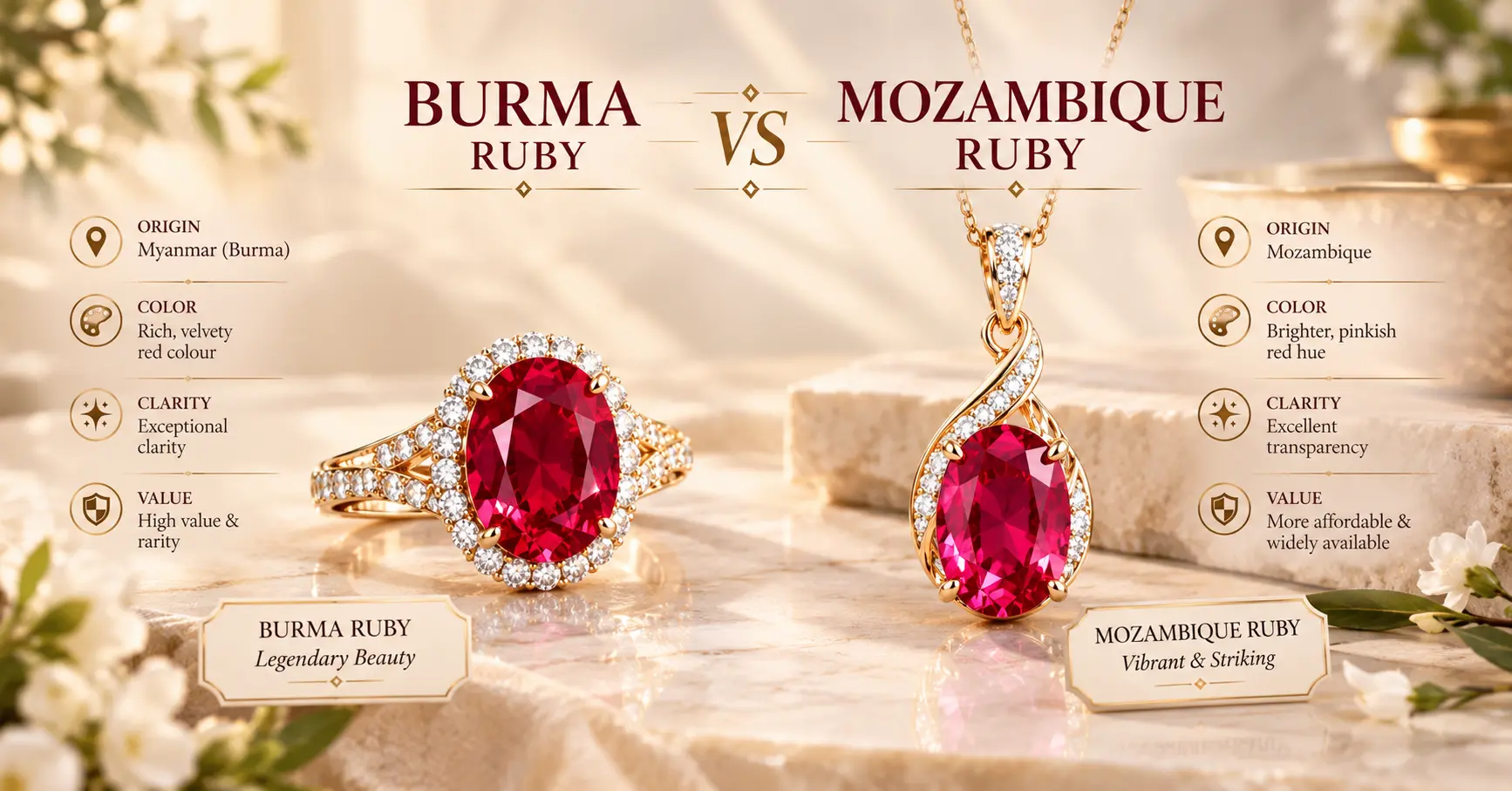
Ruby has long been admired for its rich red colour, rarity and place in fine jewellery. Known as Manik in Vedic astrology, ruby is traditionally associated with the Sun and is valued by gemstone collectors, jewellery lovers and people who follow astrological traditions. But when comparing Burmese rubies with rubies from Mozambique, buyers often face an important question: which origin offers greater rarity, beauty and value?
Both regions produce natural rubies, yet their histories in the gemstone market are different. Burma, now officially known as Myanmar, is famous for the historic Mogok mines and exceptional rubies prized by collectors. Mozambique, particularly the Montepuez region, has become a major source of ruby in the modern gemstone trade.
The truth is that a ruby’s origin can influence its desirability and price, but it does not tell the entire story. Colour, clarity, carat weight, treatment history and reliable certification all matter. Understanding these factors can help you make a more informed decision when exploring the GemRishi gemstone collection.
1. What Makes Burma and Mozambique Rubies Different?
The main difference between Burmese and Mozambican rubies lies in their geological origin, historical reputation and position in the market.
Burmese rubies are especially associated with Mogok in Myanmar, a historic mining region known for producing fine-quality stones. Exceptional examples may display vivid red colour, attractive transparency and strong visual brightness. Fine rubies with independently documented Burmese origin, especially those with little or no evidence of treatment, can attract significant collector interest.
Mozambique rubies gained greater international prominence after major deposits were discovered in the Montepuez region in 2009. Mozambique has since become an important source of gem-quality rubies, supplying stones across a wide range of colours, sizes and qualities. Some Mozambican rubies are exceptionally beautiful and can compete with fine Burmese stones.
According to the Gemological Institute of America (GIA), Mozambique's ruby production significantly changed the international market by increasing the availability of rubies in different quality ranges. <Cite refs={["turn526790search6","turn526790search3"]} />
Neither origin guarantees a superior gemstone. A beautiful, well-documented Mozambique ruby may be a better purchase than a heavily included, poorly cut or treated Burmese ruby.
2. Burmese Ruby: The Rarity and Heritage of Manik
Burmese ruby has a special place in the history of coloured gemstones. The Mogok region has supplied rubies for centuries, and its reputation was built on exceptional stones with rich colour and desirable visual characteristics.
Colour and appearance
Fine Burmese rubies are often admired for vivid red colour, sometimes with a subtle purplish undertone. The trade frequently uses the term “pigeon’s blood” for certain highly desirable red rubies, but the term should not be treated as a guarantee of origin, quality or value. Its precise use can vary between laboratories and market contexts.
The most important consideration is how the ruby looks as a complete gemstone. Strong colour saturation, good brightness and pleasing transparency can make a ruby visually striking. A dark stone that looks dull in ordinary lighting may be less desirable than a brighter ruby with more balanced colour.
Why are Burmese rubies considered rare?
The strongest reputation belongs to exceptional Burmese material, particularly fine-quality stones associated with Mogok. When beautiful colour, attractive clarity, substantial size, minimal treatment and documented origin occur together, the combination becomes much harder to find.
This scarcity helps explain why some Burmese rubies command substantial premiums. However, Myanmar also produces rubies of varying quality, and not every stone from the country is rare or exceptionally valuable.
If you are exploring ruby varieties, the GemRishi Ruby Gemstone collection provides a relevant starting point for learning about ruby as a natural gemstone.
3. Mozambique Ruby: A Major Source of Modern Ruby Supply
Mozambique has transformed the ruby market over the past two decades. The Montepuez region, in particular, has become internationally significant for its ruby deposits and production.
Colour and characteristics
Mozambican rubies can range from pinkish red to deep red, with variation in tone, saturation, transparency and inclusions. Some stones display vivid colour and strong brightness, while others have more visible inclusions or darker appearances.
These differences are normal for a natural gemstone deposit. Two rubies from the same mining region can look very different and have substantially different values.
Mozambican rubies can also be heat-treated to improve aspects of their appearance. Some are sold without evidence of heat treatment, while others have undergone treatment. Buyers should therefore evaluate each stone individually rather than assuming all rubies from one origin share the same treatment history.
Are Mozambique rubies less valuable?
Not necessarily. Mozambique supplies rubies across a broad range of qualities, including exceptional stones that can attract strong demand.
Burmese origin may provide an additional premium for comparable top-quality rubies, but a fine Mozambique ruby can be more desirable than a lower-quality Burmese example. The individual stone—not just the country on its report—should guide the decision.
4. Burma vs. Mozambique Ruby: Which Has Better Colour?
Colour is one of the most important factors in ruby value. Buyers often hear that Burmese rubies are more desirable because of their red colour, but this generalisation needs context.
The finest rubies tend to show a vivid, well-balanced red without appearing excessively dark or too light. Some may have a subtle purplish undertone. A pleasing balance of saturation, brightness and transparency is more important than simply choosing the strongest or darkest red.
Burmese rubies are celebrated for exceptional examples with vivid colour and attractive fluorescence. Mozambican rubies can also display vivid reds and impressive visual appeal.
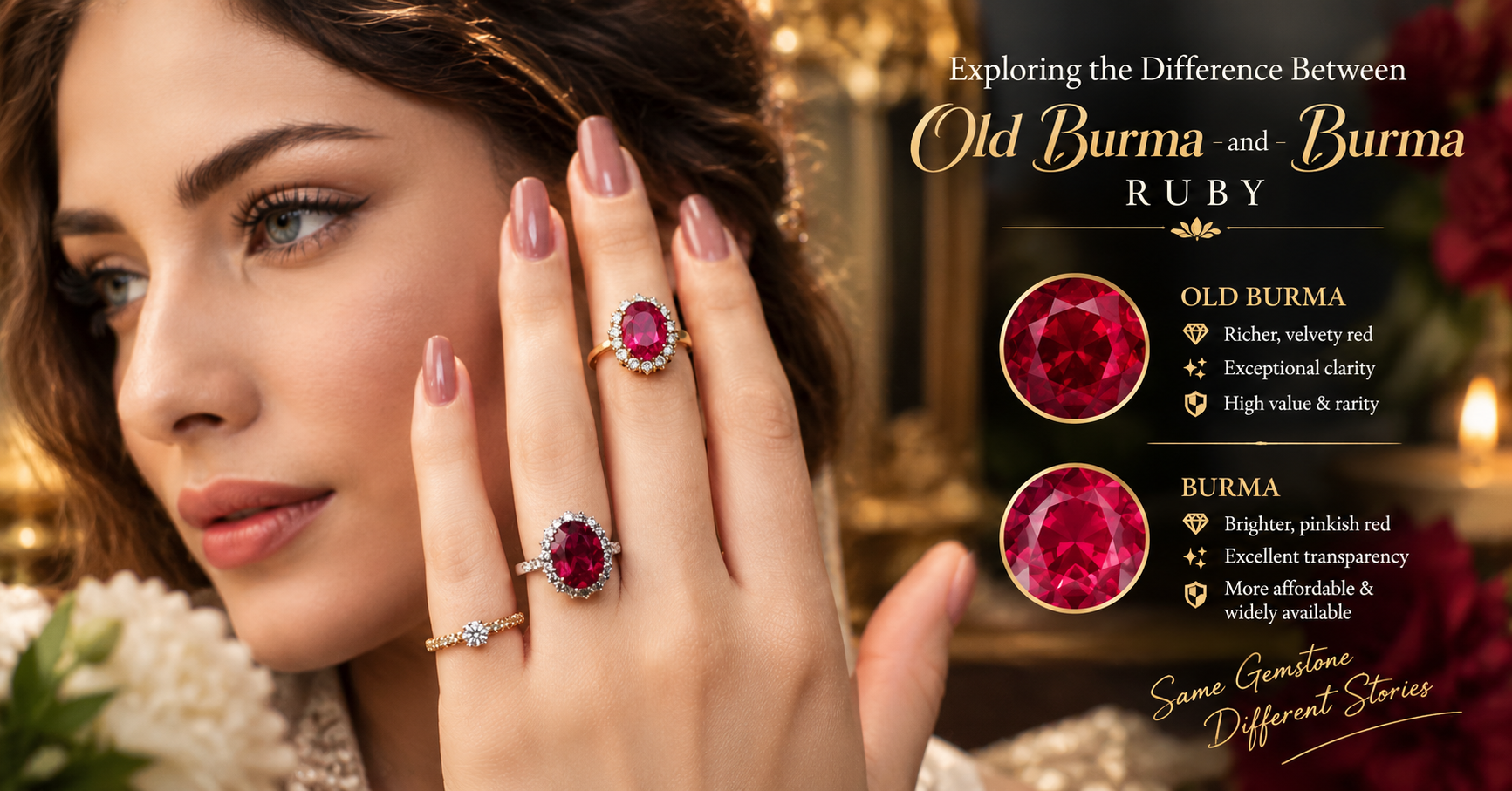
Rather than choosing by origin alone, observe the stone in neutral lighting. Look at whether the colour remains attractive, whether the gemstone appears lively and whether inclusions interfere with its transparency.
For additional context about how gemstone quality varies, you can explore GemRishi’s Ruby: Why This Red Gemstone Is Known as the King of Gemstones.
5. Which Ruby Is Rarer: Burma or Mozambique?
The answer depends on the quality being compared.
Myanmar has a long history of producing highly prized rubies, and exceptional stones from celebrated localities such as Mogok are scarce. This historic reputation, combined with the limited availability of top-quality examples, can make fine Burmese rubies particularly desirable to collectors.
Mozambique has a major ruby-producing region and has contributed substantially to global supply. Yet it would be misleading to describe all Mozambique rubies as common or all Burmese rubies as rare. The finest examples from either source can be difficult to find.
Rarity is best understood as the scarcity of a particular combination of characteristics: attractive colour, transparency, size, condition, treatment status and credible documentation.
For example, a large, vivid, untreated ruby with strong transparency and a laboratory-supported origin report may be much rarer than a smaller, heavily included stone from the same country.
The practical takeaway: exceptional Burmese rubies often benefit from a strong rarity premium, but an exceptional Mozambique ruby can also be a rare and desirable gemstone.
6. What Determines the Price of Burmese and Mozambique Rubies?
Ruby prices can vary dramatically. There is no single reliable price difference that applies to every Burmese and Mozambique ruby.
Several factors influence the final price.
Colour: Vivid, well-balanced red colour is highly desirable. A ruby that appears too dark, too light or unevenly coloured may be less attractive.
Clarity and transparency: Natural rubies commonly contain inclusions. The key is whether those inclusions noticeably reduce transparency, brightness or durability.
Carat weight: Larger rubies of fine quality are generally more difficult to find, so price per carat can rise considerably with size and quality.
Cut and proportions: A well-cut ruby can make better use of its colour and light return. Poor proportions may leave a stone looking dark or lifeless.
Treatment: Heat treatment is an established practice in the ruby trade, but treatment disclosure matters. Lead-glass filling and other significant treatments can affect durability, market acceptance and value differently from conventional heating.
Origin and documentation: A credible laboratory report identifying natural ruby, detectable treatments and geographic origin can support a premium when the stone is genuinely exceptional.
The GIA notes that origin alone does not establish quality: every mining region produces a range of material. <Cite refs={["turn526790search2","turn526790search0"]} />
Before purchasing, review GemRishi’s educational guide on Untreated vs. Heated Gemstones to better understand why treatment information matters.
7. How to Identify a Genuine Burmese or Mozambique Ruby
A ruby’s appearance alone cannot reliably confirm its origin. Natural inclusions, colour and fluorescence may offer clues, but these characteristics overlap between deposits and can be difficult for a non-specialist to interpret.
The most dependable approach is to seek a report from a reputable independent gemological laboratory. Depending on the report and the laboratory’s findings, it may identify the stone as natural ruby, describe detectable treatments and provide a geographic-origin opinion when sufficient evidence is available.
A report may not always be able to determine origin conclusively. This is a recognised limitation of gemological testing, not automatically evidence that a stone is fake.
Keep these checks in mind:
- Confirm that the report refers to the exact gemstone you are buying.
- Check whether the ruby is identified as natural or laboratory-grown.
- Read the treatment disclosure carefully.
- Look for a geographic-origin opinion if Burmese or Mozambique origin is important to you.
- Verify the report through the issuing laboratory when verification is available.
- Be cautious of unusually low prices paired with unsupported claims of rare origin.
You can also read GemRishi’s guides on identifying an original Panna (emerald) and distinguishing original from imitation Yellow Sapphire to understand the importance of gemstone verification across different varieties.
8. Is Burmese Ruby or Mozambique Ruby Better for Investment?
Ruby can attract collectors, but it should not be treated as a guaranteed investment. Prices depend on quality, market demand, documentation, liquidity and the price paid at purchase.
Exceptional Burmese rubies with documented origin and desirable characteristics may command a premium because of their established reputation and scarcity. However, that premium does not guarantee future appreciation.
Mozambique rubies may offer a wider range of choices across different budgets, including some high-quality stones with strong collector appeal. Their future resale value will still depend on the individual gemstone and market conditions.
Before buying a ruby primarily for investment, consider the following:
- Choose quality over a famous country name.
- Obtain independent documentation for valuable stones.
- Understand all treatments and their implications.
- Compare prices for gemstones of genuinely similar quality.
- Keep invoices, laboratory reports and purchase records.
- Remember that selling a gemstone later may take time and involve a significant difference between retail and resale prices.
If you are buying Manik for astrological reasons, keep traditional beliefs separate from financial expectations. Astrology is a matter of belief and tradition, not a scientifically established method of guaranteeing prosperity or investment returns.
9. Which Natural Ruby Should You Choose?
The right choice depends on your purpose, budget and expectations.
Choose a Burmese ruby if you value historic origin, collector appeal and the possibility of acquiring an exceptional stone with documented Myanmar provenance. Be prepared to assess whether the origin premium is justified by the gemstone’s actual quality.
Consider a Mozambique ruby if you want to explore the range of modern ruby supply and compare colour, clarity, size and treatment across different price points. A well-selected stone can offer excellent visual appeal without relying solely on historical reputation.
In either case, ask for transparent information and avoid making a decision based only on claims such as “rare,” “investment-grade” or “pigeon’s blood.”
Explore the GemRishi Ruby collection and the wider GemRishi gemstone range as you research your options. For comparison with other precious gemstones, you can also browse Blue Sapphire, Yellow Sapphire and Morganite.
Conclusion and Final Thoughts
Burma and Mozambique both produce natural rubies worthy of attention, but they occupy different places in the gemstone market. Burmese rubies—particularly exceptional examples from Mogok—have a long-established reputation and may command higher prices when quality and documentation support the premium. Mozambique has become a major source of rubies, including stones with outstanding colour and collector potential.
Ultimately, the most valuable ruby is not simply the one with the most famous origin. It is the one whose colour, clarity, cut, size, treatment status and documentation justify its price.
Whether you choose Burmese Manik or a Mozambique ruby, take time to examine the stone, verify its report and understand what you are paying for. A well-informed purchase is a better foundation for lasting appreciation than an origin label alone.
Frequently Asked Questions
1. Which ruby is more valuable, Burma or Mozambique?
Fine Burmese rubies can command higher prices because of their historical reputation and scarcity. However, value depends on the individual stone’s colour, clarity, size, treatment and documentation. A fine Mozambique ruby can be more valuable than a lower-quality Burmese ruby.
2. Why are Burmese rubies so expensive?
Exceptional Burmese rubies, particularly those associated with Mogok, are prized for their history, desirable colour and scarcity. When a ruby combines outstanding quality with credible origin documentation and minimal treatment, it may attract a significant market premium.
3. Are Mozambique rubies natural?
Yes. Mozambique is an established source of natural rubies. As with rubies from other origins, individual stones may have undergone treatment, so buyers should request clear disclosure and appropriate documentation.
4. Do Burmese rubies always have better colour?
No. Burmese deposits have produced rubies with highly desirable colour, but quality varies within every origin. Some Mozambique rubies also show vivid, attractive red colour. Evaluate the stone itself rather than assuming one origin is always superior.
5. How can I identify a Burmese ruby?
Visual appearance alone cannot reliably establish Burmese origin. An experienced gemologist may examine inclusions and other properties, while an independent laboratory may provide a geographic-origin opinion if the evidence supports one.
6. Is an untreated ruby better than a heat-treated ruby?
Untreated rubies may command a premium when other quality factors are comparable. However, untreated does not automatically mean better-looking or more valuable. Colour, clarity, transparency and overall quality still matter.
7. What does “pigeon’s blood ruby” mean?
It is a trade description associated with a highly desirable vivid red colour. Its use can vary between sellers and laboratories, so the term should not be treated as proof of Burmese origin or a guarantee of quality.
8. Are Mozambique rubies good for jewellery?
Yes. Natural Mozambique rubies can be suitable for rings, pendants, earrings and other jewellery. The gemstone should be assessed for inclusions, treatment, cut and suitability for its intended setting and everyday wear.
9. Which ruby is better for investment?
Neither origin guarantees investment returns. Exceptional rubies with strong quality, credible documentation and established demand may appeal to collectors, but future resale prices are uncertain and transaction costs can be significant.
10. Does a ruby certificate confirm its country of origin?
Not every gemstone report includes an origin opinion. Some laboratories can provide one when sufficient gemological evidence is available, but results may sometimes be inconclusive. Check the exact findings and scope of the report.
11. Are Burmese and Mozambique rubies both called Manik?
Yes. Manik is a commonly used Indian name for ruby. The name does not identify the country of origin, treatment status or quality of the gemstone.
12. What should I check before buying a natural ruby online?
Check the seller’s disclosures, gemstone photographs, carat weight, treatment information, return policy and independent laboratory report when appropriate. For a high-value purchase, verify the report and ensure the documentation corresponds to the exact stone. You can begin your research at the GemRishi official website.
Have Questions Regarding This Gemstone?
Connect 1-on-1 with GemRishi’s certified Vedic gemologists on WhatsApp for personalized birth chart recommendations, lab certificate verification, or custom jewelry quotes.
Gemrishi
Gemrishi is a certified gemologist and Vedic astrology scholar at GemRishi with over 15 years experience in natural gemstone origin authentication.