Glass-Filled vs. Beryllium-Treated Gemstones: How to Spot Treatment Scams in India
The gemstone may appear extremely appealing in showroom lighting; however, one cannot know how the gemstone has been treated or enhanced just by looking at it. It is very important in case of purchase of expensive gemstones like Ruby (Manik), Blue Sapphire (Neelam) and Yellow Sapphire (Pukhraj). Two gemstone treatments which one must know about are glass filling and beryllium diffusion.
Glass filling is a common practice among rubies that have undergone fractures and these fractures have been filled to improve the apparent clarity of the ruby. Another process which affects the appearance of the corundum family which includes rubies and sapphires is beryllium diffusion. Both processes may produce pleasing effects, but the buyer should be aware of these treatments to know what they are buying.
In the Indian gemstone market, it is not the issue of being treated. The problem arises when the seller hides or misleads you by making baseless claims of being natural in order to charge you more. In India, many gemstone treatments are common industry practice.
This GemRishi Guide will help you understand how these two processes work, how they differ and what are their warning signs.
What Are Glass-Filled Gemstones?
Glass filling is a treatment in which glass is introduced into surface-reaching fractures or cavities in a gemstone. In rubies, the filling material can reduce the visibility of fractures and make the stone appear clearer and more transparent.
Heavily glass-filled rubies can be considered low-quality with numerous fractures. Nevertheless, after being treated, they might look much better than before. It does not mean that their initial fractures have been erased and the stones have become high quality like fine natural rubies.
The Gemological Institute of America (GIA) describes the lead-glass-filled rubies and states that they can have certain signs that help to recognize the treatment. These signs include gas bubbles and particular flashes in the filled fractures. More information about lead-glass-filled rubies from GIA.
Why is glass filling important for buyers?
Glass filling can affect the appearance of the ruby greatly and thus influence its price. The type of filling, the condition of the ruby and its quality are all important.
Buyers should be especially cautious when a heavily filled ruby is presented as a premium-quality, naturally clear stone without treatment disclosure.

Glass-filled rubies can also require special care. Heat and certain chemicals or solvents may damage the filler or affect the stone's appearance. Jewellery repairs involving heat can be particularly risky.
If you are considering a Ruby (Manik), explore the GemRishi Ruby collection and review the GemRishi gemstone buying guide before making a purchase.
What Is Beryllium Treatment in Gemstones?
The treatment of beryllium, also known as beryllium diffusion, is a method of altering the color of corundum stones, such as sapphires and sometimes rubies. In the course of heat treatment, the beryllium enters the crystal structure of the gemstone and alters its color properties.
The beryllium diffusion treatment can be applied to make or change colors like yellow, orange and pinkish-orange in sapphires. The results will be determined by the nature of the material and the treatment process.
Unlike the glass fill, the beryllium diffusion does not imply the filling of the fracture. The color modification occurs through the diffusion into the gemstone. The color may penetrate deeper into the stone rather than forming just a surface layer.
According to GIA, distinguishing the beryllium diffusion can be problematic in some cases and requires the use of advanced methods of analysis in the laboratory, including the LA-ICP-MS testing. Visually it cannot be excluded. Learn about GIA's coloured-stone treatment research.
Why can beryllium-treated sapphires be misrepresented?
A sapphire's colour strongly influences its appeal and potential value. Color plays a significant role in determining the appearance and value of a sapphire. In case where a sapphire has been subjected to any form of treatments, the consumer may base his decisions on misrepresentations.
It does not mean that the treatment makes the sapphire artificial. It is because the actual mineral used to create the gemstone may still be natural despite the treatment that changes its color.
If you are comparing sapphires, browse the GemRishi Blue Sapphire collection and read the GemRishi guide to unheated versus untreated gemstones. Understanding these terms helps you ask more precise questions before buying.
Glass-Filled vs. Beryllium-Treated Gemstones: Key Differences
Although both treatments can improve a gemstone's appearance, they work differently.
Glass filling primarily improves apparent clarity. Glass is introduced into fractures or cavities, making them less noticeable and allowing more light to pass through the material.
Beryllium diffusion primarily modifies colour. Beryllium enters the corundum's crystal structure during high-temperature treatment and changes its colour characteristics.
Their identification methods differ. A gemologist may identify glass filling using magnification and characteristic features within fractures. Detecting beryllium diffusion can require specialised chemical analysis, because the treatment may not be reliably identified by visual inspection.
Their care considerations differ. Glass-filled rubies can be vulnerable to heat and certain chemicals or solvents. Beryllium diffusion in corundum is generally considered a permanent treatment, although normal jewellery care is still important.
Their effect on value depends on the individual stone. Treatment status is only one factor. Colour, clarity, weight, cut, durability, demand, and the quality of the underlying gemstone also matter.
A useful rule is to avoid comparing gemstones on appearance alone. Two stones with similar colour and size may have substantially different treatment histories and prices.
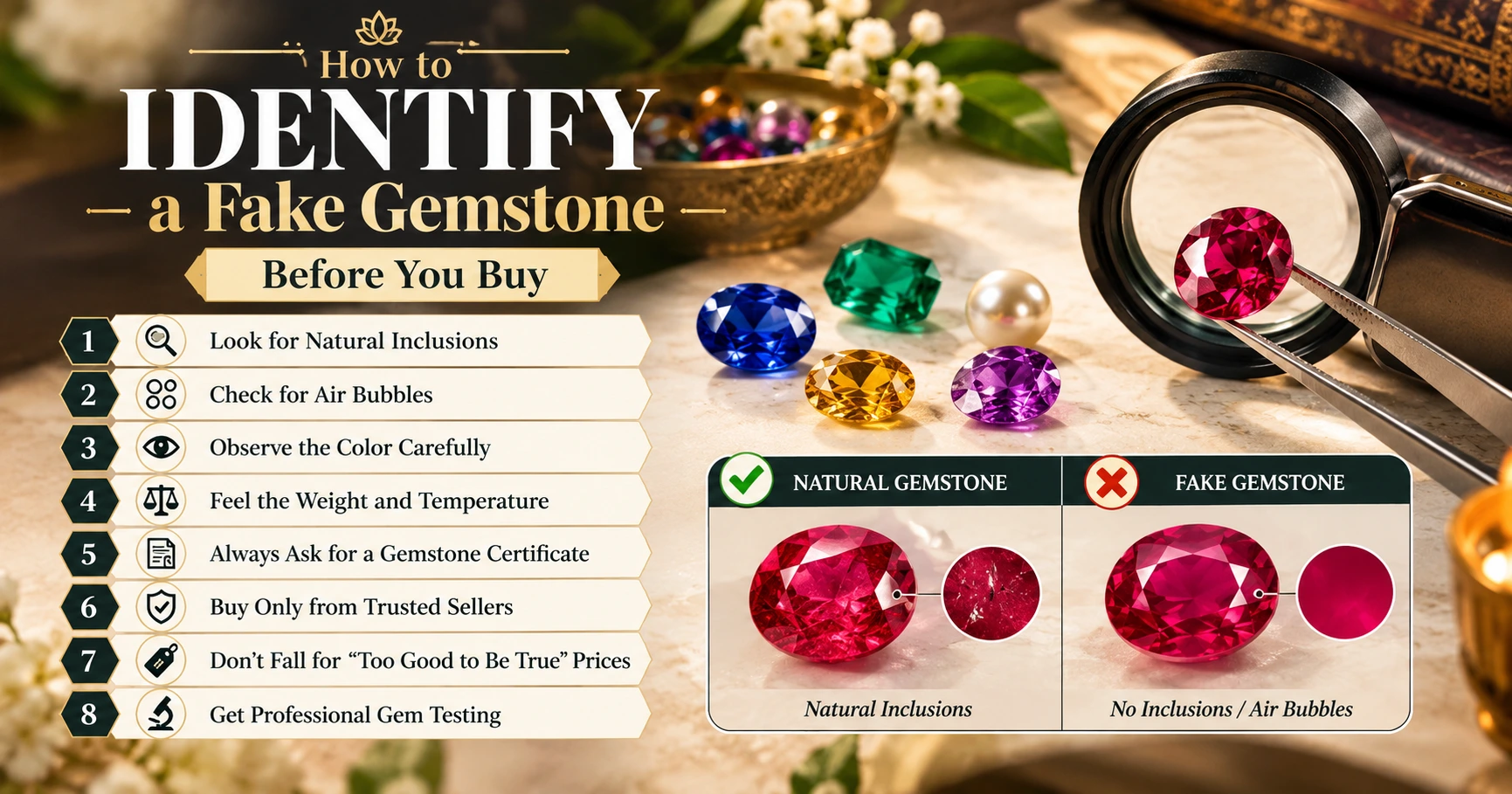
How to Spot Potential Gemstone Treatment Scams in India
There is no single visual test that allows every buyer to identify all treated gemstones. However, certain sales practices should encourage you to ask further questions.
1. The seller promises an untreated stone without evidence
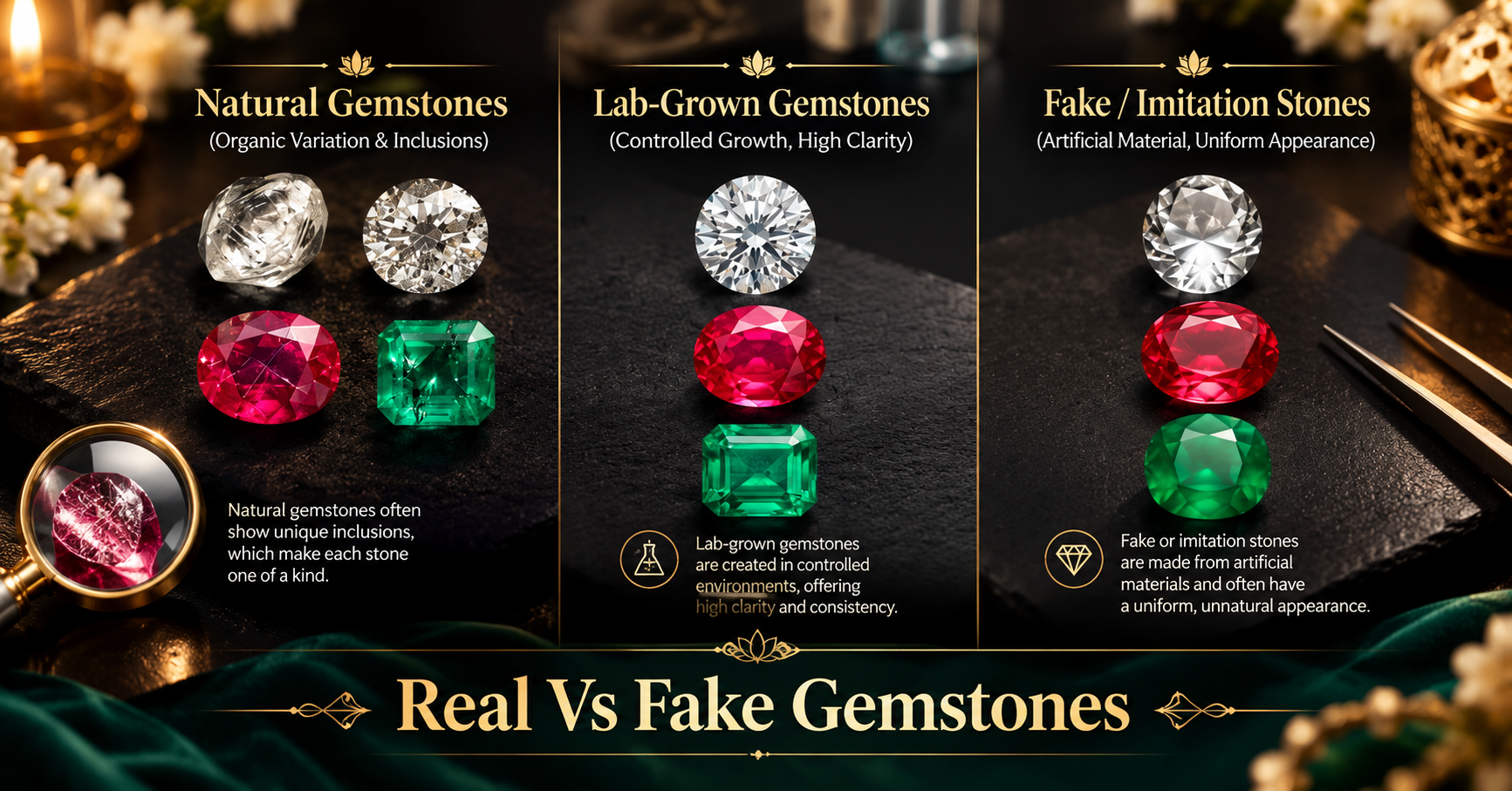
Terms such as “natural,” “untreated,” and “unheated” are not interchangeable. A natural gemstone can undergo glass filling, heating, or diffusion and remain natural in origin.
If you are paying a premium for an untreated ruby or sapphire, request an appropriate independent laboratory report that addresses the relevant treatment claim.
2. The seller avoids direct questions about treatment
Ask specifically whether the stone has undergone glass filling, heat treatment, diffusion, dyeing, or another enhancement relevant to its variety.
A vague answer such as “100% original” does not establish that a gemstone is untreated. Ask for the treatment status in writing and check whether the product description and laboratory report agree.
3. The price is justified by unsupported claims
An unusually low price does not prove fraud, and an expensive stone is not necessarily untreated. However, be cautious when a seller claims that a heavily enhanced gemstone is exceptionally rare or naturally flawless without supporting documentation.
Compare stones with similar characteristics and treatment disclosures rather than comparing prices based on colour alone.
4. The certificate does not match the gemstone
A laboratory report should correspond to the stone you are purchasing. Check the report number, photographs where available, weight, measurements, identification, and treatment comments.
Also understand the scope of the report. Not every certificate provides a full assessment of origin, treatment, or market value.
5. The seller discourages independent verification
For a significant purchase, it is reasonable to seek an independent assessment from a qualified gemological laboratory. Be cautious if a seller pressures you to pay immediately or discourages you from checking the stone's identity and treatment.
These are warning signs, not proof of wrongdoing by themselves. A fair seller should be willing to explain the product clearly and give you time to understand the documentation.
For further buying advice, visit the GemRishi gemstone collection and read the complete gemstone buying guide.
Can You Identify Glass Filling or Beryllium Diffusion at Home?
Home inspection can help you notice issues, but it cannot conclusively establish treatment status.
With glass-filled rubies, trained examiners may observe flash effects, gas bubbles, or features within fractures under magnification. These indicators require experience to interpret correctly.
Beryllium diffusion is more challenging. A sapphire can appear evenly coloured, and the absence of an obvious colour concentration at its edges does not prove that it is untreated. Advanced laboratory analysis may be necessary.
Avoid using flames, acids, solvents, harsh cleaners, or other home experiments to test a gemstone. These methods can damage the stone, its filling, or the jewellery setting.
Instead, request an appropriate report from a recognised gemological laboratory. For expensive stones, verify the report directly with the issuing laboratory where possible.
The GemRishi guide to untreated gemstones offers additional context on why visual appearance alone is not enough.
How to Buy Ruby, Blue Sapphire and Yellow Sapphire Safely
A little preparation can make gemstone shopping more straightforward, whether you are buying for jewellery, collecting, or traditional Vedic astrology.
Start by defining your requirements. Decide whether treatment status is a priority, what quality you expect, and how much you want to spend.
Ask for precise disclosures. Find out whether the stone is natural or laboratory-grown and whether it has undergone relevant treatments. If you specifically want an untreated stone, make that requirement clear before paying.
Review the laboratory report. Confirm that the report covers the information you need, including identification and treatment where applicable. A report that confirms the gemstone's identity may not necessarily establish its geographic origin or market value.
Compare like with like. Consider colour, clarity, cut, weight, treatment, and overall quality. A treated gemstone may be a suitable option when accurately represented and priced accordingly.
Keep the documentation. Save the invoice, product description, certificate, treatment disclosures, and return policy. These records are useful if questions arise after purchase.
You can explore Ruby (Manik), Blue Sapphire (Neelam), and the broader GemRishi gemstone collection while comparing options.
Are Treated Gemstones Worth Buying?
However, treated gems can be valuable for customers who know what they are buying because they can have better color or clarity, increased availability of some materials and an image fitting a certain budget.
The trouble comes from the fact that the treatment itself can be hidden, and the gem can be advertised by using misleading information. In such cases, a treated ruby shouldn’t be sold as having the same properties as an untarnished ruby of the same quality.
A beryllium-diffused sapphire also needs to be advertised truthfully rather than as being naturally colored in the absence of evidence to prove it.
In the case of customers looking for astrological stones, their treatment can also be important for their needs or suggestions given by someone they consulted. If you stick to the rules of Vedic astrology, it’s important to discuss your requirements with a specialist and get the necessary documentation from the seller.
The purchase of gemstones needs to be based on information, not fear or pressure. The knowledge about treatment is one of the most practical ways of making your choice.
Conclusion: Transparency Is the Best Protection Against Gemstone Scams
Glass-filled rubies and beryllium-treated sapphires demonstrate why a gemstone's beauty cannot tell its entire story. One treatment can improve apparent clarity by filling fractures, while the other can alter colour through diffusion. Both may be encountered in legitimate trade, but their treatment histories should be represented accurately.
Before purchasing a valuable gemstone in India, ask direct questions, review the relevant laboratory documentation, compare similar stones, and avoid relying on visual appearance or broad claims such as “100% original.”
At GemRishi, informed gemstone selection starts with understanding the stone's identity, quality, treatment, and suitability for your purpose. Explore the GemRishi gemstone collection and use the GemRishi buying guide to help you ask the right questions before making your next purchase.
Frequently Asked Questions
1. What is a glass-filled ruby?
A glass-filled ruby is a ruby in which glass has been introduced into fractures or cavities to reduce their visibility and improve apparent clarity. The treatment should be disclosed because it can affect the stone's value and care requirements.
2. What is beryllium-treated sapphire?
Beryllium-treated sapphire is corundum whose colour has been modified through high-temperature diffusion involving beryllium. The underlying gemstone can be natural, but the treatment changes its colour characteristics.
3. Are glass-filled rubies fake?
Not necessarily. A glass-filled ruby may contain natural ruby material, but its fractures have been filled with glass. It is important to distinguish the stone's identity from its treatment status and ensure the treatment is disclosed.
4. Is beryllium-treated sapphire a natural gemstone?
The underlying corundum may be natural. Beryllium diffusion is a treatment that modifies colour; it does not automatically mean the gemstone is laboratory-grown. A suitable laboratory report can help establish the stone's identity and treatment.
5. How can I identify a glass-filled ruby?
A qualified gemologist may identify glass filling through magnification and features such as gas bubbles or flash effects in fractures. These indicators are not a substitute for professional examination when the purchase is valuable.
6. Can beryllium treatment be detected with the naked eye?
Not reliably. Some stones may show clues, but beryllium diffusion can be difficult to establish visually. Advanced laboratory analysis may be required.
7. Does glass filling reduce a ruby's value?
Glass filling can significantly affect market value, particularly when the treatment is extensive. Value also depends on the underlying ruby's quality, appearance, weight, and market demand.
8. Is beryllium diffusion permanent?
Beryllium diffusion in corundum is generally considered permanent. This differs from glass filling, where the filler may be vulnerable to certain chemicals, heat, or repair procedures.
9. Are treated gemstones always scams?
No. Many gemstone treatments are established practices. A scam concern arises when a seller misrepresents the gemstone, conceals a material treatment, or makes unsupported claims about quality or value.
10. What should a gemstone certificate mention?
Depending on the laboratory and report type, it may state gemstone identity, natural or laboratory-grown status, and treatment findings. Origin and grading details are not necessarily included in every report, so check its scope.
11. Can a gemstone shop certificate be trusted?
A certificate's value depends on who issued it, the laboratory's expertise, and what testing the report covers. For expensive purchases, consider an independent report from a recognised gemological laboratory and verify the report where possible.
12. Should I buy an untreated Ruby or Sapphire?
That depends on your preferences, budget, and intended use. If untreated status matters to you, request supporting documentation. Compare overall quality and price rather than assuming every untreated stone is automatically superior.
13. Can glass-filled gemstones be worn every day?
Some can be worn with suitable precautions, but glass-filled stones may be more vulnerable to heat, certain chemicals, and jewellery repair procedures. Ask a qualified jeweller about the specific stone and setting before choosing it for daily wear.
14. How do I avoid gemstone scams when shopping online in India?
Ask for clear disclosure of natural or laboratory-grown status and relevant treatments, review the laboratory report, verify that it matches the stone, compare prices, and read the return policy. Avoid making a rushed purchase based only on photographs or verbal assurances.
15. Where can I learn more about buying gemstones?
Visit the GemRishi gemstone collection and read the GemRishi complete gemstone buying guide for more information about gemstone quality, treatment, certification, and selection.
Have Questions Regarding This Gemstone?
Connect 1-on-1 with GemRishi’s certified Vedic gemologists on WhatsApp for personalized birth chart recommendations, lab certificate verification, or custom jewelry quotes.
Gemrishi
Gemrishi is a certified gemologist and Vedic astrology scholar at GemRishi with over 15 years experience in natural gemstone origin authentication.