Unheated vs Untreated Gemstones: What’s the Difference and Why Does It Matter?
When you start exploring natural gemstones, you will come across terms such as heated, unheated, treated, untreated, natural, and certified. These terms can make gemstone shopping confusing, especially when two stones look almost identical but have very different prices.
Among these terms, unheated and untreated gemstones are particularly interesting. They are valued by many collectors and gemstone enthusiasts because they retain characteristics that are closer to their natural state.
But are unheated and untreated gemstones the same thing? Are they always more valuable? How can you tell whether a gemstone has been treated? And does an unheated gemstone always make a better choice?
Let's understand the answers through this article.
What Is an Unheated Gemstone?
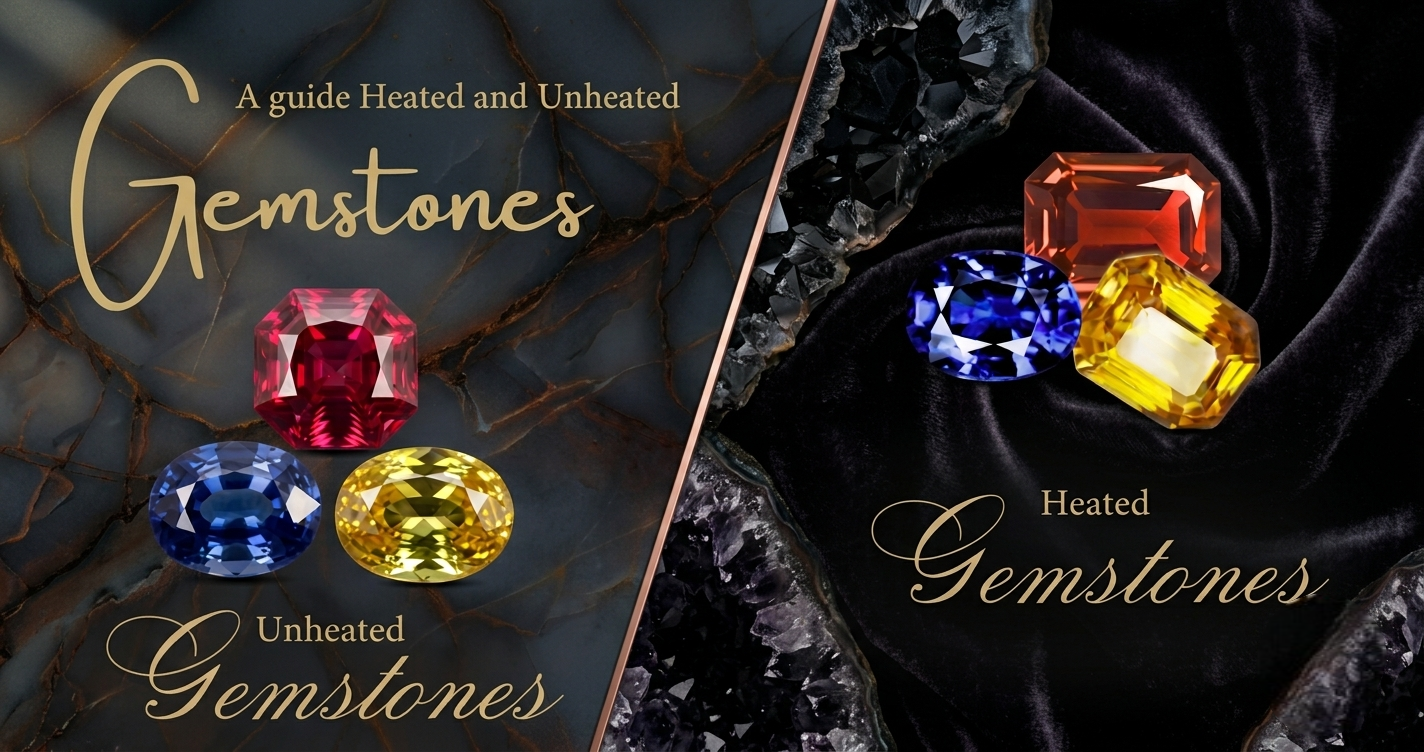
An unheated gemstone is a natural gemstone that has not undergone heat treatment (physical treatment) to improve its color or clarity and its brilliance.
Heat treatment is one of the most common enhancement processes used in the gemstone industry. Certain gemstones can be heated at high temperatures to improve their appearance. For example, heating may enhance the color of ruby or sapphire and improve the overall visual appeal of some stones.
An unheated gemstone is that stone which doesn't have gone through this process.
This means that the color, clarity, and other visible characteristics have developed naturally during the gemstone's formation inside the Earth.
However, there is an important point to remember: unheated does not always mean completely untreated.
A gemstone can be unheated but may have undergone another form of treatment. Therefore, if you specifically want a gemstone with no known artificial enhancement, you should look for an untreated gemstone and appropriate laboratory documentation.
What Does Untreated Gemstone Mean?
An untreated gemstone is a natural gemstone that has not undergone any known artificial treatment to improve its appearance like heating ,pressure exposure etc.
Depending on the gemstone, treatments can include:
- Heat treatment
- Oiling
- Fissure filling
- Dyeing
- Diffusion treatment
- Irradiation
- Resin or glass filling
- Other clarity or color enhancements
Untreated is broader terms with respect to unheated in gemstone industry.
An untreated gemstone retains its naturally occurring color, clarity, inclusions, and other characteristics without intentional enhancement.
For buyers who appreciate the natural appearance of gemstones, this can be an important consideration.
Unheated vs Untreated: What's the Difference?
The difference is simple once you look at what each term covers.
Unheated means the gemstone has not been treated with heat.
Untreated generally means that the gemstone has not undergone known artificial treatment.
So, an untreated gemstone should also be unheated, while an unheated gemstone is not necessarily untreated.
For example, a gemstone could be unheated but have undergone another type of treatment. This is why buyers should ask about the complete treatment history rather than simply asking whether a gemstone has been heated.
If you are interested in understanding treatment differences in greater detail, you can also read GemRishi's guide on untreated vs heated gemstones.
Why Are Unheated and Untreated Gemstones Special?
The biggest attraction of an unheated or untreated gemstone is its natural character and its brilliance.
Most gemstones begin their journey deep within the Earth under intense pressure, temperature, and geological conditions. Their color, inclusions, transparency, and internal characteristics develop naturally over a very long period.
When a gemstone naturally displays an attractive color and good clarity without enhancement, it can be considerably rarer than a comparable treated stone.
This rarity is one reason collectors and gemstone enthusiasts often look specifically for untreated stones.
However, it is important not to assume that untreated automatically means more valuable.
Gemstone value depends on several factors, including:
- Color
- Clarity
- Cut
- Carat weight
- Rarity
- Origin, where reliably established
- Treatment status
- Overall quality
A poor-quality untreated gemstone can still be less valuable than a beautiful, well-cut and properly disclosed heated gemstone.
Why Are Some Gemstones Heated?
Natural gemstones can sometimes have dull colors, visible inclusions, or other characteristics that reduce their visual appeal. Heat treatment can enhance the appearance of certain gemstones and make attractive stones more widely available.
For example, heating is commonly associated with ruby and sapphire.
A heated gemstone can still be natural. Treatment does not automatically mean that a gemstone is synthetic or fake.
The important thing is transparency.
If a gemstone has been heated, the treatment should be properly disclosed to the buyer.
Similarly, if a gemstone is being sold as unheated or untreated, buyers should have suitable documentation when the value of the stone warrants it.
For a broader understanding of treatment and gemstone value, you can explore GemRishi's guide to gemstone treatments.
Do Untreated Gemstones Have Inclusions?
Yes.
Inclusions are naturally occurring characteristics found inside many gemstones. They can appear as tiny crystals, needles, clouds, fractures, color zoning, or other internal features.
Because untreated gemstones have not undergone treatments intended to improve their appearance, they may contain visible natural inclusions.
But inclusions should not automatically be considered defects.
In many cases, they provide clues about how a gemstone formed and can help gemologists evaluate whether a stone has undergone certain treatments.
This is particularly important when buying valuable ruby, sapphire, emerald, or other precious gemstones.
If you are interested in emeralds, for example, you can learn more about their natural characteristics in GemRishi's article on emerald inclusions.
Why Are Unheated Rubies and Sapphires Highly Sought After?
Ruby and sapphire are two gemstones where treatment status can have a significant influence on desirability and price.
Fine-quality rubies and sapphires that have not undergone heat treatment can be rare. If an unheated gemstone also has excellent color, clarity, size, and desirable origin characteristics, it may command a significant premium.
For example, a naturally vivid red ruby that has not been heated can be much rarer than a similar-looking heated ruby.
The same principle applies to blue sapphire.
An attractive blue sapphire with natural color and good clarity can be particularly desirable to collectors.
If you are considering sapphire, GemRishi's blue sapphire guide can help you explore the gemstone and its characteristics. You can also read about the difference between heated and unheated sapphire.
How Can You Identify an Unheated or Untreated Gemstone?
This is one of the most important questions for buyers.
In many cases, you cannot reliably determine treatment status simply by looking at a gemstone.
A gemstone may have an attractive natural-looking appearance even if it has undergone treatment. Similarly, the presence of inclusions does not automatically prove that a gemstone is untreated.
Professional gemological laboratories use specialized examination methods to identify evidence of treatment.
Therefore, if you are purchasing a valuable gemstone specifically because it is claimed to be unheated or untreated, a reputable laboratory report is an important part of the buying process.
Why Is Certification Important?
A gemstone certificate provides independent information about the stone.
Depending on the laboratory and report, it may identify:
- Whether the gemstone is natural or synthetic
- The gemstone variety
- Treatment status
- Sometimes geographic origin
- Other relevant gemological characteristics
Certification becomes especially important when treatment status has a substantial impact on the price.
For example, if two sapphires look similar but one is represented as unheated, the buyer should not have to rely solely on the seller's description.
A laboratory report can provide additional confidence about what is being purchased.
When buying natural gemstones online, you can also explore GemRishi's certified gemstone collection.
Are Untreated Gemstones Better for Astrology?
Gemstones are also purchased for traditional and astrological purposes.
In Vedic astrology, gemstones such as ruby, yellow sapphire, emerald, blue sapphire, and pearl are traditionally associated with different planets.
People who follow these traditions may prefer natural gemstones and may specifically look for stones with minimal or no treatment.
However, treatment status and astrological suitability are separate considerations. A gemstone's quality, authenticity, treatment, and suitability should all be considered independently.
If you are exploring gemstones for astrological purposes, GemRishi also provides guides for individual stones such as Ruby (Manik), Yellow Sapphire (Pukhraj), and Emerald (Panna).
Should You Buy an Unheated or Untreated Gemstone?
There is no single answer for every buyer.
An untreated gemstone may be worth considering if you:
- Appreciate natural gemstone characteristics
- Prefer minimal or no artificial enhancement
- Are interested in rarity
- Collect gemstones
- Want a gemstone with naturally occurring color and clarity
On the other hand, a properly disclosed heated gemstone can be a practical option if your main priorities are appearance and budget.
The key is to understand what you are buying.
A treated gemstone is not automatically inferior, and an untreated gemstone is not automatically superior. The right choice depends on your priorities, budget, and the particular gemstone.
What Should You Check Before Buying?
Before purchasing an unheated or untreated gemstone, consider the following:
1. Ask about treatment.
Do not ask only whether the gemstone is heated. Ask whether it has undergone any other treatment.
2. Check the certificate.
For valuable gemstones, look for a laboratory report that clearly states the treatment status.
3. Examine the gemstone's quality.
Color, clarity, cut, transparency, and carat weight all influence value.
4. Understand the seller's policy.
Check the return, exchange, and certification policies before completing your purchase.
5. Compare the price carefully.
An untreated gemstone can command a premium, but the price should still make sense considering its overall quality.
You can also explore GemRishi's natural gemstone collection when comparing different gemstone options.
Final Thoughts
Unheated and untreated gemstones are appreciated for their natural characteristics and rarity. But understanding the terminology is essential before making a purchase.
An unheated gemstone has not undergone heat treatment, while an untreated gemstone has not undergone known artificial enhancement. The distinction may seem small, but it can make a meaningful difference when evaluating a valuable gemstone.
If you are considering an untreated ruby, sapphire, emerald, or another precious gemstone, look beyond appearance alone. Consider its color, clarity, cut, carat weight, treatment status, certification, and overall quality.
Most importantly, buy from a transparent seller who clearly explains the gemstone's characteristics and treatment status.
A gemstone's beauty may catch your eye, but knowing exactly what you are buying makes the experience much more meaningful.
Frequently Asked Questions
Are unheated and untreated gemstones the same?
No. Unheated means the gemstone has not undergone heat treatment, while untreated generally means that no known artificial treatment has been applied. An unheated gemstone may still have undergone another treatment.
Are untreated gemstones more expensive?
They can be, particularly when they have excellent color, clarity, size, rarity, and desirable characteristics. However, treatment status alone does not determine a gemstone's value.
Are heated gemstones natural?
Yes. A gemstone can be natural and still be heat treated. Treatment does not automatically make a gemstone synthetic.
Can you identify an untreated gemstone by looking at it?
Not reliably. Treatment identification can require professional gemological examination and laboratory testing.
Why are unheated rubies valuable?
Fine-quality rubies with naturally attractive color and clarity and no evidence of heat treatment can be rare. Their rarity can make them desirable to collectors and buyers seeking naturally occurring color.
Why should I buy a certified untreated gemstone?
Certification provides independent information about the gemstone and can help verify claims regarding its natural status and treatment.
Have Questions Regarding This Gemstone?
Connect 1-on-1 with GemRishi’s certified Vedic gemologists on WhatsApp for personalized birth chart recommendations, lab certificate verification, or custom jewelry quotes.
Gemrishi
Gemrishi is a certified gemologist and Vedic astrology scholar at GemRishi with over 15 years experience in natural gemstone origin authentication.