Textural Luxury: How Carved & Uniquely Faceted Colored Gemstones Transform Jewellery Design
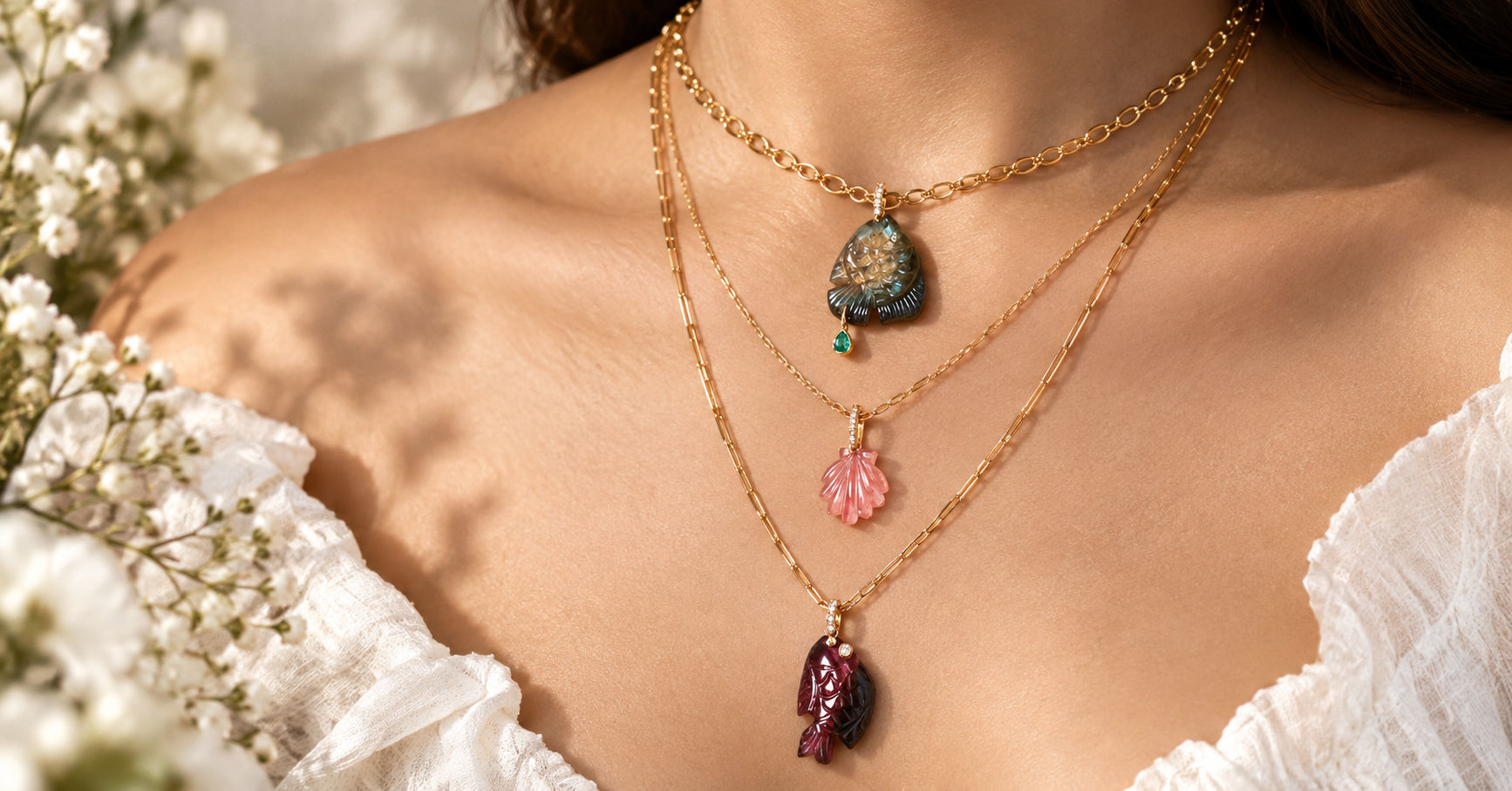
Luxury jewellery are the high-end ornaments made from rare, precious materials and crafted with exceptional artistic skill, often carrying significant brand heritage and prestige
Luxury in jewellery are drawn with uniquen craftmanship and idea of different shapes. But today, luxury is not only about the size of a gemstone, the amount of sparkle, or how elaborate a setting looks. There is a growing appreciation for jewellery that feels individual, artistic, and thoughtfully made.
This shift has brought greater attention to carved gemstones, unusual silhouettes, and uniquely faceted coloured stones. Instead of treating the gemstone as simply a polished centrepiece, designers are using its shape, surface, colour, and interaction with light as part of the overall design.
A carved gemstone can introduce a sense of movement and depth, while an unconventional cut can make familiar colours appear completely different. A green stone may feel architectural when sharply faceted, while the same colour can appear softer and more organic when carved into a floral or flowing form.
The attraction lies in the details. These gemstones do not simply add colour to jewellery; they can help give the entire piece its identity.
Lets explore with this guide to know all about Textural Jewellery.
What Makes Textural Luxury Different?
Traditional gemstone jewellery often known for symmetry, precision, polished surfaces, and familiar cuts as well their lusture and briliance. These elements remain timeless, but contemporary designers and crafter are increasingly giving new cuts and new design forms that feel less predictable.
Texture can come from the surface of a carved stone, the geometry of unusual facets, the irregular outline of a gemstone, or even the contrast between a highly polished stone and a more sculptural setting.
Light becomes an important part of this experience. As a wearer moves, individual facets may catch the light differently, while carved sections can create areas of shadow and depth. The gemstone becomes dynamic rather than remaining visually flat.
This is one reason uniquely shaped coloured gemstones work so well in contemporary jewellery. Their beauty is not always immediately obvious from one fixed viewpoint. You notice something new as you look again.
Carved Gemstones: When a Stone Becomes Art
Gemstone carving gives an artisan the opportunity to work with a stone almost like a sculptor works with a material.
Besides cutting only to create conventional facets, the surface can be shaped into decorative patterns, botanical forms, symbols, geometric details, or three-dimensional designs. The carving becomes part of the gemstone's personality. These new design are fascinatting and attractive the buyers too much .
Geometric carving can give it a more modern character, while a deeply sculpted design can create stronger contrast between light and shadow.
The process also requires a thoughtful understanding of the material. Different gemstones have different hardness, toughness, cleavage characteristics, and sensitivities. The artisan has to consider these properties before deciding how the stone should be shaped.
That is why a beautifully carved gemstone represents more than an unusual appearance. It brings together the natural qualities of the material and the skill of the person working with it.
In jewellery, this can create a stronger emotional connection. Instead of seeing only a gemstone, the wearer can see craftsmanship within the gemstone itself.
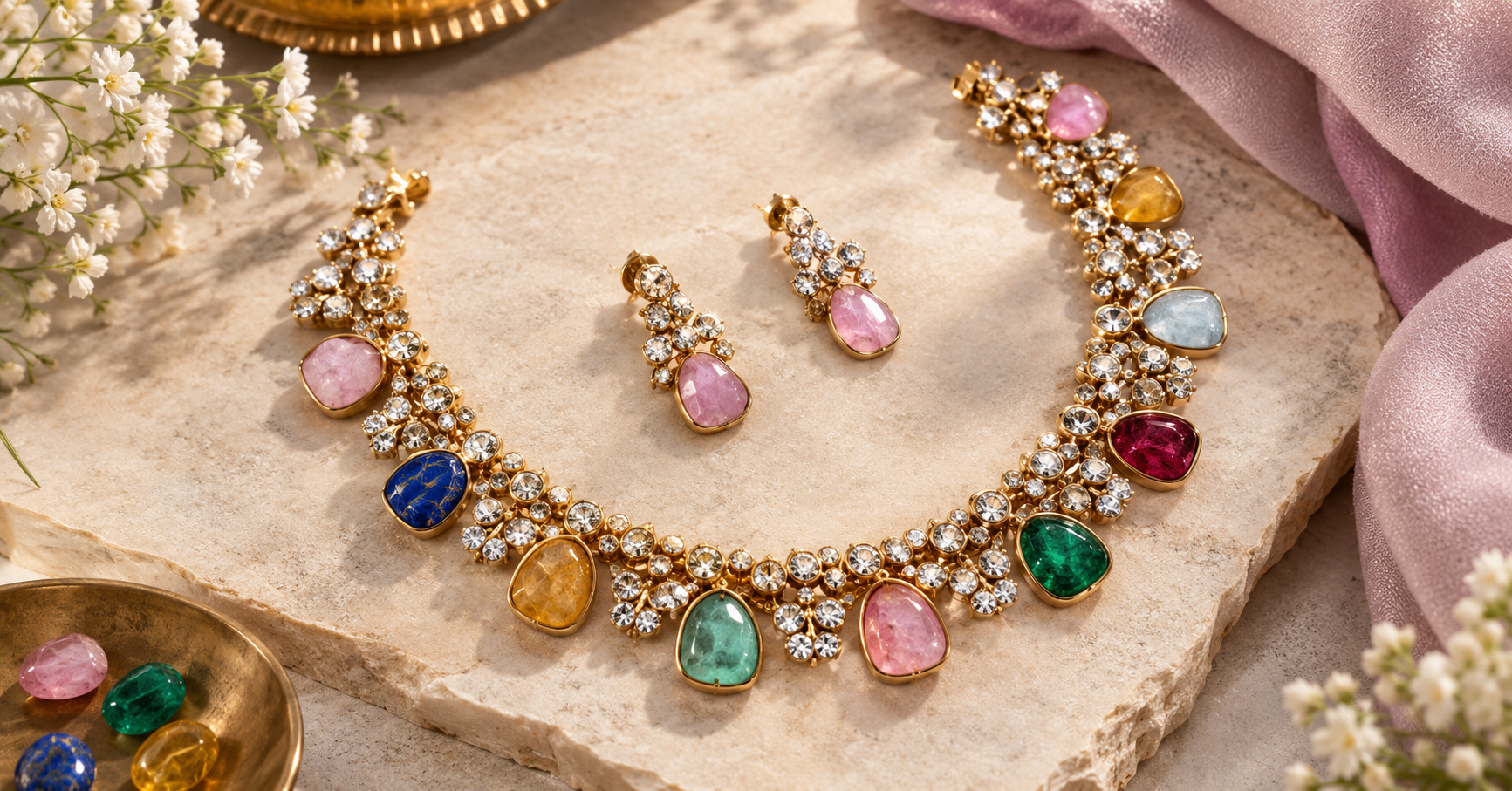
Unique Faceting: Moving Beyond the Conventional Cut
Traditional cuts are designed around established shapes and facet arrangements, but modern gemstone design does not always follow those familiar patterns. Designers and cutters can experiment with elongated forms, mixed facet styles, asymmetrical outlines, and fantasy cuts to create a distinctive visual effect.
The purpose is not simply to make a gemstone look unusual.
A different facet arrangement can influence how light enters, travels through, and returns from the stone. It can alter the appearance of colour and create flashes that may not be present in a conventional cut.
This becomes particularly interesting with coloured gemstones.
A Sapphire, Tourmaline, Amethyst, or Aquamarine does not depend on the same type of brilliance as a colourless diamond. Its colour is part of its identity. The cut can therefore be used to complement that colour rather than simply maximise sparkle.
A long, elegant cut may emphasise the depth of a gemstone, while a more geometric design can make its colour appear sharper and more contemporary.
The gemstone is no longer just something placed inside a setting. Its cut becomes part of the design language.
The Relationship Between Colour and Texture
Colour is often the first thing that attracts us to a coloured gemstone, but texture and faceting influence how that colour is perceived.
A deep blue Sapphire with clean geometric facets can feel sophisticated and architectural. A pink Tourmaline with a softer, more organic outline can create a completely different impression.
The same principle applies to green, yellow, purple, and red gemstones.
Texture can break up a single block of colour. Facets can create lighter and darker areas as they catch the light. Carving can introduce shadows that give a gemstone greater visual depth.
This relationship becomes especially effective when the jewellery setting is kept relatively simple. Instead of competing with the gemstone, the metalwork gives the stone room to express itself.
For jewellery lovers, this means that selecting a coloured gemstone is not only about choosing a favourite colour.
Coloured Gemstones That Work Beautifully With Artistic Designs
Emerald, with its distinctive green colour, can create a strong focal point in both classic and contemporary designs. Its natural inclusions are also part of its visual character, which makes it particularly interesting when the overall design embraces individuality rather than perfect uniformity. The unique cuts and craftmanship will increase more people around it instead of its color only.You can explore GemRishi's Emerald collection when considering green gemstones for jewellery.
Sapphire offers remarkable versatility. Its blue most recognised colour, Sapphire occurs in a range of colours, allowing designers to explore very different moods. Its durability also makes it suitable for many jewellery applications. GemRishi's Blue Sapphire collection is one place to explore this gemstone in more detail.
Tourmaline is especially attractive from a design perspective because of its colour diversity. Pink, green, blue, red, and multicoloured varieties can offer designers an extensive palette to work with.
Opal introduces another kind of visual interest. Its play-of-colour can shift as the stone moves, making it naturally suited to jewellery where movement and changing light are part of the appeal.
Amethyst brings a rich purple presence, ranging from soft lavender to deeper violet. Its colour works equally well in understated jewellery and more dramatic statement pieces.
The beauty of these gemstones is that there is no single formula. Each stone gives a designer a different combination of colour, transparency, texture, and visual movement.
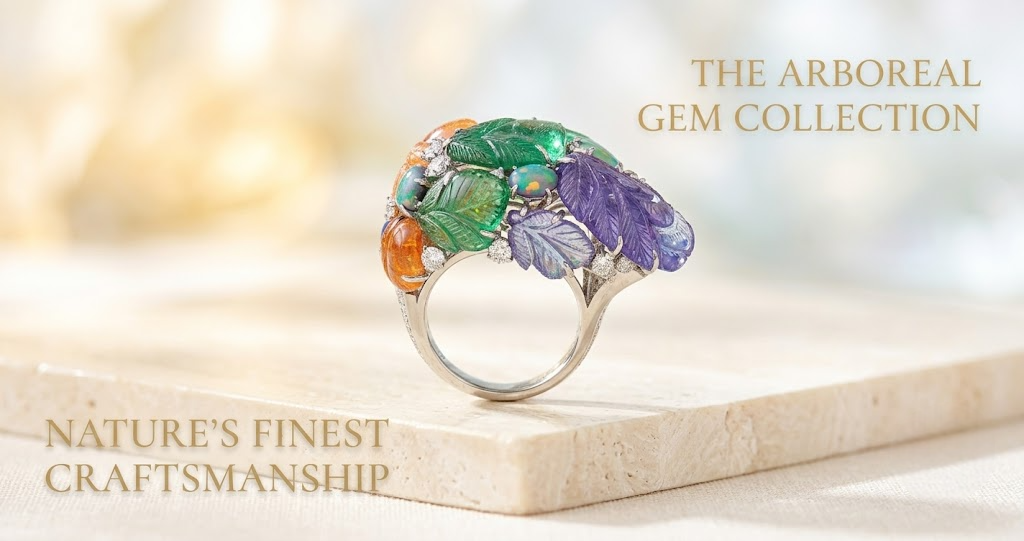
Why Designers Are Drawn to Unusual Gemstones
There is something naturally appealing about jewellery that does not look exactly like everything else.
Carved and uniquely faceted gemstones allow designers to create pieces with a stronger sense of individuality. Instead of beginning with a standard shape and building the jewellery around it, the gemstone itself can influence the design.
Sometimes the unusual form becomes the central feature. At other times, it creates a small detail that makes a relatively simple piece feel special.
This is particularly valuable in bespoke and limited-edition jewellery. When a gemstone has an unusual shape or carving, the finished piece can feel more personal because the design has been developed around something distinctive.
It also gives craftsmanship greater visibility.
In conventional jewellery, much of the skill involved in cutting a gemstone may be noticed only when the stone catches the light. With a carved or unusually shaped gemstone, the craftsmanship is visible in the form itself.
How Textural Gemstones Change Jewellery Design
A uniquely shaped gemstone can completely change the personality of a jewellery piece.
In a ring, an elongated or freeform gemstone can create a more contemporary silhouette. A carved stone can become the focal point of a statement ring without requiring an elaborate setting.
In earrings, sculptural gemstones can add movement and shape. Matching carved stones can create a refined appearance, while carefully selected variations can produce a more artistic, contemporary effect.
Pendants offer another opportunity because the gemstone can be displayed almost like a miniature work of art. A large carved gemstone suspended from a simple chain can make a strong statement without excessive decoration around it.
Bracelets can take a more subtle approach. Smaller coloured gemstones can be incorporated into a design to add texture and variation without overwhelming the wrist.
The important thing is that the gemstone and the jewellery setting should work together. When the gemstone already has an unusual shape or detailed surface, a restrained setting often allows its character to remain visible.
Traditional Craftsmanship Meets Modern Design
The idea of carving gemstones is not new. Gemstone carving has existed across cultures for centuries, with artisans creating decorative objects, seals, cameos, and jewellery from natural stones.
What feels fresh today is the way these traditional techniques are being combined with modern jewellery aesthetics.
A centuries-old carving approach can appear in a clean contemporary ring. A traditionally inspired floral motif can be placed inside a minimalist pendant. An organically shaped gemstone can sit within a sharp architectural setting.
This combination gives contemporary jewellery a sense of depth.
It also reflects a broader appreciation for craftsmanship. Buyers are increasingly interested not just in what a jewellery piece looks like, but in the story behind its creation.
For a gemstone house such as GemRishi, this connection between gemstone expertise and craftsmanship is particularly relevant. GemRishi traces its heritage to 1904 and focuses on natural gemstones, certification, and gemstone knowledge.
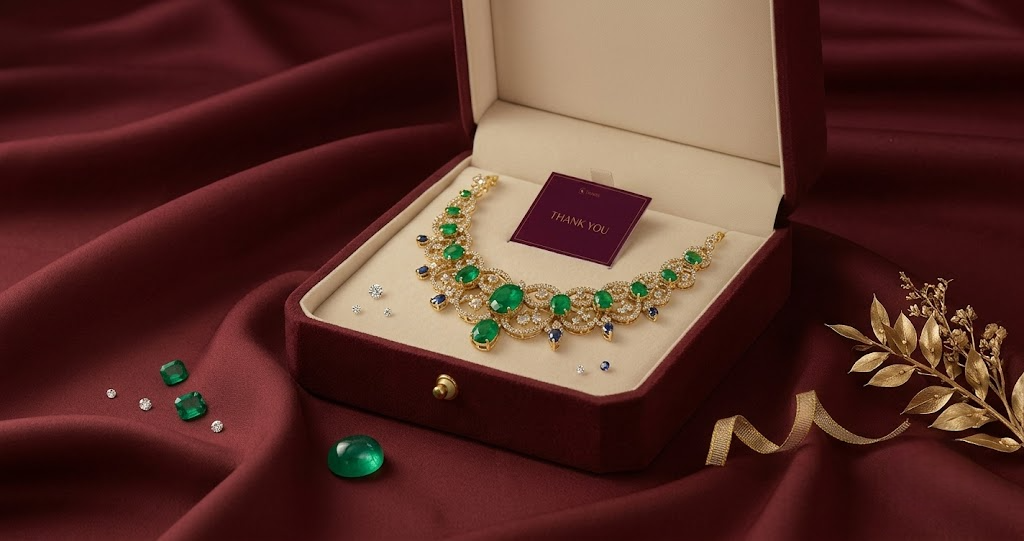
Styling Carved and Uniquely Faceted Gemstone Jewellery
Styling textural gemstone jewellery is often about knowing when to step back.
If a ring has a large carved gemstone with a distinctive pattern, it may not need several other statement rings around it. Allowing some visual space can make the central piece feel more intentional.
The same idea works with pendants and earrings. A sculptural gemstone can become the defining element of an outfit when paired with a relatively simple neckline or understated clothing.
Colour can also be used creatively.
A deep green gemstone can sit beautifully against neutral shades, while blue gemstones can create a refined contrast with white, black, grey, or earthy tones. Softer pink and lavender gemstones can bring a lighter feeling to an otherwise minimal look.
There is no strict rule that says statement gemstones must only be worn for formal occasions. A uniquely faceted gemstone can work just as well with everyday clothing when the setting is simple and the overall styling is balanced.
What to Consider Before Buying
Before purchasing, it is worth understanding exactly what you are buying.
Is the gemstone natural or synthetic?
Has it been treated?
Does it come with appropriate certification?
How does the cut or carving affect its durability?
These are the basic question everyone should try to ask before buying from seller.
Colour, clarity, cut, size, durability, treatment, certification, and budget all have a role in a gemstone purchase. GemRishi's complete gemstone buying guide explains these factors in greater detail.
Durability deserves particular attention when the gemstone is going into a ring. Rings are exposed to more everyday contact than pendants or earrings, so the physical properties of the gemstone should match the way you plan to wear it.
It is also important not to assume that a larger gemstone is automatically a better gemstone. Quality and suitability matter just as much as size.
For buyers interested in higher-value stones, certification can provide useful information about the gemstone's identity, treatment, and other characteristics. It should be considered alongside the stone's actual appearance and overall quality.
The Future of Textural Luxury
The appeal of textural gemstone jewellery is closely connected with the growing desire for individuality.
Jewellery does not have to follow one standard definition of luxury. A highly polished traditional gemstone can be luxurious, but so can a hand-carved stone with an irregular outline and a quiet, understated setting.
This gives designers greater creative freedom.
We are likely to see more experimentation with sculptural forms, unusual gemstone cuts, organic shapes, mixed textures, and coloured stones that allow the gemstone itself to influence the design.
The future of luxury may therefore be less about uniform perfection and more about character.
A gemstone that has a slightly unexpected shape, a distinctive colour pattern, or a visible handmade detail can feel more personal precisely because it does not look completely predictable.
That is the real strength of textural luxury. It allows jewellery to carry not just colour and sparkle, but personality.
Conclusion
The most memorable jewellery is not always the piece with the largest gemstone or the most elaborate setting.
Sometimes, it is a gemstone with an unexpected shape. Sometimes, it is a delicate carving that reveals itself only when you look closely. And sometimes, it is simply an unusual combination of colour, facets, and craftsmanship.
That is what makes carved and uniquely faceted coloured gemstones so interesting.
They allow jewellery to move beyond conventional sparkle and become more expressive. The gemstone can become a sculptural element, a design feature, and even the starting point for the entire piece.
In a world where individuality increasingly defines personal style, that sense of character may be one of the most enduring forms of luxury.
FAQs about Textural Luxury and Carved Gemstones
What are carved gemstones?
Carved gemstones are natural stones that have been shaped or decorated with patterns, symbols, figures, floral details, or other artistic forms.
What are uniquely faceted gemstones?
Uniquely faceted gemstones use unconventional facet arrangements, proportions, or outlines to create a distinctive appearance and interaction with light.
Are carved gemstones suitable for jewellery?
Yes, but their suitability depends on the gemstone's physical properties, the depth and design of the carving, the jewellery setting, and how the piece will be worn.
What gemstones are popular for artistic jewellery?
Sapphire, Emerald, Tourmaline, Opal, Amethyst, Aquamarine, Citrine, and several other coloured gemstones can be used in artistic jewellery depending on the desired design and application.
Are unusual gemstone cuts more valuable?
Not necessarily. The value of a gemstone depends on several factors, including its variety, colour, clarity, size, treatment, rarity, craftsmanship, and market demand.
What is a fantasy cut gemstone?
A fantasy cut is an unconventional gemstone design that uses creative shapes or facet arrangements to produce a distinctive visual effect.
Can uniquely faceted gemstones be worn every day?
That depends on the gemstone, its durability, cut, setting, and intended use. A gemstone suitable for everyday earrings may not necessarily be ideal for an everyday ring.
How should carved gemstones be cleaned?
Cleaning methods depend on the gemstone and any treatments it has received. It is best to follow specific care instructions for the individual stone.
Should I check certification before buying a gemstone?
For valuable gemstones, certification can provide useful information about identity, treatment, and other characteristics. It is an important part of making an informed purchase.
Where can I explore coloured gemstones?
You can explore the GemRishi gemstone collection to discover different coloured gemstone varieties and find stones that suit your jewellery preferences.
Have Questions Regarding This Gemstone?
Connect 1-on-1 with GemRishi’s certified Vedic gemologists on WhatsApp for personalized birth chart recommendations, lab certificate verification, or custom jewelry quotes.
Gemrishi
Gemrishi is a certified gemologist and Vedic astrology scholar at GemRishi with over 15 years experience in natural gemstone origin authentication.