Navratri Day 6: Why Maa Katyayani Is Worshipped for Strength and Protection
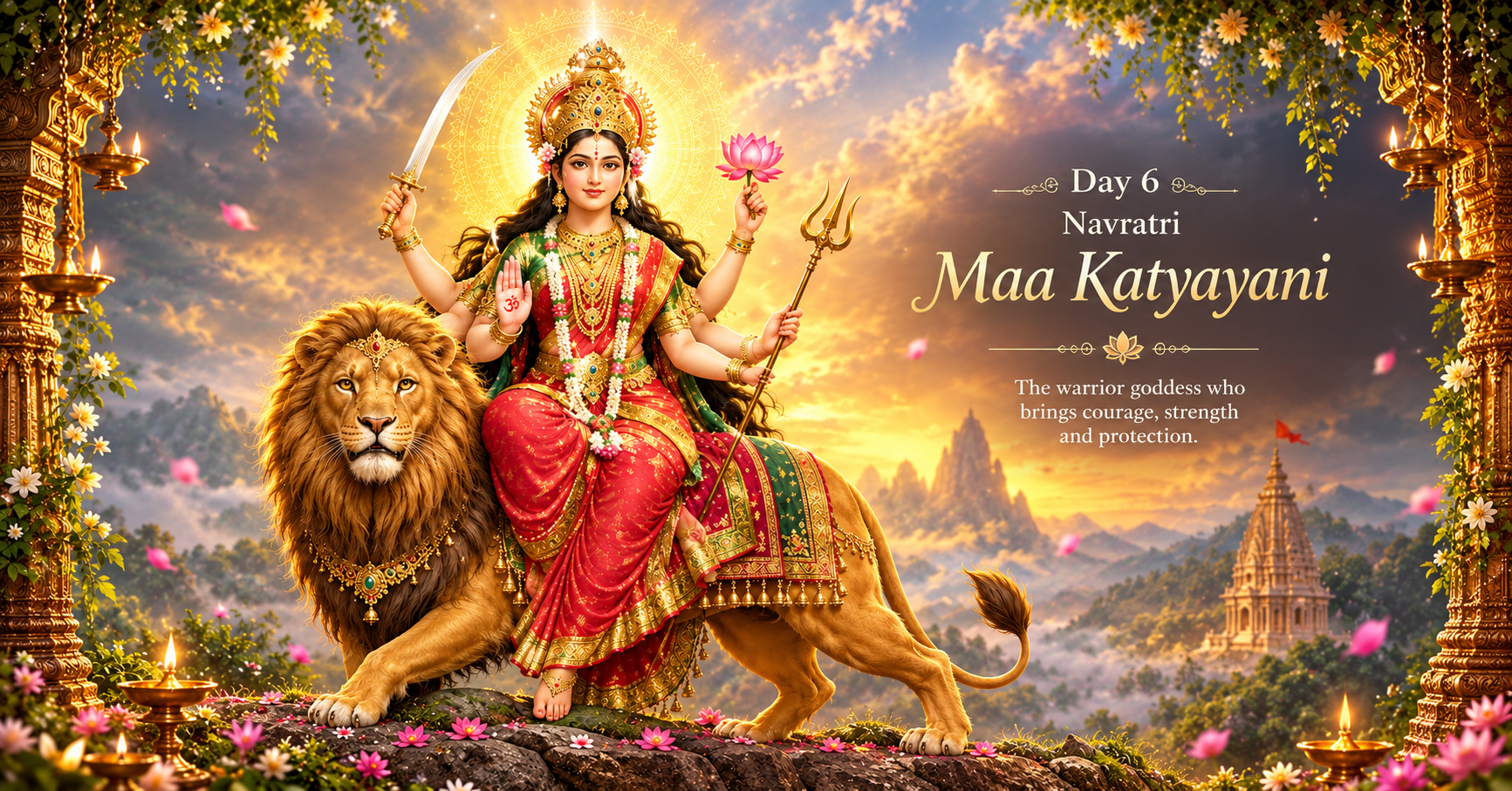
On the sixth day of Navratri, devotees worship Maa Katyayani, the fierce warrior form of Goddess Durga . She symbolizes courage, strength, and righteousness.
Navratri is a festival of devotion, faith, and the celebration of Shakti, the divine feminine power. It also symbolizes the triumph of truth over evil, reminding us that righteousness, courage, and divine strength ultimately overcome negativity and injustice. She is traditionally depicted as a powerful warrior goddess and is associated with courage, strength, protection, and the ability to stand against evil. According to traditional accounts, Goddess Parvati took the form of Katyayani to defeat the demon Mahishasura.
The story and symbolism of Maa Katyayani make her especially meaningful to people who are looking for inner strength during difficult times. Her fierce appearance does not simply represent anger or destruction. Instead, it can be understood as a symbol of determination, courage, and the willingness to protect what is right.
This complete guide covers everything you need to know about Maa Katyayani and the significance, rituals, and traditions of Navratri Day 6.
Who Is Maa Katyayani?
Maa Katyayani is one of the Navadurga, the nine traditional forms of Goddess Durga worshipped during Navratri. She is worshipped on the sixth day of Navratri, following Maa Skandamata and preceding Maa Kalaratri.
She encourage devotee to having a good strength in you will help you out in struggling situation.She also symbolises the believe in yourself to tackle any situation.
According to traditional Hindu accounts, Goddess Parvati took the form of Katyayani to fight and defeat Mahishasura. She is also associated with Sage Katyayana, this is the reason for his name Katyayani.
Maa Katyayani is generally shown riding a lion and having four arms. Traditional depictions show her carrying weapons such as a sword along with a lotus, while her other hands are represented through protective and blessing gestures.
Her lion represents courage and fearlessness, while the sword can be understood symbolically as the power to cut through negativity, injustice, and obstacles.
Why Is Maa Katyayani Worshipped on Navratri Day 6?
Maa Katyayani is worshipped on day 6 of Navratri by their devotee. Her worship represents a transition toward a more powerful and protective aspect of Shakti.
While the earlier forms of Navadurga are often associated with qualities such as devotion, discipline, nurturing energy, and creativity, Maa Katyayani represents the courage required to face challenges.
This is one reason why Navratri Day 6 Maa Katyayani Puja has special importance for devotees.
People may turn to her during periods when they need courage to make difficult decisions, face obstacles, overcome fear, or remain committed to what they believe is right.
From a spiritual perspective, the message is simple: strength does not always mean physical power. Sometimes, strength means remaining calm during difficult circumstances, standing up for yourself, protecting others, and continuing forward despite fear.
Maa Katyayani and the Symbolism of Strength
Maa Katyayani warrior form represents the ability to confront forces that threaten peace and righteousness. The sword held by the goddess is often understood as a symbol of knowledge, courage, and the removal of negativity.
Her lion is equally important. The lion represents bravery and confidence, reminding devotees that fear should not always control their actions.
This symbolism makes Maa Katyayani for strength and courage a meaningful spiritual theme during Navratri.
In everyday life, people face different forms of challenges—professional pressure, uncertainty, personal difficulties, financial responsibilities, or important decisions. Devotion to Maa Katyayani can provide a spiritual framework through which devotees reflect on courage and resilience.
These are traditional religious interpretations and should be understood as part of Hindu spiritual and cultural beliefs.
Maa Katyayani and Protection
Maa Katyayani is also traditionally associated with protection from negative forces and obstacles.
Her fierce form represents the protective side of Shakti. Instead of remaining passive in the presence of injustice or negativity, the goddess is depicted as actively confronting it.
For devotees, this can carry a powerful personal message. Protection is not only about removing external difficulties. It can also mean developing the confidence to establish healthy boundaries, avoid harmful influences, and make thoughtful decisions.
This is why the phrase Maa Katyayani for protection is commonly connected with the sixth day of Navratri.
The spiritual meaning can be viewed as an invitation to develop inner courage rather than simply expecting difficulties to disappear.
Maa Katyayani Puja on Shashthi
People include cleaning the puja space, lighting a diya, offering flowers, chanting a Maa Katyayani mantra, and offering prasad.
Traditional sources mention honey as an offering associated with Maa Katyayani on the sixth day of Navratri.
Devotees may also recite prayers or passages dedicated to Goddess Durga. Durga Saptashati, also known as Devi Mahatmya or Chandi Path, is traditionally recited during Navratri and contains 700 verses describing the glory and victories of Goddess Durga.
The most important aspect of worship is often considered to be sincere devotion rather than the number of rituals performed.
Maa Katyayani Mantra
One commonly used mantra for Maa Katyayani is:“Om Devi Katyayanyai Namah.”
Devotees may also recite longer prayers and traditional verses associated with her form. Different traditions may follow different mantras and methods of worship, so practices can vary.
The purpose of mantra chanting within a devotional practice is traditionally connected with concentration, prayer, remembrance, and spiritual discipline.
Maa Katyayani and Inner Courage
One of the most relatable aspects of Maa Katyayani is her connection with inner courage.
Everyone experiences moments when they feel uncertain or afraid. Whether someone is starting a new career, dealing with a difficult situation, making an important decision, or simply trying to become more confident, the symbolism of a warrior goddess can be deeply inspiring.
Maa Katyayani reminds devotees that courage does not necessarily mean having no fear. It can mean moving forward even when fear exists.
Her story therefore has relevance beyond the religious celebration of Navratri. It can encourage people to think about how they respond to challenges in their own lives.
Maa Katyayani and Gemstone Traditions
Navratri is also a time when many people explore traditional connections between spirituality, astrology, and gemstones.
In Vedic astrology, different gemstones are traditionally associated with different planets. For example, Yellow Sapphire (Pukhraj) is traditionally associated with Jupiter, while Ruby is associated with the Sun. These associations are part of astrological traditions and are not scientific guarantees of particular outcomes.
For readers interested in understanding gemstone selection, GemRishi provides a detailed Yellow Sapphire (Pukhraj) collection and educational guides on gemstone quality and traditional astrological use.
You can also explore GemRishi's Natural Yellow Sapphire buying and identification guide to learn about factors such as natural origin, quality, certification, and traditional use.
If you are exploring gemstones more generally, GemRishi's complete gemstone buying guide explains factors such as purpose, quality, certification, treatment, weight, durability, and budget.
Why Maa Katyayani's Message Still Matters Today
The story of Maa Katyayani continues to connect with devotees because its central message is easy to understand: strength is needed to protect what is valuable and to stand against what is harmful.
In modern life, this idea can be interpreted in many ways.
Strength can mean having the confidence to speak honestly. It can mean refusing to give up when circumstances become difficult. It can mean protecting your family, values, time, and personal boundaries.
The warrior form of Maa Katyayani therefore represents more than physical power. It represents determination, responsibility, courage, and the willingness to act when action is necessary.
How to Observe Navratri Day 6 at Home
You do not necessarily need an elaborate setup to observe Navratri Day 6 Maa Katyayani Puja.
A simple devotional routine can include:
- Clean your puja area.
- Place an image or idol of Maa Katyayani.
- Light a diya.
- Offer fresh flowers and traditional prasad.
- Chant “Om Devi Katyayanyai Namah.”
- Spend a few minutes in quiet prayer or meditation.
- Reflect on one challenge you want to face with greater courage.
- End the worship with gratitude and a prayer for strength and protection.
Different families and regions follow different Navratri traditions, so your own family or community practice may differ.
Conclusion
Maa Katyayani on Navratri Day 6 represents one of the most powerful aspects of Shakti. Her warrior form, lion vehicle, sword, and protective symbolism all contribute to the traditional image of a goddess who stands against evil and protects righteousness.
For devotees, worshipping Maa Katyayani during Shashthi can be a meaningful opportunity to reflect on strength, courage, protection, determination, and inner confidence.
Whether you celebrate Navratri through elaborate rituals or a simple prayer at home, the message of Maa Katyayani remains deeply relevant: challenges are a part of life, but courage can help us face them with greater determination.
As you observe Navratri Day 6, Maa Katyayani can serve as a traditional spiritual symbol of the strength to face difficulties, the courage to stand for what is right, and the determination to continue moving forward.
Frequently Asked Questions on Navratri Day 6
1. Who is Maa Katyayani?
Maa Katyayani is the sixth form of Goddess Durga and is worshipped on the sixth day of Navratri, known as Shashthi.
2. Why is Maa Katyayani worshipped on Day 6 of Navratri?
Maa Katyayani is worshipped on Navratri Day 6 because she represents the powerful warrior aspect of Goddess Durga and is traditionally associated with defeating evil and protecting righteousness.
3. What is the Maa Katyayani mantra?
A commonly recited mantra is “Om Devi Katyayanyai Namah.” Devotees traditionally chant it as part of their prayers to Maa Katyayani.
4. What does Maa Katyayani symbolize?
Maa Katyayani traditionally symbolizes strength, courage, protection, determination, and the power to overcome obstacles.
5. What is offered to Maa Katyayani during Navratri?
Honey is traditionally associated with Maa Katyayani as an offering on the sixth day of Navratri. Devotees may also offer flowers, fruits, and other prasad according to their family traditions.
6. How can I worship Maa Katyayani at home?
You can worship Maa Katyayani at home by cleaning the puja area, lighting a diya, offering flowers and prasad, chanting her mantra, and praying with devotion.
7. What is the significance of Maa Katyayani during Navratri?
Maa Katyayani represents the warrior energy of Shakti. Her worship during Navratri is traditionally associated with developing courage, strength, protection, and determination to face challenges.
Have Questions Regarding This Gemstone?
Connect 1-on-1 with GemRishi’s certified Vedic gemologists on WhatsApp for personalized birth chart recommendations, lab certificate verification, or custom jewelry quotes.
Gemrishi
Gemrishi is a certified gemologist and Vedic astrology scholar at GemRishi with over 15 years experience in natural gemstone origin authentication.