October’s Birthstones: The Colourful Secrets of Opal and Tourmaline
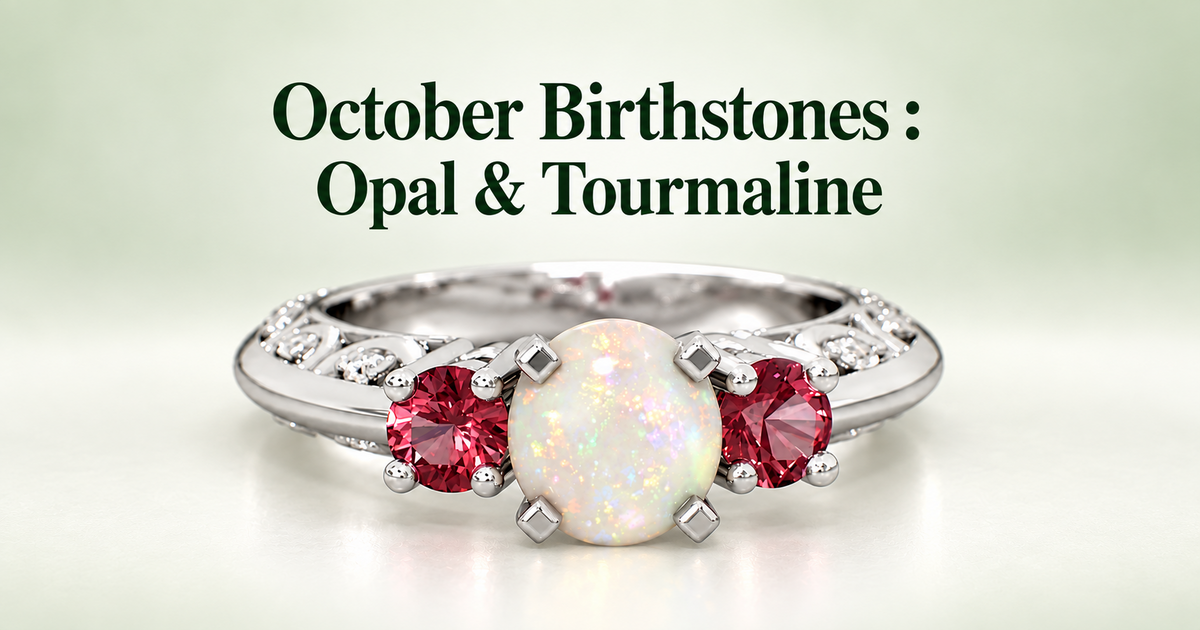
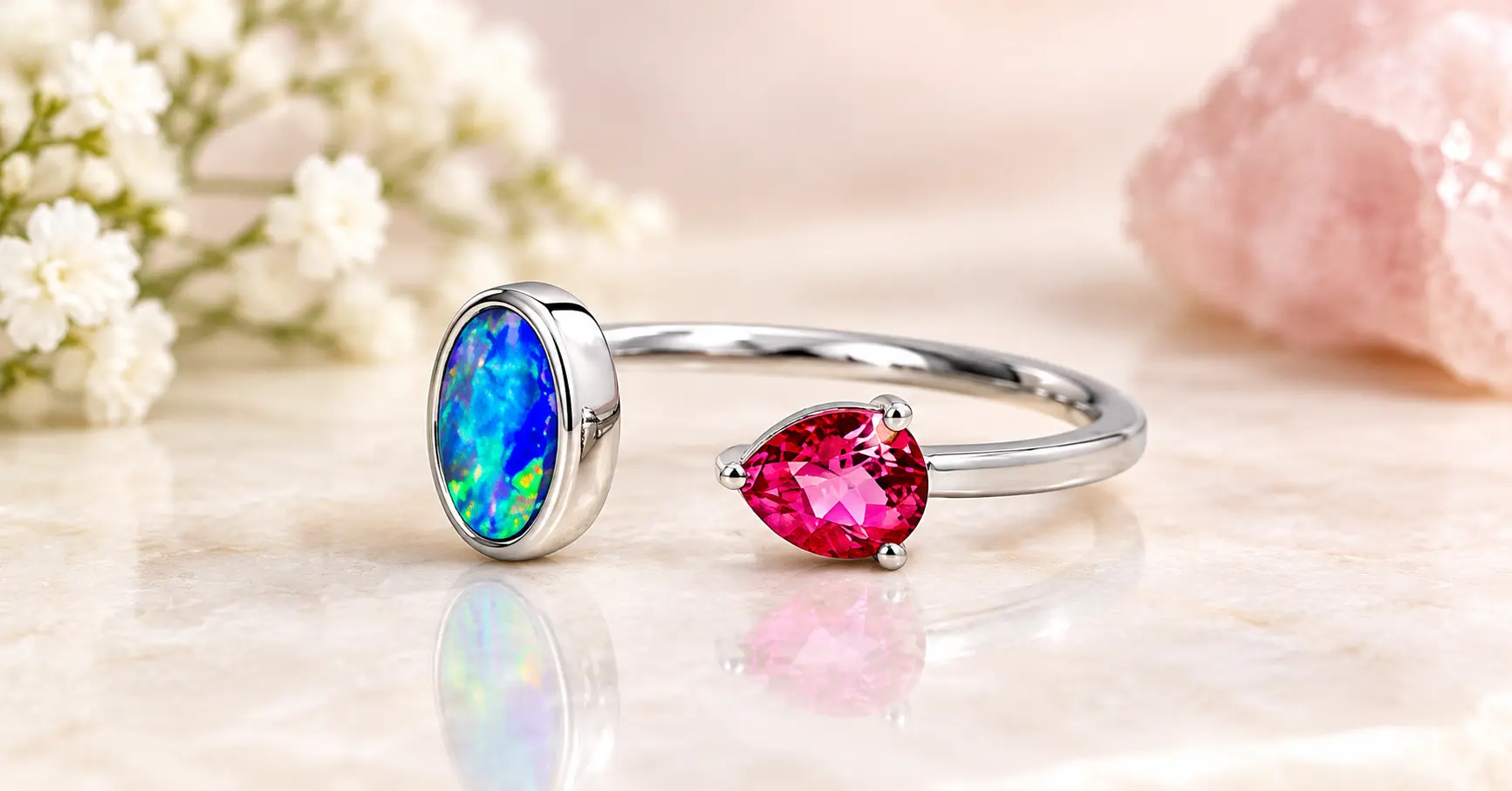
October has two birthstones, opal and tourmaline, and each offers a different way to enjoy colour. Precious opal is known for its play-of-colour: flashes of green, blue, orange or red that appear as the stone or light moves. It is not necessary that every opal displays these rainbow flashes, which is one of the differences between precious opal and common opal.
Tourmaline’s beauty comes from its remarkable colour range. It belongs to a group of closely related minerals whose chemical differences contribute to shades of pink, green, blue, red and yellow. A single crystal can even contain more than one colour. Watermelon tourmaline is a striking example, with a pink centre surrounded by green, resembling a slice of the fruit.
Their stories are just as interesting as their appearance. Opal has long symbolised hope, purity and truth in European traditions, while tourmaline spent centuries being mistaken for other gems because of its varied colours. Whether you are choosing an October birthday gift or exploring the gemstone collection at GemRishi, learning about these stones adds meaning to the colours that first catch your eye.
What Are October’s Birthstones?
October has two associated birthstones: opal and tourmaline. Opal is the traditional choice, while tourmaline is the newer addition. Pink tourmaline is especially associated with love and compassion in gemstone symbolism.
Having two options gives you room to choose. You may prefer opal’s moving flashes or tourmaline’s clear, distinct colours. Neither needs to match a strict idea of what an October birthstone should look like.
Exploring gemstone collection can help you notice those differences and discover which appearance feels right for you.
Opal: The Secret Behind Its Rainbow Colours
The shifting flashes in precious opal are called play-of-colour. They happen because tiny silica spheres inside the stone interact with light. When these spheres form an orderly arrangement, they diffract light and produce rainbow colours.
Here is a detail many people miss: not every opal has this effect. Precious opal displays play-of-colour, while common opal does not. A stone without rainbow flashes is therefore not automatically fake.
Opals also have different backgrounds. White opal has a light body colour. Black opal has a dark background that can make its flashes stand out. Boulder opal includes some of the natural rock in which it formed. Fire opal has a yellow, orange or red body colour and may lack play-of-colour.
When looking through opal gemstones, pay attention to the colours you enjoy. Watch how they appear across the stone, rather than judging it from one bright photograph.
Opal’s Meaning and History
Opal’s name is believed to come from the Sanskrit word upala, meaning “precious stone.” In ancient Rome, it became opalus.
Its unusual appearance inspired many stories. Ancient Greeks associated opal with prophecy. Bedouin traditions described it as containing lightning. In European traditions, it became a symbol of hope, purity and truth. These stories reveal how people understood a stone whose colours seemed difficult to explain.
Today, some people choose opal as a symbol of individuality. Its changing appearance gives that meaning a simple visual connection.
GemRishi’s opal meaning and wearing guide explores its traditional associations. The article on opal and creativity discusses another side of its symbolism. These beliefs can add personal meaning without being treated as guaranteed effects.
Tourmaline: More Than a Pink Birthstone
Pink may be the colour you first connect with October, but tourmaline offers much more. It occurs in green, blue, red, yellow and other shades. Some crystals contain several colour zones.
Tourmaline is actually a group of closely related minerals. Differences in chemical composition help explain its wide colour range.
One particularly recognisable variety is watermelon tourmaline. It has a pink centre surrounded by green. Cutters often slice these crystals to show the pattern. Not every pink-and-green stone has this exact arrangement.
Other names describe particular colours. Indicolite refers to blue tourmaline, while rubellite is associated with red to pinkish-red material, although trade usage varies.
Exploring tourmaline gemstones is a good reminder that an October birthstone does not have to follow one colour palette.
A Gemstone with a History of Mistaken Identity
Tourmaline’s colours caused confusion long before modern gem testing existed. Green tourmaline found in Brazil in the 1500s was mistaken for emerald. Other specimens were identified as different gemstones because of their appearance.
Its name comes from the Sinhalese word toramalli, associated with mixed gems. Scientists recognised tourmaline as distinct in the 1800s.
Looking at emerald gemstones and ruby gemstones helps explain why colour alone once seemed convincing. However, similar-looking stones can have different compositions and care requirements. Appearance is a starting point, not a reliable identification test.
Opal or Tourmaline: Which Should You Choose?
Opal suits someone who enjoys changing patterns and is comfortable giving jewellery extra care. A pendant can be a practical choice because it usually receives fewer knocks than a ring.
Tourmaline is more resistant to scratching. It measures 7–7.5 on the Mohs scale, compared with 5–6.5 for opal. However, hardness measures scratch resistance, not immunity to breaking. Both stones need thoughtful handling.
For a gift, think about the recipient’s habits. Do they wear rings every day? Do they prefer soft colours or bright jewellery?
GemRishi’s complete gemstone buying guide can help organise your questions. Its white sapphire, zircon and opal comparison offers another useful starting point when comparing jewellery options.
What to Check Before Buying
Ask for the stone’s dimensions, weight, treatment information and available laboratory report. Request a video under ordinary lighting so you can see more than a carefully chosen still image.
For opal, ask whether it is solid opal, a doublet or a triplet. Doublets and triplets are assembled stones made with layers. Knowing the construction helps you understand what you are buying and how to care for it.
Read the seller’s terms before ordering. Check GemRishi’s return policy and confirm the conditions that apply to your purchase, especially if the gemstone will be set into jewellery.
How to Care for October Birthstones
Use gentle cleaning and avoid unnecessary heat.
For opal, warm, soapy water is the recommended cleaning method. Avoid sudden temperature changes and protect the surface from scratches. Keep opal jewellery separate from harder stones.
Tourmaline can also be cleaned with warm, soapy water. GIA advises against ultrasonic and steam cleaners. Heat and sudden temperature changes can damage it.
Ask for specific care instructions if the stone is treated or assembled.
Frequently Asked Questions
Does every opal show rainbow colours?
No. Precious opal shows play-of-colour; common opal does not. Both are opal.
Is tourmaline always pink?
No. Tourmaline occurs in many colours, and individual crystals can contain multiple colour zones.
Can I wear these stones if I was not born in October?
Yes. Birthstone traditions can make a gift meaningful, but you can choose either gemstone simply because you enjoy it.
A Personal Way to Celebrate October
Opal invites you to notice changing light. Tourmaline gives you an unusually wide choice of colours. Their appeal lies in those details.
Choose the stone you enjoy looking at, understand its care needs, and ask questions before buying. That is how an October birthstone becomes a piece you will want to keep wearing.
Have Questions Regarding This Gemstone?
Connect 1-on-1 with GemRishi’s certified Vedic gemologists on WhatsApp for personalized birth chart recommendations, lab certificate verification, or custom jewelry quotes.
Gemrishi
Gemrishi is a certified gemologist and Vedic astrology scholar at GemRishi with over 15 years experience in natural gemstone origin authentication.