# Navratri Day 8 (Ashtami Puja): Maa Mahagauri – The Goddess of Purity, Peace, Grace & Forgiveness
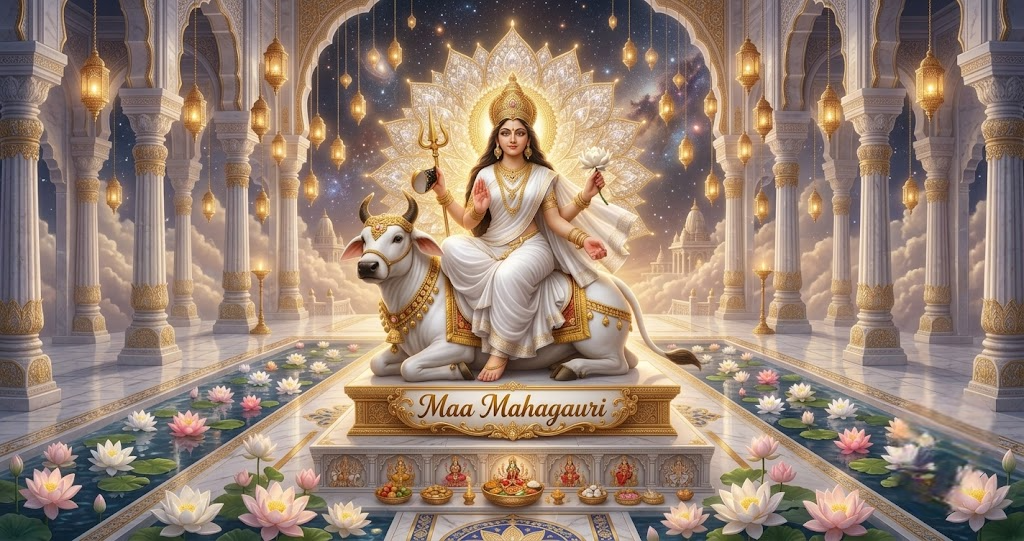
Navratri Day 8, known as Ashtami Navratri. It is one of the most significant days of the nine-day festival (Navratri). On this day, devotees traditionally worship Maa Mahagauri, the eighth form of Navadurga. She is known for with purity, peace, grace, and spiritual renewal.
Ashtami holds special importance for devotees who observe fasting, prayers, and devotional rituals during Navratri. Many families perform Ashtami Puja, offer flowers, fruits, sweets, and other traditional offerings to the goddess. In several traditions, Kanya Puja is also performed on Ashtami, honouring young girls as manifestations of the divine feminine. Devotees visit temples, chant sacred mantras, perform aarti, and seek Maa Mahagauri’s blessings for peace and prosperity. Together, these rituals make Navratri Day 8 a meaningful occasion for devotion, reflection, and celebration.
“Let’s take a closer look at the significance of Navratri Day 8, the worship of Maa Mahagauri, and the traditions associated with Ashtami.”
Who Is Maa Mahagauri? Story, Meaning & Spiritual Significance
Maa Mahagauri is worshipped as the eighth form of Navadurga during Navratri Day 8, also known as Ashtami Navratri. The name “Mahagauri” means “extremely fair” or “radiantly white,” symbolizing purity, peace, grace, and spiritual clarity. According to traditional Hindu beliefs, Maa Mahagauri performed intense penance to attain Lord Shiva, and her devotion is closely associated with her divine transformation. Her story represents the journey from perseverance and devotion toward purity and spiritual awakening. Maa Mahagauri is traditionally depicted wearing white garments and riding a white bull, reflecting serenity and divine consciousness. Devotees perform Maa Mahagauri Puja on the eighth day of Navratri and seek her blessings for peace, prosperity, forgiveness, and emotional strength. Her four arms traditionally hold a trident and damaru, while her other hands represent blessings and protection. The spiritual significance of Maa Mahagauri lies in overcoming negativity and moving toward inner peace and purity. Her story reminds devotees that sincere devotion, patience, and spiritual discipline can lead to transformation and inner harmony.
Navratri Day 8: Maa Mahagauri Puja Vidhi, Mantra & Prayers
On Navratri Day 8, devotees worship Maa Mahagauri with devotion and follow traditional Ashtami Puja Vidhi to seek her blessings. People clean the puja space and placing Maa Mahagauri's idol or image on a clean altar. The include Navratri Puja Samagri like flowers, fruits, incense, diya, roli, kumkum, rice, sweets, and other traditional offerings. Light the diya and incense, offer flowers and bhog, and recite prayers dedicated to Maa Mahagauri. Devotees also perform Kanya Pujan as part of Ashtami traditions, depending on their family customs.
People chants Maa Mahagauri mantra is “ॐ देवी महागौर्यै नमः” (Om Devi Mahagauryai Namah).
The mantra is traditionally chanted with concentration and devotion during the puja or meditation. Its simple meaning is an invocation seeking the blessings of Goddess Mahagauri. After the offerings and mantra chanting, devotees perform Maa Mahagauri Aarti and conclude the Navratri Day 8 Puja with prayers for peace, prosperity, purity, and well-being.
Significance of White Colour on Navratri Day 8
White is closely associated with Maa Mahagauri, the goddess worshipped on Navratri Day 8. She is worshipped for white appearance ,purity, peace, grace, and spiritual clarity. This is the reason why devotee wearing white or including white flowers and offerings in Ashtami Puja is a way of reflecting these qualities.
Why Is White Associated with Maa Mahagauri?
Maa Mahagauri is traditionally depicted in white attire, symbolising purity and serenity. The colour also represents a calm mind and freedom from negativity, making it an important part of her devotional symbolism.
White Gemstones and Maa Mahagauri
The symbolism of white naturally connects with gemstones such as Pearl, Moonstone, White Quartz, and White Sapphire. Their soft or luminous appearance complements the themes of purity, peace, and serenity associated with Maa Mahagauri.
Pearl is traditionally associated with the Moon and is valued for its soft lustre and classic beauty. You can explore the GemRishi Pearl collection.
Moonstone is known for its beautiful, glowing effect and is another gemstone that fits naturally with the peaceful symbolism of Ashtami. Explore GemRishi Moonstone to learn more about this gemstone.
Choosing a White Gemstone for Navratri
When choosing a white gemstone, consider its authenticity, quality, appearance, certification, and intended use. If you are selecting one for astrological purposes, traditional Vedic practices may recommend gemstones based on an individual's birth chart rather than colour alone.
These gemstone associations are rooted in traditional and spiritual beliefs, not scientifically proven effects. Still, incorporating a white gemstone into Navratri celebrations can be a meaningful way to appreciate the symbolism and beauty associated with Maa Mahagauri.
How to Celebrate Navratri Day 8(Ashtmi Puja) at Home
Celebrating Navratri Day 8 (Ashtami) at home can be simple and meaningful.
People can arrange a clean prayer space, sincere devotion, and traditional offerings are enough to create a peaceful atmosphere.
Simple Home Puja
Begin by cleaning the puja area and placing an image or idol of Maa Mahagauri. Light a diya, offer flowers, incense, and water, and then recite Maa Mahagauri's mantra or other Durga prayers. Complete the puja with aarti and seek the goddess's blessings for peace and well-being.
Fasting Practices
Many devotees observe a fast during Navratri according to their family traditions and personal practices. Some follow a fruit-based or sattvic diet, while others observe a stricter fast. It is always important to follow a fasting practice that is suitable for your individual circumstances.
Bhog Preparation
Traditional bhog may include simple sattvic foods, fruits, sweets, and other offerings prepared according to family customs. Offer the food to Maa Mahagauri with devotion before sharing it as prasad with family members.
Prayer and Devotional Activities
Ashtami is also a beautiful time to slow down and spend a few peaceful moments in prayer. You can chant Maa Mahagauri's mantra, read Durga-related scriptures, visit a temple, perform aarti, or simply sit quietly in reflection.
For those who enjoy combining spirituality with gemstones, exploring traditional stones such as Pearl, Moonstone, or White Sapphire can also add a symbolic element to the celebration. You can explore the GemRishi gemstone collection to learn more about different gemstones and their traditional associations.
FAQs About Navratri Day 8 & Maa Mahagauri
Who is worshipped on Navratri Day 8?
Maa Mahagauri, the eighth form of Navadurga, is traditionally worshipped on Navratri Day 8, also known as Ashtami.
Why is Ashtami important in Navratri?
Ashtami is considered an important day of Navratri dedicated to Devi worship. Many devotees perform special puja, observe fasting, offer bhog, and participate in Kanya Puja, depending on their family and regional traditions.
What is Maa Mahagauri's mantra?
A commonly recited mantra associated with Maa Mahagauri is:
“ॐ देवी महागौर्यै नमः” (Om Devi Mahagauryai Namah)
Devotees may chant it during their daily prayers or Ashtami Puja as an expression of devotion.
What bhog is offered to Maa Mahagauri?
Bhog varies according to regional and family traditions. Devotees commonly offer fruits, sweets, coconut, and simple sattvic preparations to Maa Mahagauri.
Why is Maa Mahagauri associated with white?
Maa Mahagauri is traditionally depicted wearing white and having a radiant white complexion. White symbolises purity, peace, serenity, and spiritual clarity, which are qualities associated with her form.
This symbolism also makes white gemstones such as Pearl and Moonstone an interesting addition to a Navratri-themed gemstone discussion. You can explore GemRishi's Pearl and gemstone collections for more information.
What is done during Ashtami Puja?
Ashtami Puja generally includes cleaning the prayer space, invoking Maa Mahagauri, lighting a diya, offering flowers and bhog, chanting mantras, performing aarti, and seeking the goddess's blessings. Some families also perform Kanya Puja as part of their Ashtami traditions.
Final Thought
Navratri Day 8 is a celebration of devotion, purity, and inner peace. Whether you observe Ashtami through a traditional puja, fasting, Kanya Puja, or quiet prayer at home, the day offers an opportunity to connect with the peaceful symbolism of Maa Mahagauri. And for gemstone enthusiasts, exploring the beauty and traditional significance of stones such as Pearl, Moonstone, and White Sapphire can be a natural extension of the day's theme.
Have Questions Regarding This Gemstone?
Connect 1-on-1 with GemRishi’s certified Vedic gemologists on WhatsApp for personalized birth chart recommendations, lab certificate verification, or custom jewelry quotes.
Gemrishi
Gemrishi is a certified gemologist and Vedic astrology scholar at GemRishi with over 15 years experience in natural gemstone origin authentication.