Navratri Day 7: Maa Kalaratri & Black-Oynx – Significance, Symbolism & Astrology
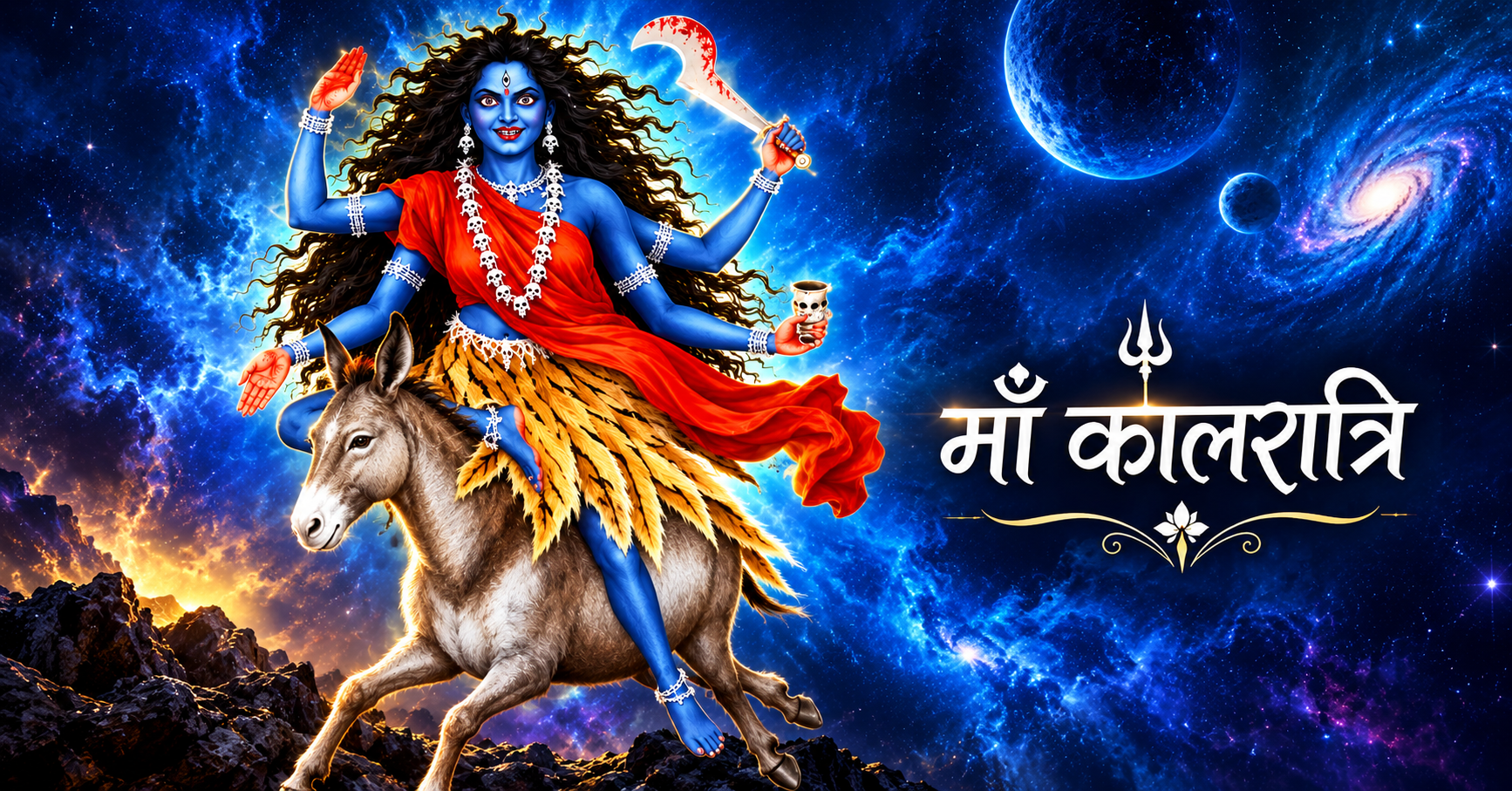
The seventh day of Navratri, known as Saptami, is dedicated to Maa Kalaratri. She is one of the most powerful and awe-inspiring forms of Goddess Durga. Her appearance may seem fierce, but her purpose is deeply protective.Maa Kalratri is know for strength that helps overcome fear, darkness, ignorance, and negativity. She is traditionally worshipped as a divine mother who protects her devotees and gives them the courage to face difficult situations.
Her name itself carries powerful symbolism. “Kalaratri” is commonly associated with the idea of the dark night, representing the destruction of darkness and evil. She is also known as Shubankari, meaning the one who brings auspiciousness. This reminds devotees that her fierce appearance does not represent destruction for its own sake; rather, it represents the power needed to remove obstacles and protect what is good.
This symbolism makes Black Onyx an interesting gemstone to explore alongside Maa Kalaratri. Black Onyx is widely appreciated for its deep black appearance and is often associated in modern crystal traditions with strength, grounding, protection, and emotional resilience. While Black
This guide is all about the seventh form of Goddess Durga(Maa Kalratri ) and Black Oynx gemstone.
Who Is Maa Kalaratri?
Maa Kalaratri is traditionally recognised as the seventh form of Navadurga, the nine manifestations of Goddess Durga worshipped during Navratri. Her form is among the fiercest of the nine, reflecting the immense power required to confront evil and darkness.
She is commonly depicted with a dark complexion, flowing or dishevelled hair, three eyes, and four arms. Her hands carry symbolic weapons while the other hands display gestures associated with protection and blessings. She rides a donkey, which is often interpreted through ideas of humility and groundedness.
Although her appearance can look frightening, Maa Kalaratri is traditionally considered compassionate toward her devotees. Her fierce form symbolises the destruction of negative forces, while her protective nature represents reassurance and divine shelter.
This contrast is one of the most meaningful aspects of her worship. Maa Kalaratri teaches that something can appear fierce while still being deeply protective.
Why Is Maa Kalaratri Worshipped on Navratri Day 7?
Navratri is traditionally celebrated over nine nights and nine days, with each day associated with a particular form of Goddess Durga. Saptami, the seventh day, is dedicated to Maa Kalaratri.
Her worship is associated with overcoming fear and negativity. Devotees seek her blessings for courage, protection, and strength during challenging circumstances.
The spiritual message behind Maa Kalaratri can also be understood in everyday life. Everyone experiences periods of uncertainty, fear, stress, or difficulty. Her symbolism reminds people that avoiding darkness is not always the answer. Sometimes, we need the courage to face it directly.
This idea connects naturally with the symbolism often associated with Black Onyx.
Black Onyx and Its Symbolism
Black gemstones have long attracted attention because of their dramatic appearance. Black Onyx, in particular, is commonly associated in modern crystal traditions with ideas such as grounding, strength, protection, stability, and resilience.
These meanings are not scientifically proven effects of the gemstone. Instead, they reflect traditional, cultural, and contemporary spiritual interpretations.
The symbolism can nevertheless make Black Onyx meaningful to someone who enjoys wearing jewellery with a personal intention.
For example, a person might choose Black Onyx as a reminder to remain grounded during stressful situations or to approach challenges with greater confidence.
This symbolic interpretation fits naturally with the broader message of Maa Kalaratri: strength comes from facing challenges with courage rather than allowing fear to control us.
Maa Kalaratri and Black Onyx: Understanding the Connection
The connection between Maa Kalaratri and Black Onyx should primarily be understood as a symbolic one.
Maa Kalaratri is traditionally associated with the destruction of darkness, fear, evil, and negativity. Black Onyx, meanwhile, is commonly given symbolic meanings related to protection, grounding, strength, and resilience.
Both therefore share themes that can be meaningful when discussing inner strength and protection.
However, there is an important distinction. Black Onyx is not universally recognised in Hindu scriptures as the gemstone of Maa Kalaratri. There is no need to turn a symbolic connection into a religious rule.
Instead, the gemstone can be introduced as a modern complementary symbol that reflects some of the qualities people associate with Maa Kalaratri.
This distinction makes the topic more authentic and avoids presenting spiritual interpretations as established religious facts.
Why Does Black Onyx Represent Strength and Protection?
The deep black appearance of Black Onyx naturally contributes to its symbolism. Black has often been associated with mystery, depth, seriousness, and the unknown.
In modern crystal traditions, Black Onyx is frequently viewed as a grounding stone. Its symbolism can be particularly appealing to people who want a physical reminder of stability and resilience.
Imagine wearing a Black Onyx bracelet during an important phase of your life. The stone itself does not scientifically remove fear or negative energy, but its meaning can serve as a personal reminder:
Stay grounded. Stay patient. Face the challenge.
That personal symbolism is where gemstones can become more than decorative objects.
Similarly, Maa Kalaratri's story encourages devotees to look beyond fear and recognise the strength required to overcome darkness.
Maa Kalaratri's Message of Courage
One of the strongest lessons associated with Maa Kalaratri is fearlessness.
Her fierce appearance symbolises a force that does not retreat when faced with evil or darkness. Instead, she confronts it.
In modern life, this idea can be interpreted in a simple and relatable way. Courage does not necessarily mean that we never feel afraid. It can mean continuing forward even when fear is present.
This is also where Black Onyx can become a meaningful symbolic companion. Its dark appearance can serve as a visual reminder of resilience, while Maa Kalaratri's story provides a spiritual reminder of courage.
Together, they create a theme that is easy to understand: darkness does not always have to be feared; sometimes, it has to be faced.
Maa Kalaratri and Black Onyx: A Spiritual Perspective
The beauty of this topic lies in the symbolism rather than a strict gemstone prescription.
Maa Kalaratri represents the courage to confront darkness. Black Onyx, through modern crystal symbolism, represents grounding, strength, and protection. Together, they can provide a meaningful theme for Navratri Day 7.
For a devotee, Maa Kalaratri may represent faith and divine protection. For someone interested in gemstones, Black Onyx may serve as a personal symbol of resilience. And for someone interested in both, the combination can become a reminder to remain strong and grounded during challenging moments.
The gemstone does not need to be presented as having supernatural powers. Its value can also come from the meaning a person gives to it.
Conclusion
Maa Kalaratri and Black Onyx come together through a shared theme of strength, courage, grounding, and protection. Maa Kalaratri's fierce form represents the power to overcome darkness, while Black Onyx is commonly associated in modern crystal traditions with resilience and grounding.
It is important to remember that Black Onyx is not universally prescribed as Maa Kalaratri's gemstone. The connection is best understood symbolically rather than as a fixed religious or astrological rule.
As Navratri reaches its seventh day, Maa Kalaratri's message remains powerful: facing fear requires courage, and difficult periods can become opportunities to discover inner strength. Whether appreciated as a gemstone, a piece of jewellery, or a personal symbol, Black Onyx can complement that message beautifully.
Frequently Asked Questions
1. What is Maa Kalaratri known for?
Maa Kalaratri is traditionally known as the seventh form of Navadurga and is associated with courage, protection, and the destruction of darkness and evil.
2. Is Black Onyx the gemstone of Maa Kalaratri?
Black Onyx is not universally established as Maa Kalaratri's prescribed gemstone. Its connection with her is better understood as a symbolic association.
3. What does Black Onyx symbolise?
In modern crystal traditions, Black Onyx is commonly associated with grounding, strength, protection, stability, and resilience.
4. Why is Maa Kalaratri worshipped on Day 7?
Saptami, the seventh day of Navratri, is traditionally dedicated to Maa Kalaratri, whose fierce form represents the power to overcome darkness and fear.
5. Can Black Onyx be worn as jewellery?
Yes. Black Onyx is commonly used in rings, bracelets, pendants, necklaces, and beads.
6. Is Black Onyx scientifically proven to provide protection?
No. Spiritual and crystal-healing claims about protection or energy are not scientifically established. Such meanings belong to cultural, spiritual, and contemporary crystal traditions.
7. What is the spiritual message of Maa Kalaratri?
Her symbolism encourages courage, fearlessness, strength, and the ability to face darkness and difficult circumstances with faith.
Have Questions Regarding This Gemstone?
Connect 1-on-1 with GemRishi’s certified Vedic gemologists on WhatsApp for personalized birth chart recommendations, lab certificate verification, or custom jewelry quotes.
Gemrishi
Gemrishi is a certified gemologist and Vedic astrology scholar at GemRishi with over 15 years experience in natural gemstone origin authentication.