Navratri Day 3: Maa Chandraghanta & Pearl (Moti) — The Divine Connection of Courage, Peace & Inner Strength
Navratri is more than a nine-day festival. For many devotees, it is a spiritual journey through different qualities of the Divine Feminine—strength, discipline, courage, wisdom, compassion, and transformation.People are so devoted that took fast for 9 days.
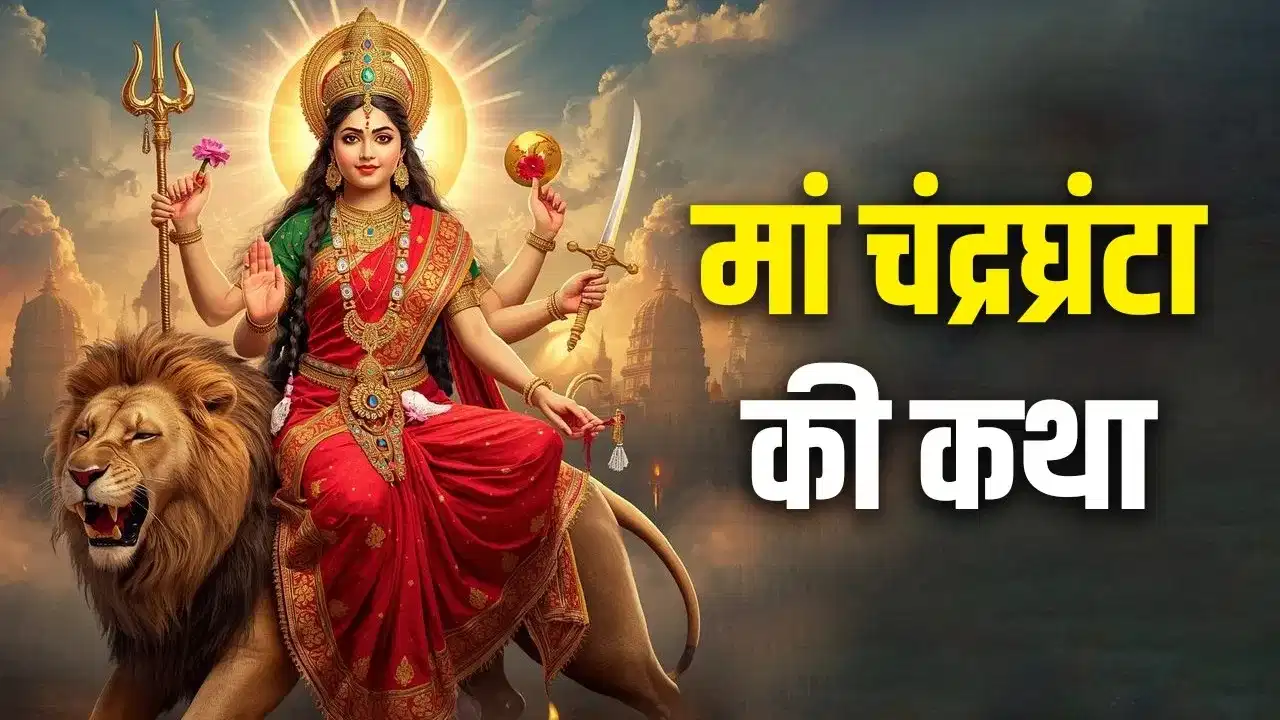
On Day 3 (Tritiya), devotees worship Maa Chandraghanta, the third form of Goddess Durga. Her form beautifully brings together two qualities that may initially seem opposite: the courage of a warrior and the peace of a calm mind.
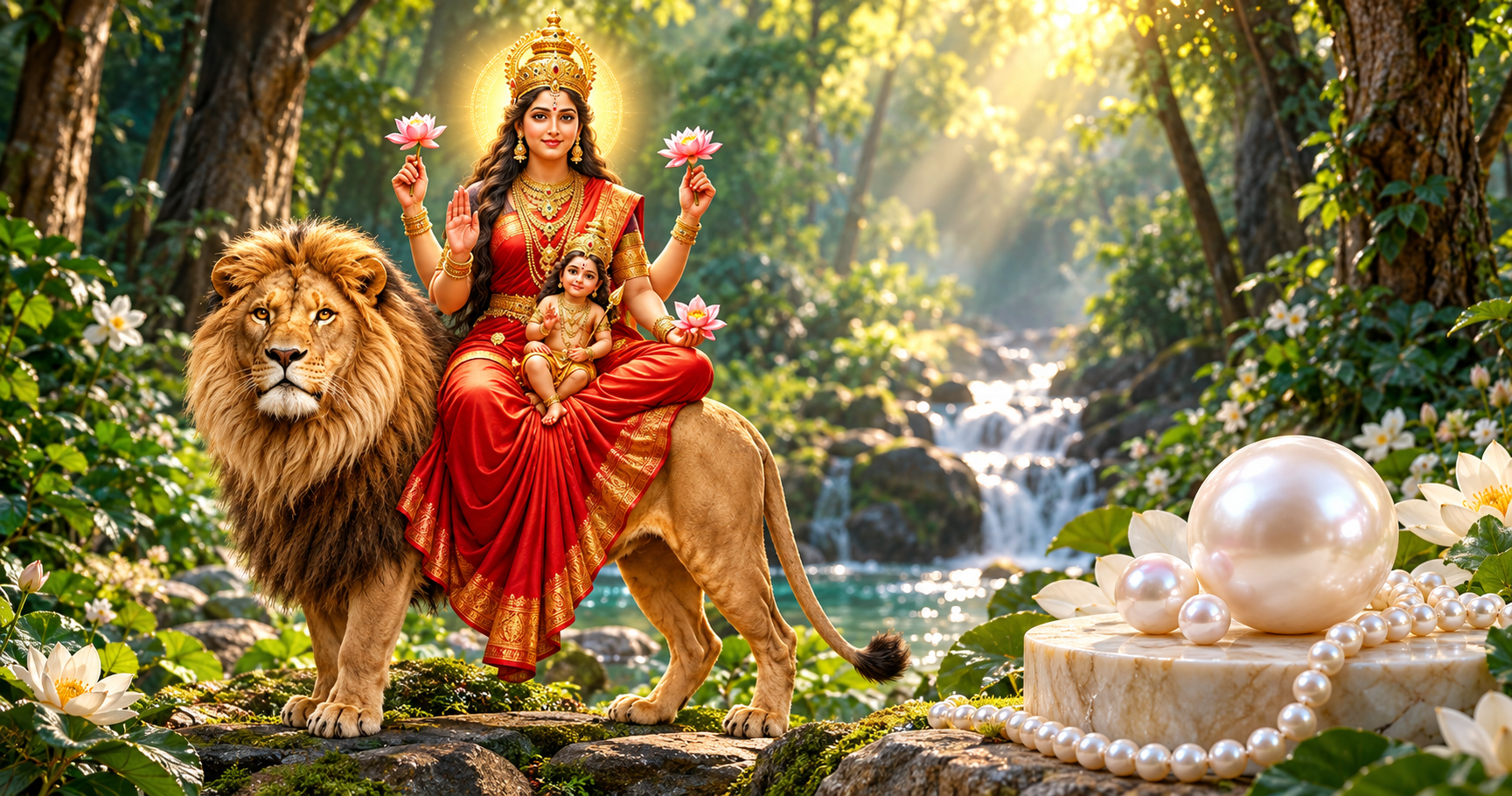
She is traditionally depicted riding a tiger, carrying divine weapons, and wearing a crescent moon shaped like a bell on her forehead. Her name comes from Chandra, meaning Moon, and Ghanta, meaning bell.
This connection with the Moon makes Pearl (Moti) a meaningful gemstone to explore alongside Maa Chandraghanta. In traditional Vedic astrology, Pearl is associated with Chandra (the Moon) and is symbolically connected with calmness, emotional balance, and inner peace.
Explore GemRishi – Certified Natural Gemstones
Who Is Maa Chandraghanta?
Maa Chandraghanta is worshipped as the third form of Navadurga on Tritiya. She represents Courage, Protection, Strength, Fearlessness, Peace, Emotional balance, Spiritual awareness.
Her appearance represents a powerful transformation from inner discipline to courageous action. She is traditionally shown with multiple arms carrying divine weapons and sacred objects, while riding a tiger.
However, Maa Chandraghanta's warrior form is not simply about aggression.
There is a deeper message behind her appearance.
Maa Chandraghanta represents the courage to face difficult situations without losing inner peace.
This message remains meaningful in everyday life. We all experience situations where we need to make difficult decisions, overcome fear, speak up, or remain calm during challenging circumstances.
Her form reminds us that being peaceful does not mean being weak.
The Meaning Behind the Name Chandraghanta
The name Chandraghanta is formed from two words:
- Chandra — Moon
- Ghanta — Bell
The crescent moon on her forehead is traditionally described as resembling a bell.
The Moon holds an important place in Indian spiritual and astrological traditions. It is traditionally associated with the mind, emotions, sensitivity, intuition, and inner nature.
The bell, meanwhile, is commonly associated with awakening and drawing one's attention toward the sacred.
Together, this symbolism offers a beautiful message:
A calm mind can give birth to courageous action.
Maa Chandraghanta represents more than physical strength. Her form encourages devotees to develop confidence, awareness, emotional steadiness, and the courage to face challenges.
Why Is Pearl (Moti) Associated With Maa Chandraghanta?
Among traditional Vedic gemstones, Pearl (Moti) has a strong connection with the Moon.
In Vedic astrology, Pearl is traditionally associated with Chandra (Moon). The Moon is traditionally connected with qualities such as:
- Emotional sensitivity
- Peace
- Intuition
- Mental calmness
- Nurturing energy
- Emotional balance
This creates a natural symbolic connection between Maa Chandraghanta, the Moon, and Pearl.
The Traditional Connection
Maa Chandraghanta --> Crescent Moon — Chandra --> Peace & Emotional Balance -->Pearl (Moti)
Pearl's soft, luminous appearance also reflects the gentle quality traditionally associated with moonlight.
Read GemRishi's Pearl Wearing Guide
Pearl and the Symbolism of Inner Peace
Pearl has mostly famous for its naturally soft and luminous appearance.
In Vedic astrology, its association with the Moon has given Pearl an additional symbolic meaning. It is traditionally connected with:
- Peace and calmness
- Emotional balance
- Sensitivity
- Intuition
- Mental clarity
- Nurturing qualities
Her warrior form reminds us to stand strong, while the Moon symbolism reminds us to remain composed.
This balance is perhaps one of the most meaningful lessons of Day 3.
Courage does not always have to be loud.It also means staying calm, setting boundary, continuing despite uncertainty, trusting yourself enough to take next step.
Explore Pearl (Moti) at GemRishi
What Maa Chandraghanta Teaches Us About Courage
In everyday life, courage does not always mean taking a dramatic risk or fighting a major battle.
Courage can be much quieter.
It can mean:
- Starting again after failure
- Having an honest conversation
- Standing up for what matters
- Setting healthy boundaries
- Remaining calm during conflict
- Facing an uncomfortable truth
- Continuing toward a goal despite fear
Maa Chandraghanta's traditional imagery captures this idea beautifully.
She is prepared for battle, but her form is not simply about anger. Her symbolism brings together strength, protection, grace, and serenity.
This gives Day 3 an important message:
True strength also includes emotional control.
The Tiger of Maa Chandraghanta: A Symbol of Fearlessness
Maa Chandraghanta is traditionally depicted riding a tiger.
The tiger represents qualities such as Strength, Courage, Power, Fearlessness, Determination
Fear can become bigger when we continuously avoid it. When we finally face it, we may discover that we have more strength than we imagined.
The tiger therefore fits beautifully with the message of Day 3:
Do not allow fear to make every decision for you.
At the same time, Maa Chandraghanta's peaceful expression reminds us that courage does not require losing control.
The Crescent Moon and the Mind
The Moon has an important place in Vedic astrology and is traditionally associated with the mind and emotional nature.
Maa Chandraghanta's crescent Moon therefore adds another meaningful layer to her symbolism.
A restless mind can make a small problem feel overwhelming. A calm mind can look at the same situation with greater clarity.
This is where the traditional symbolism of Pearl becomes particularly relevant.
Pearl is traditionally associated with the Moon and is often discussed in relation to peace, emotional balance, and calmness.
Read GemRishi's Guide to Pearl for Peace & Calm
How to Observe Navratri Day 3
Devotees may observe Navratri according to their family, regional, and spiritual traditions.
A simple Day 3 routine can include:
1. Begin With a Peaceful Mind
Start the day with cleanliness and a calm mindset.
2. Prepare Your Puja Space
Keep your place of worship clean and peaceful.
3. Light a Diya
Light a diya and offer flowers or other items according to your family tradition.
4. Offer Your Prayers
Spend a few quiet moments in prayer, meditation, or reflection.
5. Chant Maa Chandraghanta's Mantra
ॐ देवी चन्द्रघण्टायै नमः
Om Devi Chandraghantayai Namah
6. Reflect on Courage
Think about one fear or challenge in your life that you would like to face with greater courage and calmness.
The purpose does not have to be complicated. Sometimes a few minutes of sincere prayer and reflection can make the day deeply meaningful.
Should You Wear Pearl on Navratri Day 3?
Pearl can be explored as a symbolic gemstone associated with Maa Chandraghanta's Moon connection.
However, if you are considering Pearl specifically as an astrological gemstone, traditional Vedic astrology recommends examining an individual's birth chart before wearing a planetary gemstone.
GemRishi also explains that gemstone selection should consider individual horoscope factors rather than choosing a gemstone solely because of its general planetary association.
Read GemRishi's Complete Gemstone Buying Guide
Therefore, there is a difference between:
Wearing Pearl as jewellery
and
Wearing Pearl as an astrological gemstone.
For the latter, consulting a knowledgeable Vedic astrologer is traditionally recommended.
Maa Chandraghanta and Pearl: A Simple Spiritual Connection
The connection between Maa Chandraghanta and Pearl can be understood through three simple ideas:
Maa Chandraghanta
Courage, protection and inner strength
↓
Chandra — The Moon
Mind, emotions and calmness
↓
Pearl — Moti
Traditional gemstone of the Moon
This makes Pearl a beautiful symbolic gemstone for Navratri Day 3.
The idea is not that a gemstone alone creates courage or peace. Instead, the gemstone can serve as a personal reminder of the qualities we want to cultivate.
When you see Pearl, think of the Moon.
When you think of the Moon, think of calmness.
And when you think of Maa Chandraghanta, remember that calmness and courage can exist together.
The Deeper Message of Day 3
Perhaps the most beautiful lesson of Maa Chandraghanta is that strength and peace do not have to be opposites.
You can be gentle and still have boundaries.
You can be calm and still be courageous.
You can be compassionate and still stand firmly for what matters.
You can face difficulties without allowing fear to control your actions.
That balance makes Maa Chandraghanta's form especially meaningful.
As Navratri moves from Maa Shailaputri to Maa Brahmacharini and then to Maa Chandraghanta, the spiritual journey moves toward greater courage and purposeful action.
So, on the third day of Navratri, take a moment to ask yourself:
Where in my life do I need more courage—and where do I need more peace?
Perhaps the answer to both is connected.
Frequently Asked Questions
1. Who is Maa Chandraghanta?
Maa Chandraghanta is the third form of Goddess Durga among the Navadurga and is worshipped on the third day of Navratri, known as Tritiya. She is known for courage, protection, strength, and inner peace.
2. Why is Maa Chandraghanta called Chandraghanta?
Her name comes from Chandra (Moon) and Ghanta (bell). She is traditionally depicted with a crescent moon on her forehead that resembles a bell.
3. Which gemstone is associated with Maa Chandraghanta?
Pearl (Moti) is a suitable traditional gemstone connection because Pearl is associated with the Moon (Chandra) in Vedic astrology, while Maa Chandraghanta's form prominently features the crescent Moon.
4. What does Pearl represent in Vedic astrology?
Pearl is traditionally associated with the Moon and qualities such as emotional balance, peace, sensitivity, intuition, and mental calmness.
5. Can everyone wear Pearl during Navratri?
Pearl can be worn as jewellery, but if it is being considered as an astrological gemstone, traditional Vedic astrology recommends checking the individual's birth chart before wearing it.
6. What is the mantra of Maa Chandraghanta?
A commonly recited mantra is:
ॐ देवी चन्द्रघण्टायै नमः
Om Devi Chandraghantayai Namah
It is traditionally recited while worshipping Maa Chandraghanta on the third day of Navratri.
7. What is the main message of Maa Chandraghanta?
Maa Chandraghanta's traditional symbolism represents the balance of courage and peace—facing challenges fearlessly while maintaining inner calm, awareness, compassion, and self-control.
Have Questions Regarding This Gemstone?
Connect 1-on-1 with GemRishi’s certified Vedic gemologists on WhatsApp for personalized birth chart recommendations, lab certificate verification, or custom jewelry quotes.
Gemrishi
Gemrishi is a certified gemologist and Vedic astrology scholar at GemRishi with over 15 years experience in natural gemstone origin authentication.