Natural Basra Pearls vs. Cultured Pearls in Vedic Astrology: Which Moti Is Best?
Introduction: Why the Right Pearl Matters
Pearls have held a special place in Indian jewellery, spiritual traditions and Vedic astrology for centuries. Known as Moti or Mukta Ratna, the pearl is traditionally associated with Chandra, the Moon, which is believed in Vedic astrology to represent the mind, emotions, inner peace and intuition. From rare Basra pearls admired by collectors to elegant South Sea pearls and accessible cultured varieties, each type offers a distinctive combination of beauty, origin and value.
Choosing a pearl for astrological purposes can raise an important question: Is a natural Basra pearl better than a cultured pearl for wearing as Moti?
The answer depends on what you value most. Natural pearls are exceptionally rare, while cultured pearls are genuine pearls formed with human assistance. Traditional astrological practitioners may prefer natural pearls for specific spiritual purposes, but beliefs about a pearl's planetary effects are not scientifically established. For buyers, understanding these differences is essential before making an informed decision.
This guide explores Basra pearls vs. cultured pearls in Vedic astrology, the unique appeal of South Sea pearls, the traditional connection between Moti and Chandra, and the essential factors to consider before purchasing a pearl gemstone.
What Is Moti in Vedic Astrology?
In Vedic astrology, Moti is the traditional gemstone associated with Chandra Graha, or the Moon. The Moon is symbolically connected with the mind, emotions, maternal relationships, sensitivity and mental composure. Within traditional Jyotish practices, a pearl may be recommended when an astrologer considers strengthening the Moon appropriate for an individual's birth chart.
Pearls are different from most traditional astrological gemstones because they are organic gems formed by molluscs. Their soft lustre, gentle glow and natural colour variations have contributed to their enduring association with serenity and elegance.
Natural pearls, cultured pearls and imitation pearls should not be treated as interchangeable categories. Natural pearls form without human intervention, cultured pearls grow with human assistance, and imitation pearls are manufactured to resemble genuine pearls.
For an astrological purchase, it is worth understanding the distinction between a pearl's gemological identity and the traditional beliefs associated with wearing it.
What Are Natural Basra Pearls?
Basra pearls are among the most celebrated varieties of natural pearls. The name is historically associated with Basra, Iraq, a major centre of the natural pearl trade connected with the Persian Gulf.
These pearls are valued for their rarity, distinctive lustre and historical significance. Natural Basra pearls can display warm white, creamy or subtle golden tones, although individual pearls vary in appearance. Their shapes may range from round to oval, button-like or irregular.
Unlike cultured pearls, natural Basra pearls develop without deliberate human intervention to initiate pearl formation. Their rarity, provenance, condition, size, shape, lustre and surface quality can all influence their market value.
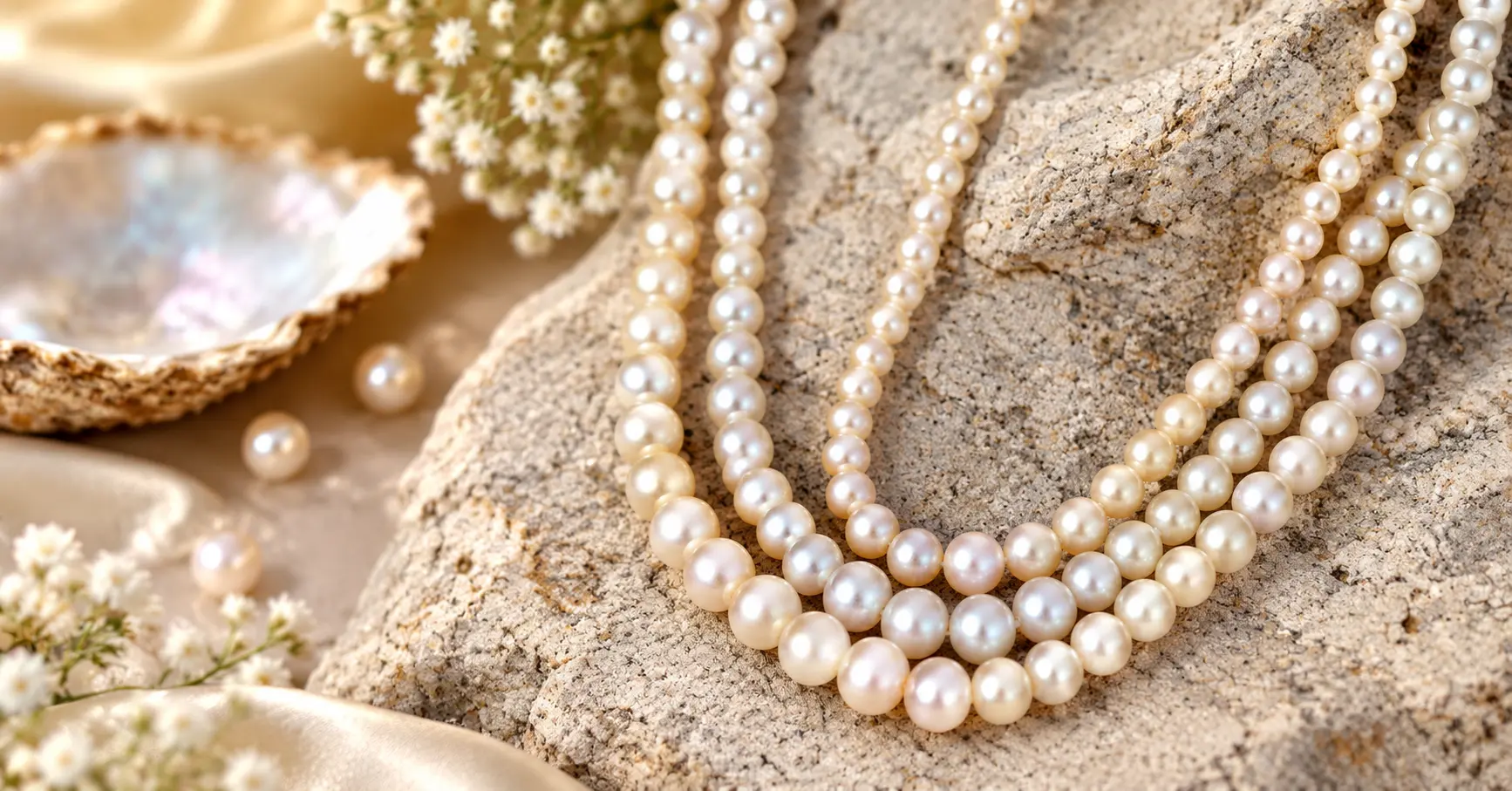
In traditional gemstone astrology, some practitioners favour natural pearls because they associate them more closely with the pearls described in historical astrological traditions. Nevertheless, the claim that Basra pearls produce stronger planetary effects than other genuine pearls is a matter of belief, not an established scientific conclusion.
Because genuine natural Basra pearls can be exceptionally valuable, buyers should be particularly cautious about unsupported claims of origin. A pearl's colour, shape or appearance alone cannot establish that it is a natural Basra pearl.
What Are Cultured Pearls?
Cultured pearls are genuine pearls produced with human assistance. Pearl farmers initiate the process by introducing a nucleus or mantle tissue, depending on the cultivation method, into a suitable mollusc. The mollusc then deposits nacre as the pearl develops.
This process differs from natural pearl formation in how growth begins, but the pearl itself is still formed by the mollusc. Cultured pearls are not automatically imitation pearls.
Most pearls available in today's jewellery market are cultured. They include freshwater pearls and saltwater varieties such as Akoya, Tahitian and South Sea pearls.
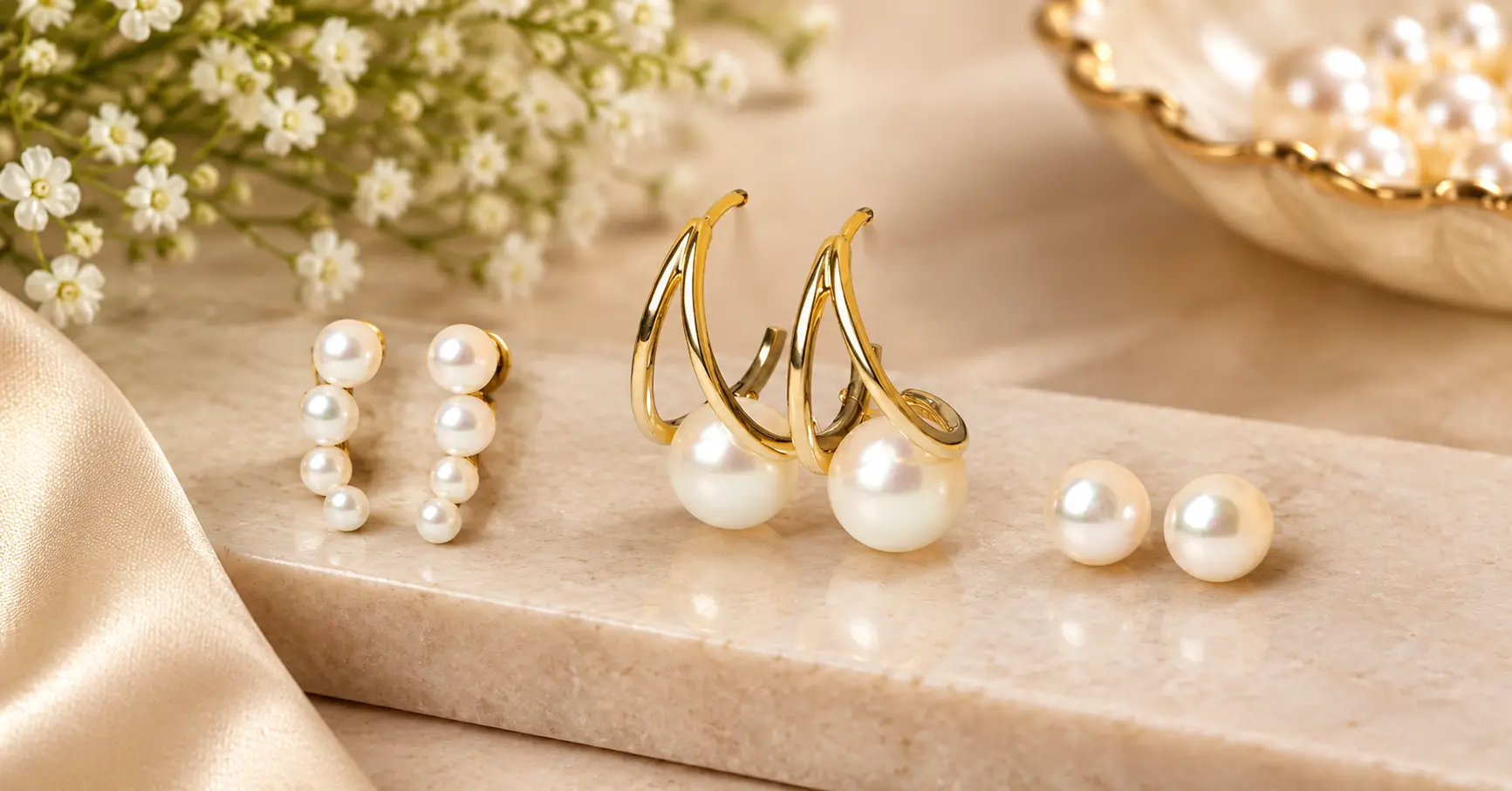
Their quality can vary considerably. Important considerations include lustre, surface condition, shape, size, colour, nacre quality and matching when pearls are used together.
For buyers interested in pearl jewellery, cultured varieties offer a broad choice of designs and price points. However, someone seeking a pearl specifically for a traditional Jyotish remedy should clarify the requirements with a knowledgeable astrologer rather than assume that every pearl type is equally suitable under every astrological tradition.
Basra Pearls vs. Cultured Pearls in Vedic Astrology
The key difference is how the pearls form, how rare they are and how they are evaluated by buyers. Their perceived astrological suitability depends on the tradition or practitioner being followed.
1. Origin and formation
Natural Basra pearls form without human intervention. Cultured pearls develop through a managed cultivation process in which human intervention initiates their growth.
Both are genuine pearls, but the terms natural and cultured describe different formation processes. A seller should disclose this distinction clearly.
2. Traditional astrological preference
In some traditional Jyotish practices, natural, untreated pearls are preferred for astrological use. Basra pearls may receive particular attention because of their rarity and historical reputation.
Cultured pearls may be viewed differently by individual practitioners. There is no scientifically validated test that demonstrates a stronger planetary effect from a natural pearl than from a cultured one.
If your intention is to wear Moti as a traditional astrological remedy, ask the practitioner what type of pearl they recommend and why. Keep the recommendation separate from claims about a gemstone's scientifically proven effects.
3. Rarity and value
Natural Basra pearls are rare, and authenticated examples can command substantial prices. Cultured pearls are more widely available, although exceptional South Sea and other high-quality cultured pearls can also be expensive.
A higher price does not automatically mean a pearl is more suitable for astrology. Nor does a lower price establish that a pearl is inferior in every respect. Value should be assessed through verified identity, quality, condition, provenance and market demand.
4. Appearance and quality
Basra pearls may display distinctive natural shapes and a warm glow. Cultured pearls can also have excellent lustre, attractive colours and impressive size.
Neither category should be judged by whiteness alone. Surface quality, nacre, lustre, shape and overall appearance all matter when evaluating a pearl.
5. Certification and authenticity
This is one of the most important differences to understand before buying.
A professional gemological laboratory can help determine whether a pearl is natural or cultured. A seller's invoice or description alone is not equivalent to independent gemological identification.
For a costly pearl advertised as natural Basra, request a suitable laboratory report and clear documentation supporting the claimed origin. A laboratory may be able to identify a pearl as natural, but a precise geographic attribution such as Basra may require additional evidence and may not always be conclusively established.
Is a South Sea Pearl Suitable as Moti?
South Sea pearls are highly regarded for their size, soft lustre and elegant white, silver or golden colours. They are generally cultured saltwater pearls produced by the Pinctada maxima oyster, with major sources including Australia, Indonesia and the Philippines.
Their impressive appearance makes them popular in luxury jewellery, including necklaces, pendants and earrings.

But is a South Sea pearl the same as a natural Basra pearl for astrological purposes? No. They differ in origin and formation, and the distinction matters when a traditional recommendation specifically calls for a natural pearl.
A South Sea pearl may be a beautiful and valuable jewellery choice, but it should not be described as a natural Basra pearl simply because it is large, lustrous or expensive. If you are buying it for a Jyotish purpose, confirm whether your astrologer accepts cultured pearls for that particular recommendation.
How to Choose the Right Pearl for Your Needs
Before purchasing Moti, begin with your purpose. A pearl selected for jewellery may be judged primarily by design, lustre, quality and budget. A pearl selected for traditional astrological use may involve additional considerations about natural origin and the practitioner's guidance.
Keep these points in mind:
- Confirm the identity: Determine whether the pearl is natural, cultured or imitation.
- Ask about treatments: Request disclosure of any bleaching, dyeing, coating or other treatments.
- Review the report: For expensive pearls, seek an independent gemological report appropriate to the claim.
- Compare quality: Examine lustre, surface condition, shape, size and nacre quality.
- Understand the price: Rarity can influence value, but price alone does not prove authenticity.
- Avoid guaranteed outcomes: No pearl can be scientifically guaranteed to bring wealth, improve relationships or correct planetary influences.
If you are new to gemstone buying, start with the educational resources and product information available through GemRishi — gemrishi.com.
Other Gemstones Associated With Vedic Astrology
Pearl is traditionally linked with the Moon, but it is only one of the gemstones discussed in Jyotish traditions. Other planetary associations may help readers understand the broader context of astrological gemstone selection.
Emerald (Panna) — Mercury
Emerald is traditionally associated with Budh, or Mercury, and is often linked symbolically with communication, learning and intellect. Explore the Emerald gemstone collection at GemRishi to learn about emerald characteristics and buying considerations.
Yellow Sapphire (Pukhraj) — Jupiter
Yellow sapphire is associated with Guru, or Jupiter, in traditional Vedic astrology. It is commonly connected with wisdom, knowledge and prosperity in astrological interpretations. Read more through the Yellow Sapphire gemstone page at GemRishi.
Ruby (Manik) — Sun
Ruby is traditionally associated with Surya, the Sun, and symbolises vitality, authority and confidence in astrological traditions. Buyers should consider colour, clarity, treatments and independent identification when evaluating a ruby. Explore Ruby gemstones at GemRishi.
Red Coral (Moonga) — Mars
Red coral is traditionally associated with Mangal, or Mars, and is linked symbolically with courage and action. Unlike ruby and sapphire, coral is an organic gem material rather than a mineral crystal. Learn more about Red Coral gemstones at GemRishi.
Blue Sapphire (Neelam) — Saturn
Blue sapphire is traditionally associated with Shani, or Saturn. It is a distinct gemstone with its own identification, quality and buying considerations. Explore Blue Sapphire at GemRishi.
Hessonite (Gomed) and Cat's Eye (Lehsunia)
Hessonite is traditionally associated with Rahu, while cat's eye chrysoberyl is associated with Ketu in many Jyotish traditions. Both require careful identification because other materials may be sold under similar trade names.
These associations are part of traditional astrological practice; they should not be interpreted as scientific evidence that a gemstone will produce a particular life outcome.
Fina Thoughts: Which Moti Is Best?
The choice between natural Basra pearls and cultured pearls comes down to your priorities. If rarity, historical significance and natural formation matter most, an authenticated natural Basra pearl may be your preferred option. If you want an attractive pearl for jewellery with a wider range of styles and budgets, cultured pearls—including South Sea varieties—offer excellent choices.
For Vedic astrology, some practitioners prefer natural pearls, but there is no scientific evidence that Basra pearls produce stronger planetary effects than cultured pearls. Seek qualified astrological guidance if you follow this tradition, and independent gemological verification when authenticity matters.
At GemRishi, an informed gemstone purchase begins with understanding the stone's identity, quality and origin. Choose your Moti thoughtfully, ask the right questions, and let verified information guide your decision.
FAQs: Natural Basra Pearls vs. Cultured Pearls in Vedic Astrology
1. What is the difference between natural Basra pearls and cultured pearls?
Natural Basra pearls form without human intervention and are historically associated with the Persian Gulf pearl trade. Cultured pearls form with human assistance and are genuine pearls produced by molluscs.
2. Which Moti is considered best in Vedic astrology?
Some traditional Jyotish practitioners prefer natural, untreated pearls for astrological purposes. The choice depends on the practitioner's tradition and the individual's horoscope; no pearl has scientifically proven planetary effects.
3. Are Basra pearls better than cultured pearls?
Basra pearls are prized for their rarity and historical significance. Cultured pearls offer greater availability and variety. Whether one is considered preferable for astrology depends on traditional beliefs rather than established scientific evidence.
4. Are South Sea pearls natural or cultured?
South Sea pearls sold commercially are generally cultured saltwater pearls. They are valued for their large size, lustre and white, silver or golden colours. They should not be confused with natural Basra pearls.
5. Can cultured pearls be worn as Moti?
Cultured pearls can certainly be worn as jewellery. Whether they are appropriate for a specific astrological purpose depends on the tradition followed and the advice of the astrologer.
6. How can I identify an original Basra pearl?
Appearance alone cannot establish authenticity. Request an independent gemological report that identifies the pearl as natural and seek supporting documentation for any claimed Basra origin.
7. Why are natural Basra pearls expensive?
Their rarity, quality, size, shape, lustre, condition and documented provenance can contribute to their value. However, the name “Basra” alone does not guarantee authenticity or a particular price.
8. Does Moti represent the Moon in Vedic astrology?
Yes. Pearl, or Moti, is traditionally associated with Chandra, the Moon, and symbolically represents qualities such as emotional sensitivity, nurturing and calmness.
9. Which metal is traditionally used for wearing Moti?
Silver is commonly recommended in traditional Vedic astrology for pearl jewellery. Recommendations may vary, so consult a knowledgeable practitioner if you intend to follow a specific astrological method.
10. Can I wear Moti with Emerald, Ruby or Yellow Sapphire?
Different gemstones have different planetary associations in Vedic astrology. Whether they should be worn together depends on the astrological tradition and individual birth chart. Seek qualified guidance instead of assuming every combination is suitable.
Explore the GemRishi gemstone collection to learn about Pearl, Emerald, Ruby, Yellow Sapphire and other gemstones.
11. Does a pearl certificate prove that it is a Basra pearl?
A suitable laboratory report can help establish whether a pearl is natural or cultured and assess relevant characteristics. Confirming a specific historical or geographic origin may require additional evidence and may not always be conclusive.
12. Are natural pearls always better quality than cultured pearls?
No. Natural and cultured pearls can vary considerably in lustre, surface quality, shape, size and nacre. Natural pearls are generally rarer, but rarity does not automatically mean that every natural pearl looks better than every cultured pearl.
13. Can cultured pearls bring the same astrological benefits as natural pearls?
Astrological traditions differ in how they assess natural and cultured pearls. There is no reliable scientific evidence establishing that either category produces planetary or personal benefits.
14. What should I check before buying a pearl gemstone online?
Check whether the pearl is natural or cultured, review treatment disclosures, examine quality and request appropriate gemological documentation. Compare the seller's claims with the report, and avoid purchasing solely on promises of astrological results.
For more guidance, read the GemRishi gemstone buying guide.
Have Questions Regarding This Gemstone?
Connect 1-on-1 with GemRishi’s certified Vedic gemologists on WhatsApp for personalized birth chart recommendations, lab certificate verification, or custom jewelry quotes.
Gemrishi
Gemrishi is a certified gemologist and Vedic astrology scholar at GemRishi with over 15 years experience in natural gemstone origin authentication.