“Australian Opal or Ethiopian Opal – Which Is Better for You?”
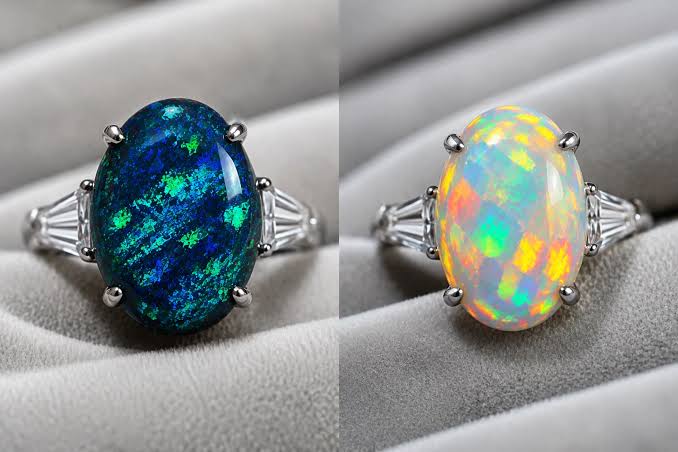
Australian Opal vs Ethiopian Opal: Which Is Better?
Opal is one of the world's most fascinating gemstones, admired for its beautiful play-of-colour, flashes of green, blue, red, orange, and yellow. Among the varieties available today, Australian Opal and Ethiopian Opal are two of the most popular choices for jewellery lovers and gemstone collectors.
But which one is better?
The answer depends on several factors, including appearance, durability, hydrophane behaviour, price, jewellery use, and personal preference.
If you are exploring different types of opal, you can also browse the Opal gemstone collection at GemRishi to learn more about available opal options.
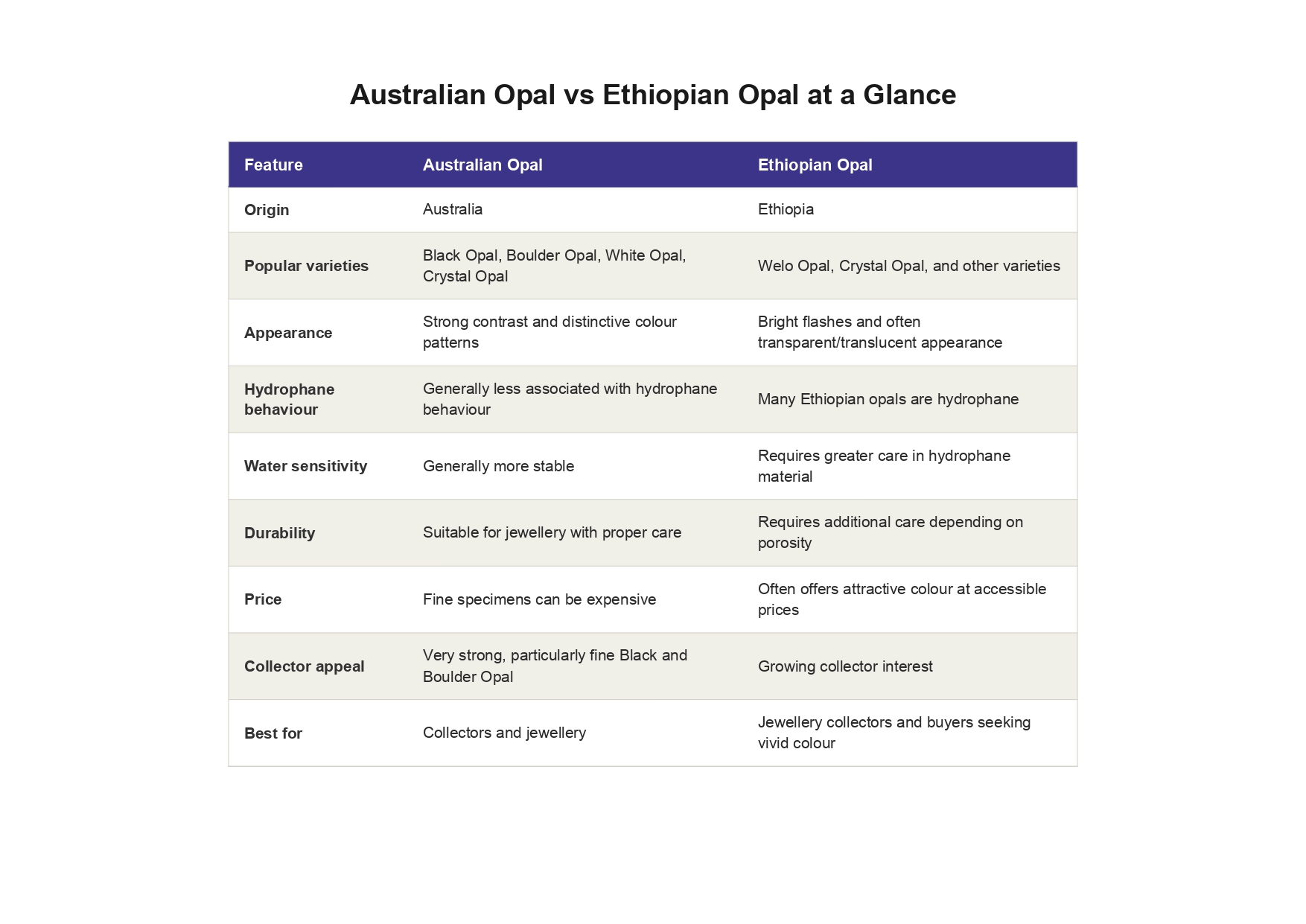
What Is Australian Opal?
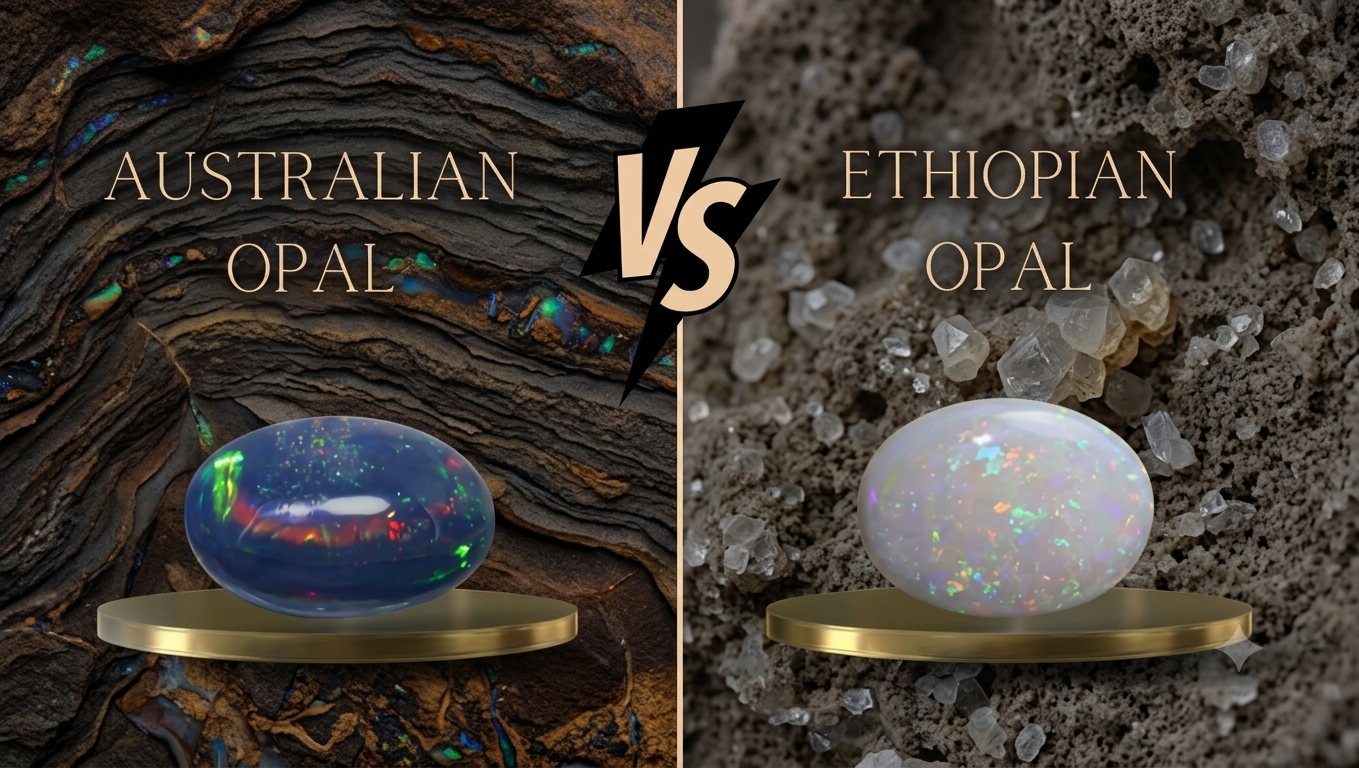
Australia is one of the world's most famous opal-producing countries. Australian Opal comes from several important mining regions, including Lightning Ridge, Coober Pedy, Andamooka, and Queensland.
Australian opal occurs in several forms, including Black Opal, Boulder Opal, White Opal, and Crystal Opal.
Among these, Australian Black Opal is particularly famous. Its darker body tone can provide a dramatic background for the gemstone's play-of-colour, making flashes of red, green, blue, and other colours appear exceptionally vivid.
If you are particularly interested in dark-bodied opal, explore GemRishi's Black Opal collection.
What Is Ethiopian Opal?
Ethiopian Opal has become increasingly popular in the international gemstone market, particularly material from the Welo region.
Ethiopian Opal can display spectacular play-of-colour and is often found in transparent or translucent forms. This can create an unusual visual effect where the colours appear to move within the gemstone.
One of the most important characteristics to understand when purchasing Ethiopian Opal is hydrophane behaviour.
1. Difference in Play-of-Colour
The play-of-colour is the feature that makes precious opal so desirable.
Australian Opal can display many different patterns, including pinfire, broad flashes and rolling flashes. Black Opal is especially admired because its dark body tone can create strong contrast with the colours.
Ethiopian Opal can also produce remarkable flashes of colour. Transparent and translucent varieties may show colour that appears to float inside the gemstone.
However, origin alone does not determine quality.
A beautiful Ethiopian Opal can be more attractive than an average Australian Opal, while an exceptional Australian Black Opal can be considerably more valuable than an ordinary Ethiopian stone.
When selecting any gemstone, factors such as colour, clarity, cut, condition and overall appearance should be considered.
For general gemstone-selection advice, GemRishi's Gemstone Buying Guide explains factors such as appearance, durability, certification and treatment disclosure.
2. Hydrophane: An Important Ethiopian Opal Characteristic
Hydrophane is one of the biggest differences buyers should understand.
A hydrophane gemstone can absorb water because of its porous structure. Much Ethiopian Welo Opal is hydrophane, although the degree of hydrophane behaviour varies from stone to stone.
When a hydrophane opal absorbs water, its appearance can temporarily change. Transparency and play-of-colour may look different while the stone is wet and return as it dries.
This is one reason Ethiopian Opal should be handled carefully.
It does not mean that Ethiopian Opal is poor quality. Rather, it means buyers should understand the physical characteristics of the particular gemstone they are purchasing.
3. Which Is More Durable?
Opal is relatively soft compared with many traditional jewellery gemstones. It generally requires protection from hard impacts, scratches and sudden changes in environmental conditions.
Australian Opal has a long history of jewellery use and can be an excellent choice when properly set and cared for.
Ethiopian Opal can also be used in jewellery, but hydrophane material requires additional attention because moisture can enter the gemstone.
For everyday jewellery, the type of opal, its construction, setting and individual stability are more important than simply its country of origin.
4. Which Opal Is More Valuable?
There is no fixed rule that Australian Opal is always more expensive than Ethiopian Opal.
The value of an opal depends on several characteristics:
- Brightness of play-of-colour
- Colour range
- Colour pattern
- Body tone
- Transparency
- Size
- Cut
- Condition
- Natural or treated status
- Solid, doublet or triplet construction
Exceptional Australian Black Opal can command very high prices because of its rarity and strong play-of-colour.
Ethiopian Opal can provide spectacular colour at a comparatively accessible price, making it attractive to buyers entering the world of precious opals.
5. Australian Opal vs Ethiopian Opal for Rings
If you want an opal for an everyday ring, Australian Opal can be a practical choice when the stone is properly selected and protected by an appropriate setting.
However, no opal should be treated like a highly durable gemstone such as sapphire.
Ethiopian Opal can also be used in rings, but hydrophane material requires additional care around water and impact.
For frequent wear, consider:
- Protective settings
- Avoiding harsh chemicals
- Removing the ring before swimming
- Keeping the stone away from unnecessary impacts
- Cleaning it according to the seller or gemologist's instructions
6. Which Is Better for Pendants and Earrings?
Both varieties can work beautifully in pendants and earrings.
Ethiopian Opal can be particularly attractive in these jewellery types because they generally experience less physical impact than rings.
Australian Opal also offers a wide variety of body tones and patterns, making it suitable for everything from subtle jewellery to statement pieces.
The best choice ultimately depends on the appearance you prefer.
7. What About Natural and Certified Opal?
When purchasing an expensive gemstone, authenticity and treatment disclosure are important.
Ask the seller:
Is the gemstone natural?
Is it solid opal?
Has it been treated?
Is it a doublet or triplet?
Does it show hydrophane behaviour?
Does it come with a laboratory report?
GemRishi states that its gemstone selection focuses on natural and certified gemstones and recommends looking for recognized gemological certification when purchasing gemstones.
You can also explore GemRishi's Certified Gemstones collection when comparing certified gemstone options.
8. Australian Opal or Ethiopian Opal: Which Should You Choose?
Choose Australian Opal if you prefer:
- Classic Australian provenance
- Black Opal or Boulder Opal
- Strong colour contrast
- Traditional collector appeal
- A wide variety of body tones and patterns
- An opal for carefully worn jewellery
Choose Ethiopian Opal if you prefer:
- Bright and dramatic play-of-colour
- Transparent or translucent gemstones
- Unusual internal colour effects
- Attractive colour at different price levels
- A modern alternative to traditional Australian Opal
- Pendants and earrings with striking colour
Australian Opal vs Ethiopian Opal: Final Verdict
So, Australian Opal or Ethiopian Opal—which is better?
There is no universal winner.
Australian Opal is an excellent choice for buyers who appreciate Australia's long opal-mining history, distinctive varieties and particularly the dramatic appearance of fine Black Opal and Boulder Opal.
Ethiopian Opal is an exciting alternative, especially for buyers attracted to vivid play-of-colour, transparent material and distinctive visual effects.
The most important thing is to judge the individual gemstone rather than the origin alone.
When buying an opal, pay attention to its colour, brightness, pattern, body tone, construction, condition, treatment and stability. A high-quality gemstone from either source can become a beautiful addition to a jewellery collection.
For more guidance before purchasing, explore GemRishi's Gemstone Buying Guide and certified gemstone collection.
Have Questions Regarding This Gemstone?
Connect 1-on-1 with GemRishi’s certified Vedic gemologists on WhatsApp for personalized birth chart recommendations, lab certificate verification, or custom jewelry quotes.
Gemrishi
Gemrishi is a certified gemologist and Vedic astrology scholar at GemRishi with over 15 years experience in natural gemstone origin authentication.