Rahu Ketu Transit: Should You Wear Gomed or Cat’s Eye (Lehsuniya)?
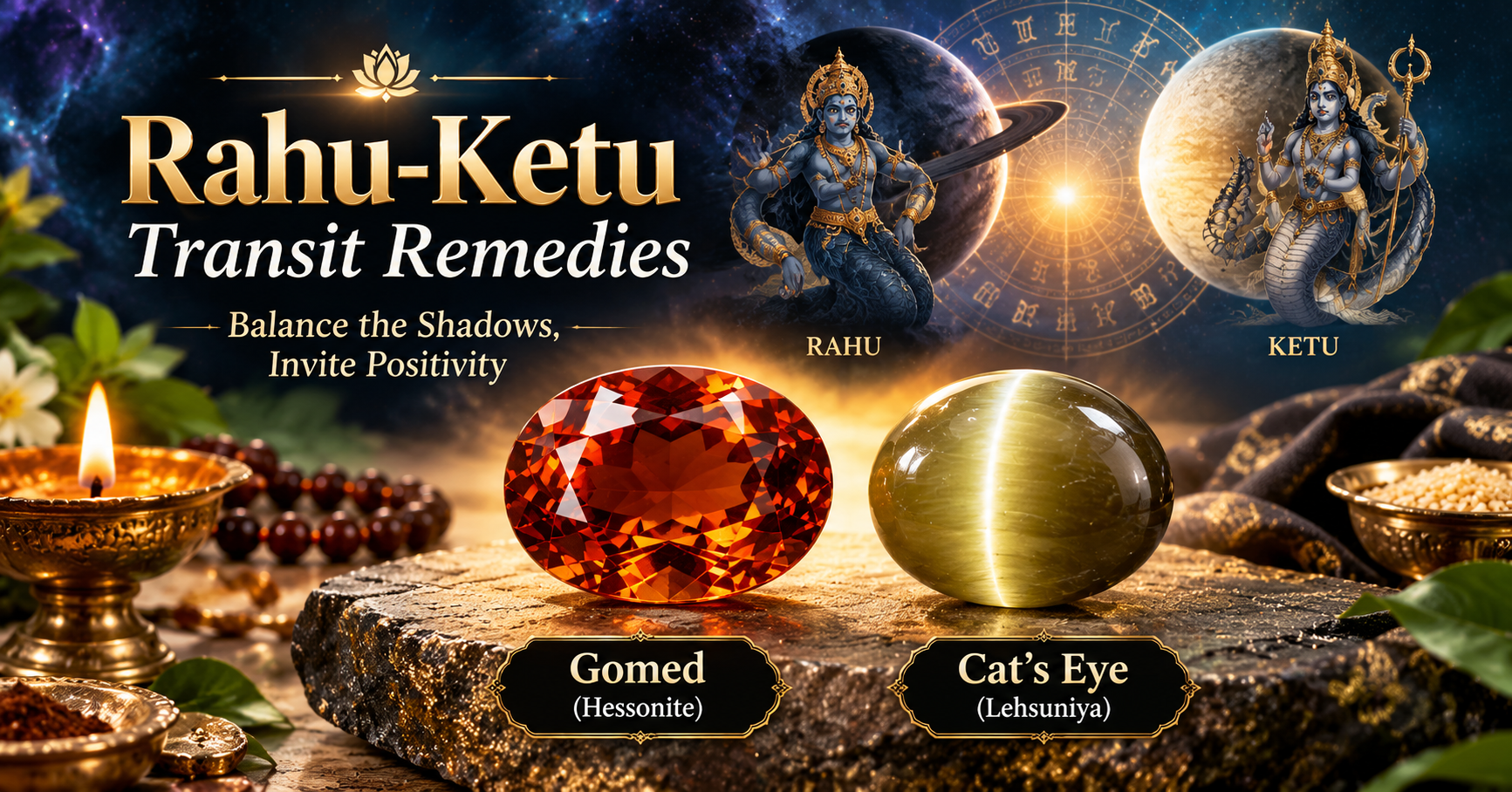
Rahu and Ketu transits are considered significant periods in Vedic astrology, often associated with unexpected changes, confusion, personal transformation, and new perspectives. During these phases, many people explore traditional gemstone remedies to better understand the astrological influences affecting their lives. Hessonite (Gomed), associated with Rahu, and Cat’s Eye (Lehsuniya), associated with Ketu, are two gemstones commonly discussed in this context. Understanding their traditional significance, astrological associations, and selection guidelines can help you explore these gemstones more thoughtfully before making a decision.
Have you ever experienced a phase when decisions seem unusually difficult, plans change unexpectedly, or you feel drawn towards a completely different direction in life? In Vedic astrology, such periods are sometimes interpreted through the movements of Rahu and Ketu, two shadow planets associated with transformation, ambition, detachment, and spiritual growth.
During a Rahu Ketu transit, many people explore traditional astrological remedies, including gemstones believed to be associated with these planetary nodes. Two stones frequently discussed are Hessonite Garnet (Gomed) and Cat’s Eye (Lehsuniya).
In this guide, we will explore the significance of Rahu Ketu transit, the differences between Gomed and Cat’s Eye, and what to consider before choosing either gemstone.
Understanding Rahu Ketu Transit in Vedic Astrology
Rahu and Ketu are known as the lunar nodes in astronomy and as shadow planets in Vedic astrology. They are always positioned opposite each other in the zodiac and are traditionally associated with significant changes in perspective, priorities, and life direction.
Rahu is commonly linked with ambition, material desires, unconventional opportunities, and the urge to explore the unknown. Ketu, on the other hand, is associated with detachment, introspection, past experiences, and spiritual inquiry.
During a Rahu Ketu transit, astrologers interpret the movement of these nodes through different zodiac signs and houses to understand possible themes in a person's life. Some people explore gemstones as part of their traditional astrological practice during these periods.
However, a transit alone does not establish that you need a gemstone. Astrology is a traditional belief system, and there is no established scientific evidence that gemstones can prevent financial losses, guarantee success, or control planetary influences.
Gomed (Hessonite): The Traditional Gemstone of Rahu
Explore Gomed gemstones and their traditional significance at GemRishi.
Gomed, also known as Hessonite Garnet, is a warm-toned gemstone that typically displays honey, cinnamon, orange-brown, or reddish-brown colours. In Vedic astrology, it is traditionally associated with Rahu.
Rahu symbolises ambition, desire, sudden changes, and unconventional thinking. Accordingly, traditional astrological interpretations associate Gomed with clarity, focus, and the ability to approach challenging circumstances with greater composure.
When Is Gomed Traditionally Considered?
An astrologer may consider Hessonite when assessing Rahu's placement in a birth chart, its relationship with other planets, and the running Mahadasha or Antardasha. A Rahu transit may form part of that assessment, but it is not the only factor.
Before choosing Gomed, pay attention to the gemstone's authenticity, colour, clarity, cut, and laboratory documentation. A stone's appearance alone cannot establish its natural identity or suitability for astrological use.
If you are exploring this gemstone, read the Gomed gemstone benefits, meaning, and wearing guide for more information.
Cat’s Eye (Lehsuniya): The Traditional Gemstone of Ketu
Explore GemRishi’s gemstone collection to discover available gemstone options.
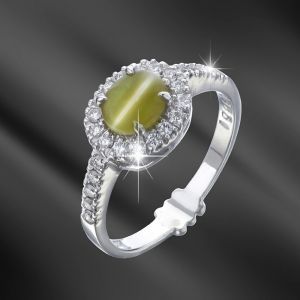
Cat’s Eye, commonly called Lehsuniya or Lehsunia in India, is known for a distinctive band of reflected light that resembles a cat's pupil. The variety traditionally used in astrological jewellery is often chrysoberyl Cat’s Eye, although other gemstones are also sold under the Cat’s Eye name.
In Vedic astrology, Cat’s Eye is associated with Ketu, which represents detachment, introspection, spiritual exploration, and unconventional life experiences. Traditional interpretations connect Lehsuniya with discernment, intuition, and navigating periods of uncertainty.
When Is Cat’s Eye Traditionally Considered?
An astrologer may examine Ketu's position, house placement, planetary associations, and current planetary period before recommending Lehsuniya. Ketu's transit alone does not automatically make Cat’s Eye appropriate for everyone.
When purchasing this gemstone, confirm its exact mineral variety and check for a reliable laboratory report. The moving light band should be clearly visible, but visual appeal alone is not proof of authenticity.
You can browse the GemRishi gemstone collection to explore available gemstone options before making an informed decision.
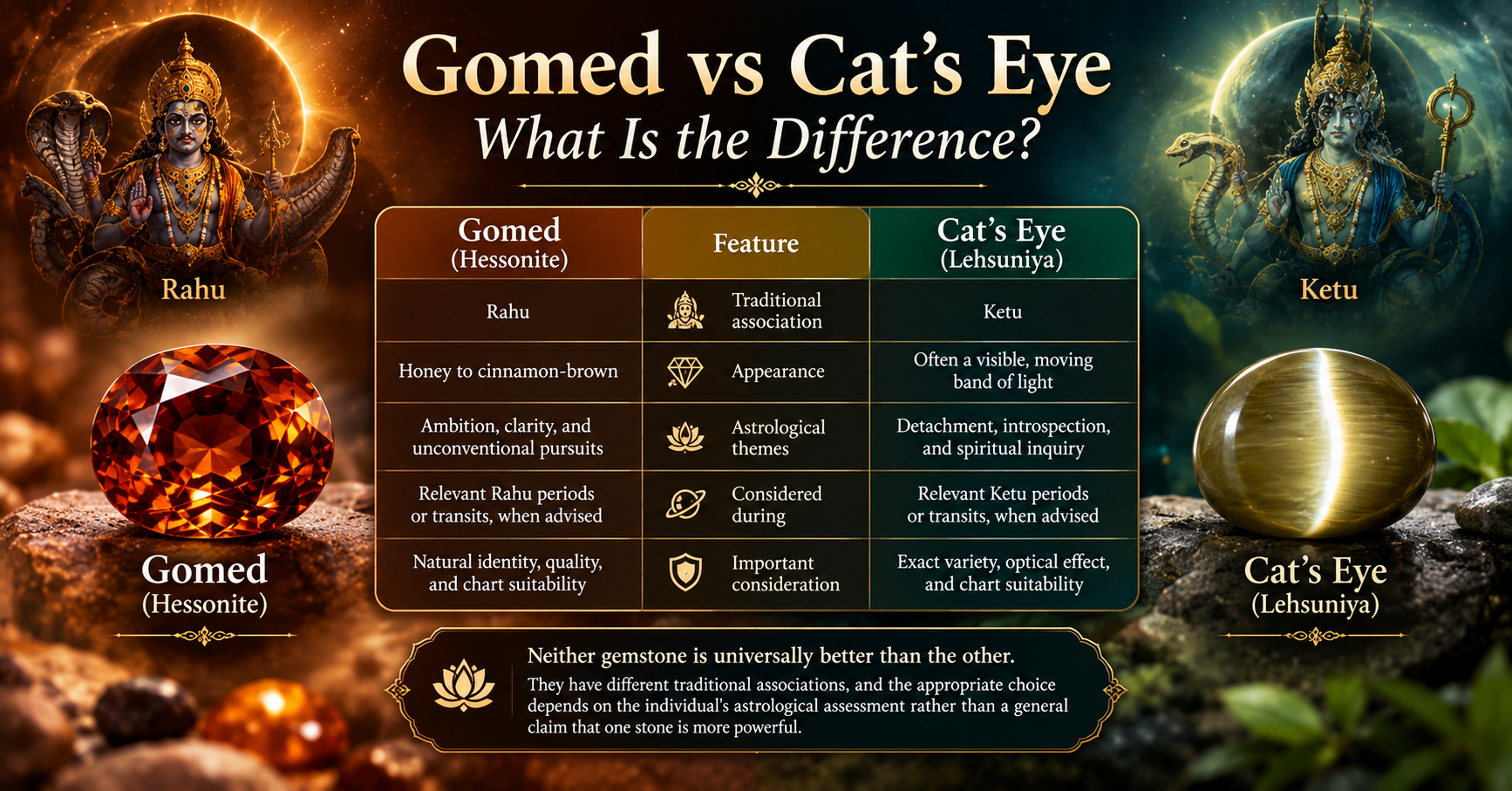
Gomed vs Cat’s Eye: What Is the Difference?
Should You Wear Gomed or Cat’s Eye During Rahu Ketu Transit?
The most sensible starting point is to understand your reason for considering a gemstone. Are you interested in traditional Vedic astrology, researching gemstones for personal reasons, or simply learning about their cultural significance?
If you follow Vedic astrology, consult a knowledgeable astrologer who can review your birth chart and current planetary periods. Ask why a particular gemstone is being recommended, what its traditional purpose is, and whether there are alternatives within your preferred practice.
Avoid choosing a stone solely because you are experiencing a difficult period or fear sudden losses. Gemstones should not replace financial planning, professional advice, medical care, or practical decision-making.
Once you have decided to explore a gemstone, buy from a reputable seller that clearly describes the stone's identity, treatments, certification, and return policy.
Visit the GemRishi homepage to explore its gemstone offerings and educational resources.
How to Choose the Right Gemstone During a Rahu Ketu Transit
Before purchasing Gomed or Cat’s Eye, consider these practical steps:
- Understand the astrological recommendation: If you follow Vedic astrology, seek an individual chart assessment rather than relying only on your zodiac sign.
- Check gemstone authenticity: Look for reliable laboratory documentation identifying the stone and any detectable treatments.
- Compare quality: Colour, clarity, cut, carat weight, and durability all influence a gemstone's appearance and value.
- Understand traditional wearing practices: Recommended metals, fingers, and rituals vary across astrological traditions.
- Buy with confidence: Review the seller's product information, certification details, and return policy before purchasing.
For additional help, read GemRishi’s complete gemstone selection guide and explore the full gemstone collection.
Frequently Asked Questions About Rahu Ketu Transit and Gemstones
1. Which gemstone is associated with Rahu?
Gomed, or Hessonite Garnet, is traditionally associated with Rahu in Vedic astrology. Its suitability is generally assessed through an individual's birth chart.
2. Which gemstone is associated with Ketu?
Cat’s Eye, commonly called Lehsuniya, is traditionally associated with Ketu. Chrysoberyl Cat’s Eye is a recognised variety used in astrological jewellery.
3. Should I wear Gomed during Rahu transit?
Not automatically. Traditional astrologers consider the birth chart, Rahu's placement, and current planetary periods before recommending Gomed.
4. Can I wear Cat’s Eye during Ketu transit?
Some astrologers may recommend it after assessing the horoscope. Ketu's transit alone is not sufficient to determine whether the gemstone is suitable.
5. Can I wear Gomed and Cat’s Eye together?
Both stones have different traditional planetary associations. Consult a qualified Vedic astrologer before combining them for astrological purposes.
6. Does Gomed remove confusion and financial problems?
Traditional beliefs associate Gomed with Rahu-related themes such as clarity and ambition. However, there is no established scientific evidence that wearing it removes confusion or prevents financial losses.
7. Does Cat’s Eye protect against sudden losses?
Some astrological traditions associate Cat’s Eye with protection and navigating uncertainty. These are traditional beliefs, not scientifically established guarantees against accidents, financial losses, or other risks.
8. What is the difference between Gomed and Cat’s Eye?
Gomed is a variety of garnet traditionally associated with Rahu, while Cat’s Eye refers to a gemstone displaying a distinctive band of light and is associated with Ketu in Vedic astrology.
9. Can I choose a gemstone based only on my zodiac sign?
It is better not to rely on your zodiac sign alone. Traditional gemstone recommendations may involve the ascendant, planetary placements, aspects, and running planetary periods.
10. How do I identify an authentic Gomed stone?
Purchase from a reputable seller and request a reliable gem laboratory report. Colour and appearance can help with an initial assessment, but they cannot independently confirm authenticity.
11. Is every Cat’s Eye gemstone chrysoberyl?
No. The Cat’s Eye effect occurs in different gemstones. Check the laboratory report to confirm whether the stone is chrysoberyl or another variety.
12. Where can I buy Gomed or Cat’s Eye online?
You can begin with GemRishi’s gemstone collection to explore available options. Review each product's specifications, certification, and return terms before purchasing.
13. What should I check before buying an astrological gemstone?
Check its identity, natural or synthetic status, treatment disclosure, quality, weight, and certification. If you are purchasing it for astrological use, understand the traditional recommendation before deciding on a particular stone.
Final Thoughts: Gomed or Cat’s Eye—Which Should You Choose?
Rahu Ketu transit can be an interesting subject for anyone exploring Vedic astrology and its traditional gemstone practices. Gomed represents Rahu, while Cat’s Eye represents Ketu, but neither gemstone should be considered a universal solution for life's uncertainties.
Take time to understand their differences, learn about gemstone quality, and seek appropriate guidance before making a purchase. Whether you are exploring astrology or simply appreciate natural gemstones, an informed decision begins with reliable information.
Explore GemRishi for gemstone collections and educational resources, including the Gomed wearing guide and gemstone buying guide.
Disclaimer: Astrological interpretations in this article reflect traditional beliefs and are not scientifically established. Gemstones should not be relied upon to guarantee outcomes or replace professional financial, medical, or other advice.
Have Questions Regarding This Gemstone?
Connect 1-on-1 with GemRishi’s certified Vedic gemologists on WhatsApp for personalized birth chart recommendations, lab certificate verification, or custom jewelry quotes.
Gemrishi
Gemrishi is a certified gemologist and Vedic astrology scholar at GemRishi with over 15 years experience in natural gemstone origin authentication.