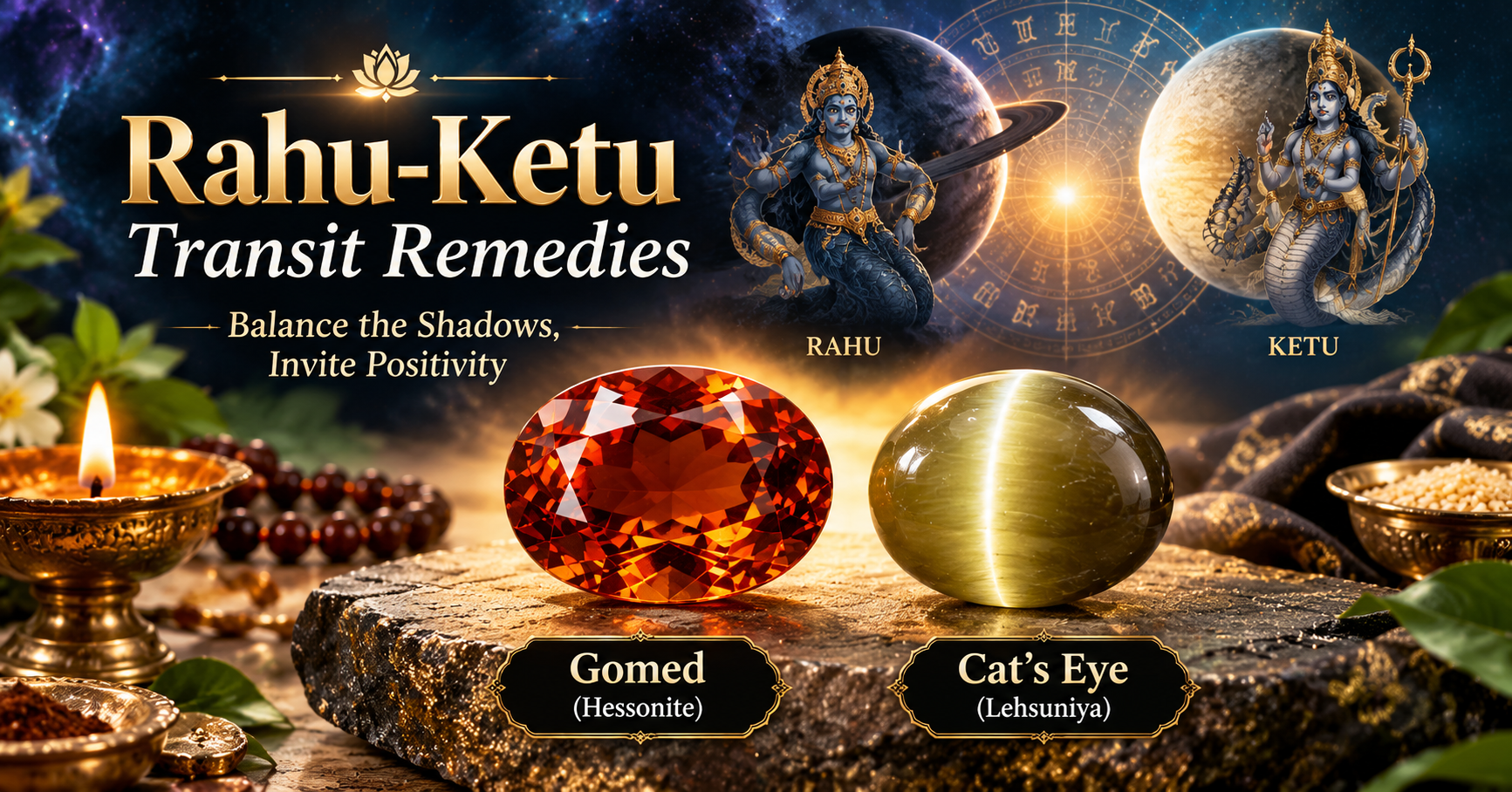
“Cat’s Eye (Lehsunia) Wearing Vidhi: Correct Day, Finger, Mantra & Step-by-Step Method”
Introuction
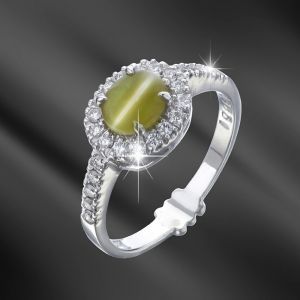
Cat’s Eye, popularly known as Lehsunia, Lahsuniya, Vaidurya, or Ketu Ratna, is traditionally associated with Ketu in Vedic astrology. The gemstone is famous for its distinctive cat’s-eye effect (chatoyancy)—a bright band of light that appears to move across the surface of the stone when it is turned under light.
In Vedic gemstone astrology, Cat’s Eye is considered a powerful gemstone and is generally recommended only after examining the wearer’s horoscope. The correct day, finger, metal, weight, purification method, and mantra may vary according to an individual’s birth chart and the condition of Ketu.
For those looking for a natural and certified gemstone, you can explore GemRishi’s [certified gemstone collection] and [Gemstone Buying Guide] for guidance on gemstone selection, certification, purification, and wearing practices. GemRishi Certified Gemstones GemRishi Gemstone Buying Guide
What Is Cat’s Eye (Lehsunia)?
Cat’s Eye is the traditional gemstone associated with Ketu, one of the shadow planets in Vedic astrology. The gemstone is also called Lehsunia or Lahsuniya in India and Vaidurya in Sanskrit.
The most important gemological variety used as Ketu’s gemstone is natural Chrysoberyl Cat’s Eye. It is known for its characteristic chatoyancy, where a narrow, luminous line appears across the stone and resembles the eye of a cat. Chrysoberyl has a hardness of approximately 8.5 on the Mohs scale, making it a durable gemstone for jewellery.
Key Facts About Cat’s Eye
- Common Name: Cat’s Eye
- Hindi Name: Lehsunia / Lahsuniya
- Sanskrit Name: Vaidurya
- Astrological Association: Ketu
- Mineral: Chrysoberyl
- Distinctive Feature: Chatoyancy
- Typical Colour: Honey, yellowish-green, greyish-green and brownish shades
- Hardness: Approximately 8.5 on the Mohs scale
- Traditional Metal: Silver, Panchdhatu or gold depending on astrological advice
Important: Not every gemstone sold as “Cat’s Eye” is Chrysoberyl Cat’s Eye. Quartz Cat’s Eye, glass and other imitations are different materials. If the stone is being purchased for astrological purposes, its identity and natural origin should be verified through a reputable gemological laboratory.
Why Is Cat’s Eye Worn in Vedic Astrology?
According to Vedic astrology, Cat’s Eye is used to strengthen or harmonise the influence of Ketu when the planet is considered suitable for the native.
Ketu is traditionally associated with qualities such as:
- Spirituality
- Detachment
- Intuition
- Mysticism
- Inner awareness
- Sudden changes
- Liberation and self-realisation
Because Ketu is considered a powerful and unusual planetary influence, Cat’s Eye should not be selected simply because someone wants its perceived benefits. Astrologers generally recommend analysing the birth chart, Ketu’s placement, strength, aspects and planetary periods before prescribing the gemstone.
Who Should Wear Cat’s Eye (Lehsunia)?
Cat’s Eye is traditionally recommended when an astrologer determines that strengthening Ketu would be beneficial for the individual.
It may be considered in situations involving:
- A suitably placed but weak Ketu
- Ketu Mahadasha or Antardasha
- Certain horoscope combinations where Ketu needs strengthening
- A need for greater spiritual focus or detachment, according to traditional Jyotish principles
However, Cat’s Eye should not be worn solely on the basis of zodiac sign or general online advice. Ketu can produce very different results depending on its placement in an individual horoscope.
Cat’s Eye Wearing Vidhi: Step-by-Step Method
The following is a commonly followed traditional procedure for wearing Lehsunia. Since different astrological traditions prescribe different timings and rituals, your astrologer’s personalised recommendation should take priority.
Step 1: Select a Natural Cat’s Eye
Choose a natural Chrysoberyl Cat’s Eye with a clear, sharp and well-defined chatoyant band.
A good-quality Cat’s Eye generally has a distinct eye effect that moves as the gemstone is rotated under a focused light source. Certification from a recognised gemological laboratory can help confirm the gemstone’s identity and natural status.
For authentic gemstone selection, visit GemRishi and refer to its gemstone buying guidance.
Step 2: Choose the Appropriate Metal
Cat’s Eye is traditionally set in:
- Silver
- Panchdhatu
- Gold, in specific astrological recommendations
Silver or Panchdhatu is commonly mentioned in modern Vedic gemstone-wearing guides, while some traditions allow gold depending on the horoscope. Therefore, the metal should preferably be selected according to astrological advice rather than a universal rule.
An open-back setting is traditionally preferred so that the gemstone can maintain direct contact with the skin.
Which Finger Should You Wear Cat’s Eye On?
The middle finger (Madhyama) is the most commonly recommended finger for Cat’s Eye in many Vedic gemstone traditions.
Some sources also mention the little finger or alternative placements in specific horoscope conditions. Therefore, the exact finger should be confirmed by an astrologer after analysing the birth chart.
General Traditional Recommendation
Middle Finger → Right Hand
This is a commonly followed recommendation, but it should not override a personalised astrological prescription.
Which Day Is Best to Wear Cat’s Eye?
There is no single universally agreed day across all Vedic traditions.
Various gemstone-wearing traditions recommend:
- Wednesday
- Saturday
- Tuesday
- Thursday
Some traditions also specify evening hours or particular lunar phases. Because Ketu-related rituals differ between astrological schools, the most appropriate day and Muhurat should be selected according to the individual horoscope and the astrologer’s tradition.
Best Approach
Instead of choosing a day only from a general internet recommendation, ask an experienced Vedic astrologer to determine the appropriate Tithi, Nakshatra, day and time for your horoscope.
Cat’s Eye Mantra
The Ketu mantra is traditionally recited before wearing Lehsunia.
Ketu Beej Mantra
ॐ स्रां स्रीं स्रौं सः केतवे नमः
Om Sraam Sreem Sraum Sah Ketave Namah
A commonly used shorter mantra is:
ॐ कें केतवे नमः
Om Kem Ketave Namah
Many traditional guides recommend chanting the selected mantra 108 times before wearing the gemstone.
How to Purify Cat’s Eye Before Wearing?
Purification is an important part of the traditional gemstone-wearing ritual.
Traditional Purification Process
- Take a clean bowl.
- Place the Cat’s Eye ring or pendant inside it.
- Add Gangajal and/or clean water.
- Some traditions additionally use raw milk as part of the purification ritual.
- Leave the ring for a short period according to the chosen ritual.
- Remove the ring and gently rinse it with clean water.
- Dry it with a soft, clean cloth.
- Place it before your chosen deity or in a clean prayer area.
- Light incense or a lamp if this is part of your personal tradition.
- Chant the Ketu mantra 108 times.
- Wear the gemstone after completing the mantra.
Different traditions use different purification combinations, so there is no need to combine every ritual into one procedure.
Cat’s Eye Wearing Vidhi at a Glance
FactorTraditional RecommendationGemstoneNatural Chrysoberyl Cat’s EyePlanetKetuOther NamesLehsunia, Lahsuniya, VaiduryaFingerMiddle finger is commonly recommendedHandRight hand is commonly recommendedMetalSilver / Panchdhatu; other metals may be chart-specificMantraOm Kem Ketave NamahChanting108 timesPurificationGangajal / water; some traditions use raw milkDayVaries by tradition and horoscopeTimingAstrologically determined Muhurat is preferredSettingOpen-back setting is traditionally preferred
What Are the Traditional Benefits of Cat’s Eye?
In Vedic astrology, Lehsunia is traditionally associated with Ketu and is believed to support qualities such as:
1. Spiritual Growth
Cat’s Eye is associated with Ketu’s spiritual and detached nature and is traditionally believed to support meditation, introspection and spiritual awareness.
2. Protection
Lehsunia is often regarded as a protective gemstone in Vedic astrology and is traditionally associated with protection from sudden difficulties and negative influences.
3. Intuition
Ketu is associated with intuition, mysticism and subtle perception. Therefore, Cat’s Eye is traditionally believed to enhance intuitive awareness.
4. Focus and Detachment
The gemstone is also associated with reducing excessive attachment and encouraging a more inward-looking approach.
5. Support During Ketu Periods
Astrologers may prescribe Cat’s Eye during certain Ketu Mahadasha or Antardasha conditions when strengthening Ketu is considered appropriate.
Note: These are traditional astrological beliefs and should not be interpreted as scientifically established medical or financial effects.
How to Identify a Good Cat’s Eye Gemstone?
The most important visual feature of a fine Cat’s Eye is its chatoyant band.
Look for:
- A sharp and clearly visible eye
- A straight and well-centred band
- Good transparency
- Attractive body colour
- Strong movement of the eye under light
- Natural origin
- Independent laboratory certification
The famous “milk-and-honey” effect, where the stone can show contrasting milky and honey-like areas under appropriate lighting, is also considered a desirable characteristic in fine Chrysoberyl Cat’s Eye.
Natural Cat’s Eye vs Quartz Cat’s Eye
One of the most important points for buyers is that Chrysoberyl Cat’s Eye and Quartz Cat’s Eye are not the same gemstone.
Chrysoberyl Cat’s Eye
- Natural Chrysoberyl
- Hardness around 8.5 Mohs
- Traditional Ketu gemstone
- Strong natural chatoyancy
- Higher value when quality is exceptional
Quartz Cat’s Eye
- Quartz variety
- Different mineral composition
- Generally less valuable
- Should not automatically be treated as the traditional Chrysoberyl Ketu gemstone
Therefore, always verify the gemstone's mineral identity before purchasing it for astrological use.
Important Precautions Before Wearing Lehsunia
Cat’s Eye is traditionally considered a powerful and fast-acting astrological gemstone. For this reason, it is better to avoid selecting it casually.
Keep These Points in Mind
- Do not choose Cat’s Eye only because of your zodiac sign.
- Consult a qualified Vedic astrologer before wearing it.
- Buy natural Chrysoberyl Cat’s Eye if it is being prescribed as Ketu’s gemstone.
- Ask for a reliable laboratory certificate.
- Confirm the appropriate gemstone weight.
- Confirm the correct finger and metal.
- Follow the recommended Muhurat.
- Do not rely on a one-size-fits-all wearing method.
GemRishi also recommends consulting an astrologer when selecting an astrological gemstone and highlights factors such as gemstone authenticity, certification, purification, metal and correct finger placement.
Common Questions About Cat’s Eye Wearing Vidhi
Can I wear Cat’s Eye without consulting an astrologer?
It is better not to. Cat’s Eye is traditionally associated with Ketu, and its suitability depends on the individual horoscope. An astrologer can determine whether strengthening Ketu is appropriate.
Which finger is best for Cat’s Eye?
The middle finger is the most commonly recommended placement. However, some traditions prescribe alternative fingers depending on the horoscope.
Which mantra should I chant for Cat’s Eye?
The Ketu mantra “Om Kem Ketave Namah” is commonly used. Another traditional Ketu Beej Mantra is “Om Sraam Sreem Sraum Sah Ketave Namah.”
How many times should the Cat’s Eye mantra be chanted?
A common traditional practice is to chant the mantra 108 times before wearing the gemstone.
Is Cat’s Eye the same as Lehsunia?
Yes. Lehsunia/Lahsuniya is a commonly used Indian name for Cat’s Eye, particularly in the context of Vedic astrology.
Should Cat’s Eye touch the skin?
An open-back ring or setting that allows the gemstone to touch the skin is traditionally preferred by many gemstone practitioners.
Final Thoughts
Cat’s Eye (Lehsunia) is one of the most distinctive gemstones associated with Ketu in Vedic astrology. Its beautiful chatoyant effect makes it visually fascinating, while its traditional astrological association gives it a special place among Ketu gemstones.
However, the correct Cat’s Eye Wearing Vidhi is not simply about wearing a ring on a particular day and finger. The gemstone should ideally be selected after analysing the birth chart, followed by choosing the appropriate quality, weight, metal, finger and Muhurat.
For readers looking for natural and certified gemstones, [GemRishi] offers certified gemstone options and professional gemstone guidance. Visit GemRishi You can also refer to its [Gemstone Buying Guide] before making a purchase. Read GemRishi's Gemstone Buying Guide
Choose the gemstone carefully, verify its authenticity, and follow personalised astrological guidance before wearing Cat’s Eye.
Have Questions Regarding This Gemstone?
Connect 1-on-1 with GemRishi’s certified Vedic gemologists on WhatsApp for personalized birth chart recommendations, lab certificate verification, or custom jewelry quotes.
Gemrishi
Gemrishi is a certified gemologist and Vedic astrology scholar at GemRishi with over 15 years experience in natural gemstone origin authentication.