Navratri Day 1: Maa Shailaputri’s Strength and Her Symbolic Connection with Pearl
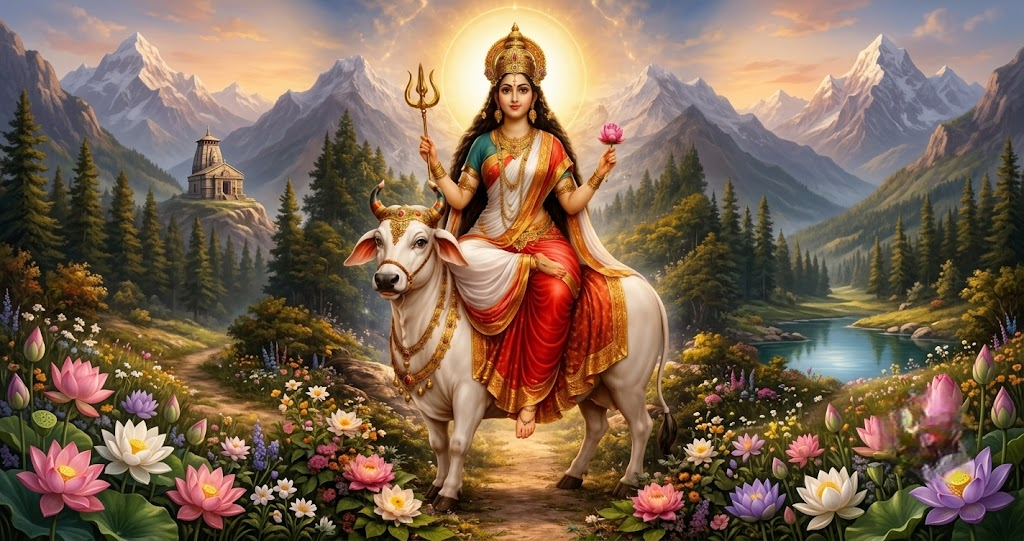
Navratri is one of the most famous Hindu festivals. It is celebrated over nine days in devotion to the nine forms of Goddess Durga. During this people do prayer, fasting, reflection and spiritual renewal, with each day dedicated to a different form of the Divine Mother. Homes and temples come alive with diyas, devotional music, colourful decorations and traditional rituals. Beyond its religious significance, Navratri is also a celebration of inner strength, faith and the triumph of positive energy.
The first day of Navratri marks the beginning of this sacred journey and is dedicated to Maa Shailaputri, the daughter of the mountains and the first form of Goddess Durga.
Worshipped on Pratipada, Maa Shailaputri represents a strong and steady beginning.
Gemstones can add another meaningful layer to this celebration. Pearl, also known as Moti, has a traditional association with the Moon and is often symbolically connected with qualities such as calmness, purity and emotional balance. For those exploring gemstones at GemRishi, this connection offers a thoughtful way to appreciate the cultural and traditional significance of gemstones alongside the spiritual essence of Navratri.
This guide is all about Maa Shailputri and the connection with gemstone Pearl.
Who Is Maa Shailaputri?
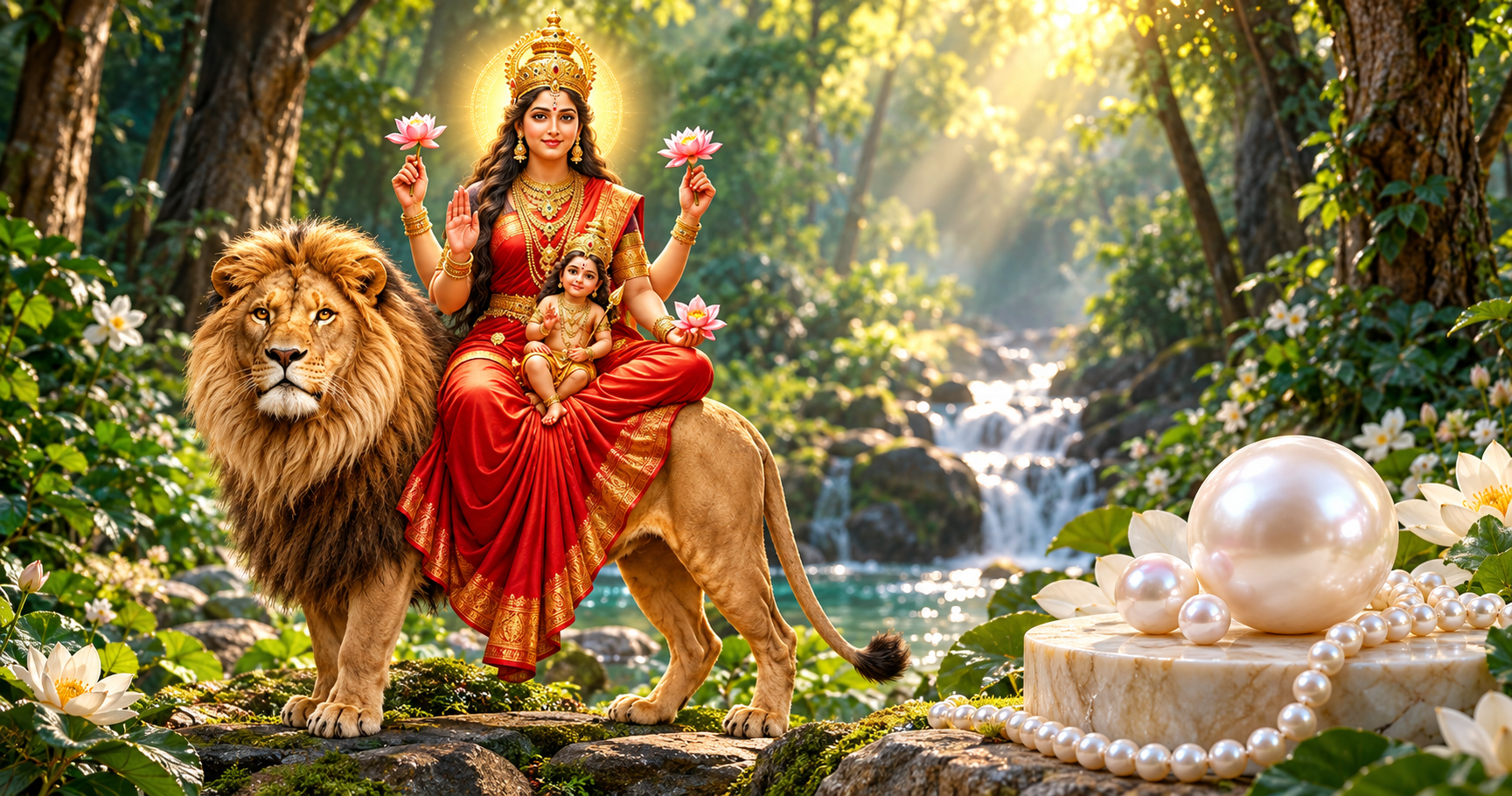
The name Shailaputri means “daughter of the mountain.” In Hindu tradition, she is the daughter of the mountain king Himavan and is identified with Goddess Parvati.
She is commonly depicted riding a bull, holding a trident in her right hand and a lotus in her left. A crescent moon adorns her forehead. These features make her image immediately recognisable among the Navadurga.
Her mountain connection offers a powerful image of steadiness. Mountains endure changing seasons, heavy rain and strong winds. As a devotional reflection, they remind us to remain grounded through life’s uncertainties.
The first day of Navratri can therefore become an opportunity to begin again—with greater patience, clearer intentions and a willingness to keep going.
What Maa Shailaputri’s Strength Can Teach Us
Strength takes many forms in everyday life. Sometimes it means facing a difficult situation. At other times, it means keeping a promise, accepting responsibility or responding kindly when we feel frustrated.
Maa Shailaputri’s image encourages reflection on these quieter expressions of courage.
Her trident can be understood as a reminder of determination, while the lotus invites thoughts of growth and gentleness. Together, they offer a meaningful lesson: we can remain firm in our values while treating others with compassion.
A simple intention for Pratipada might be:
“May I approach my responsibilities with courage and my relationships with patience.”
Carrying this intention through the nine days can make the festival personally meaningful.
The Symbolic Connection Between Maa Shailaputri and Pearl
The connection between Maa Shailaputri and Pearl comes through traditional lunar associations.
Some Hindu astrological traditions associate Maa Shailaputri with the Moon. In the Navaratna system of nine planetary gemstones, Pearl represents Chandra, the Moon. This shared association provides a symbolic link between the goddess and the gemstone.
Pearl’s gentle lustre also lends itself to themes of simplicity and quiet reflection. A white pearl can serve as a personal reminder to pause, speak thoughtfully and approach the day with a calm intention.
Readers interested in this belief tradition can explore GemRishi’s article on Pearl’s traditional association with peace and calm.
This symbolism does not make Pearl a required part of Maa Shailaputri’s worship. Customs differ between families and communities. Claims about gemstones influencing emotions or planetary effects belong to astrological belief and are not scientifically established outcomes.
What Makes Pearl a Special Gemstone?
Pearl has a different beginning from mineral gemstones such as ruby or sapphire. It forms inside a living mollusc, making it a gem of biological origin.
Cultured pearls are real pearls. They should be distinguished from both natural pearls and imitations.
This distinction matters when browsing Pearl gemstones at GemRishi. A clear description helps you understand what you are choosing and appreciate its origin alongside its appearance.
Bringing Pearl into Your Navratri Celebration
Pearl jewellery can be a personal addition to festive dressing. A pendant, pair of earrings or familiar family necklace can carry memories as well as meaning.
You might wear a pearl piece as a reminder of your intention for the festival. You could also give pearl jewellery to someone with a handwritten message celebrating their patience, courage or kindness.
The gesture does not need to be elaborate. A meaningful piece already in your collection can feel just as special as something new.
For those interested specifically in astrological customs, GemRishi’s Pearl wearing vidhi guide explains commonly followed traditions. These customs are separate from wearing pearls simply for their beauty.
How to Understand Pearl Quality
A pearl’s appeal involves more than its size. GIA assesses pearl quality through factors including lustre, surface quality, shape, colour, size, nacre quality and matching in jewellery containing multiple pearls.
When exploring a pearl, consider the following:
- Identity: Does the description clearly state natural, cultured or imitation?
- Lustre: How does light reflect from the surface?
- Surface: Are visible marks shown clearly in photographs?
- Disclosure: Is information about treatments available?
- Documentation: What does the accompanying laboratory report actually identify?
GemRishi’s gemstone buying guide provides a starting point for broader buying considerations. You can also browse the gemstone collection to explore different appearances and varieties.
A gemstone report describes gemological characteristics; it does not establish spiritual benefits.
Begin Navratri with a Meaningful Intention
Maa Shailaputri’s mountain symbolism invites us to build a steady foundation for the days ahead. Pearl’s traditional connection with the Moon adds a gentle theme of reflection to that beginning.
Together, these ideas can inspire a simple practice: choose one quality to work on during Navratri. It might be patience, consistency, gratitude or kindness. Return to that intention each morning, whether through prayer, a quiet moment or a meaningful piece of jewellery.
To continue exploring gemstone stories and traditions, visit the GemRishi Journal. Let what you learn deepen your appreciation of the gems, while keeping devotion and thoughtful action at the heart of the festival.
Frequently Asked Questions
1. Who is worshipped on Navratri Day 1?
Maa Shailaputri, the first of the nine forms of Goddess Durga, is worshipped on Pratipada, the first day of Navratri.
2. Why is Pearl symbolically connected with Maa Shailaputri?
Some traditions associate Maa Shailaputri with the Moon. Pearl represents the Moon in the Navaratna system, creating a symbolic connection through Chandra.
3. Is wearing Pearl necessary to worship Maa Shailaputri?
No. Wearing or purchasing a gemstone is not necessary. Devotees can observe the day through prayer and their family’s traditions.
4. Are cultured pearls genuine pearls?
Yes. Cultured pearls form inside living molluscs with human assistance. They are different from imitation pearls.
5. Does wearing Pearl guarantee calmness or good fortune?
No. These associations belong to astrological traditions and personal belief. Pearl can still be valued for its beauty, cultural significance and personal meaning.
6. Where can I explore Pearl gemstones?
You can visit GemRishi’s Pearl page. Review the individual gemstone’s identity, description, treatment disclosures and available laboratory documentation before choosing.
Have Questions Regarding This Gemstone?
Connect 1-on-1 with GemRishi’s certified Vedic gemologists on WhatsApp for personalized birth chart recommendations, lab certificate verification, or custom jewelry quotes.
Gemrishi
Gemrishi is a certified gemologist and Vedic astrology scholar at GemRishi with over 15 years experience in natural gemstone origin authentication.