How to Identify Morganite Gemstone Physically: A Complete Guide to Genuine Morganite
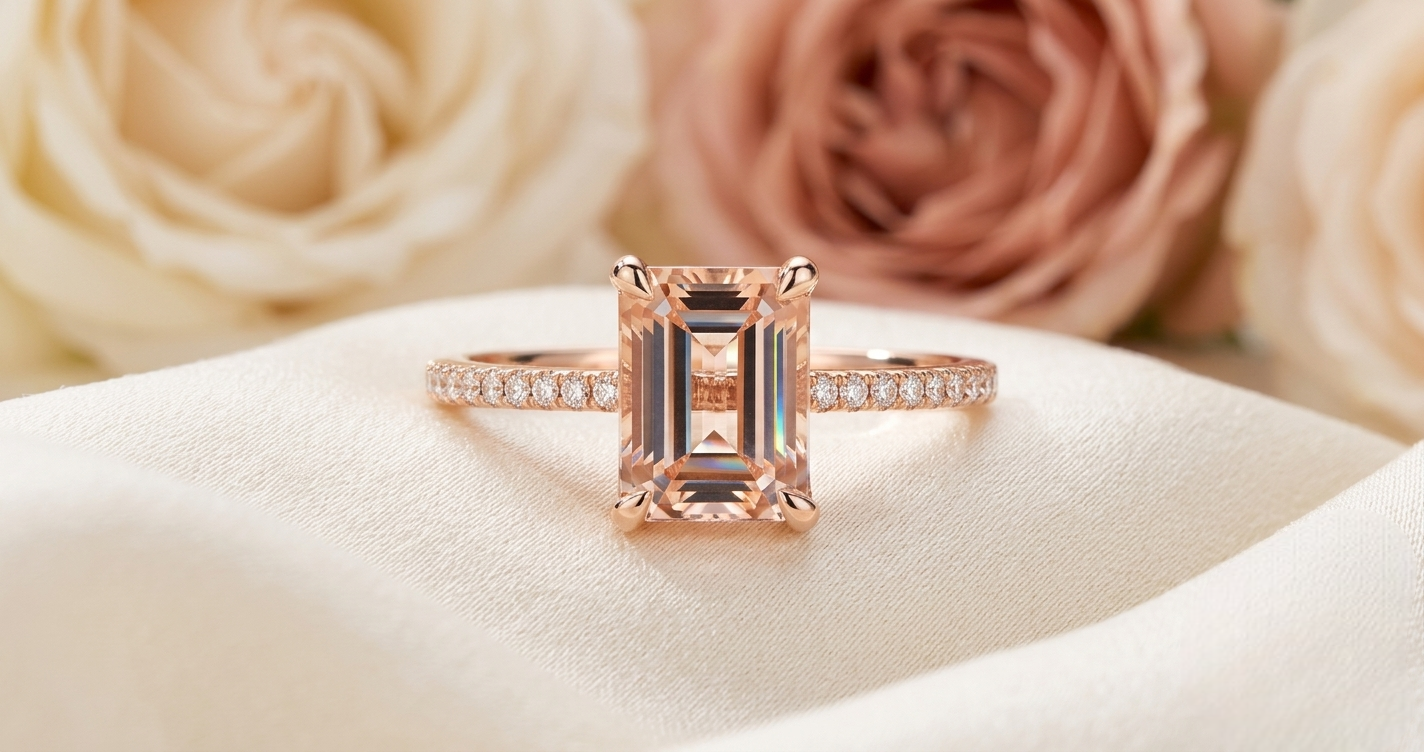
Morganite is one of the most attractive pastel-colored gemstones. It is well known for its soft pink, peach, rose, and orangy-pink shades. As a variety of beryl, Morganite belongs to the same mineral family as emerald and aquamarine. Its delicate color and elegant appearance have made it increasingly popular for rings, pendants, earrings, and other fine jewelry.
If you are planning to buy a Morganite gemstone, one of the first questions you may have is: How can you identify Morganite physically?
The appearance of a gemstone can provide useful clues, but visual inspection alone cannot confirm whether a stone is natural Morganite. Laboratory testing may be necessary to establish its identity, natural or laboratory-grown status, and detectable treatments. Still, knowing Morganite's physical characteristics can help you make a more informed purchase.
If you are exploring gemstones before buying, you can also refer to the GemRishi Gemstone Buying Guide for additional guidance.
What Is Morganite?
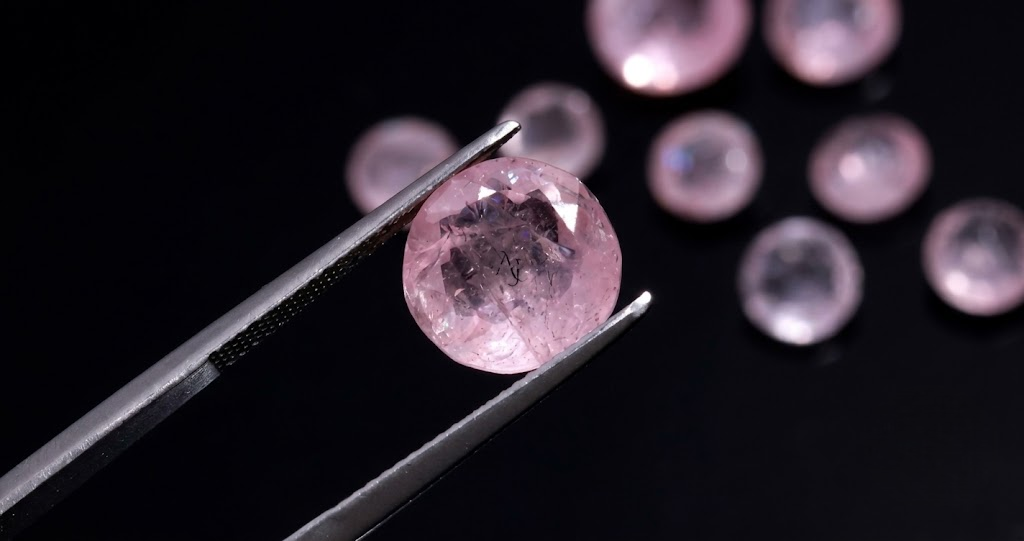
Morganite is the pink to orange-pink variety of beryl. Its characteristic color is associated with manganese within the crystal structure. GIA describes its common color range as pink, purplish pink, and orangy pink, with many stones occurring in soft pastel tones.
Morganite has a Mohs hardness of approximately 7.5 to 8, making it sufficiently durable for jewelry when handled with reasonable care. Its refractive index is approximately 1.583–1.590, while its specific gravity is approximately 2.80–2.91.
These properties are useful to gemologists, but some of them require specialized instruments to measure accurately.
1. Look at the Color of Morganite
Color is one of the first physical characteristics to examine.
Genuine Morganite can occur in several attractive shades, including:
- Light pink
- Rose pink
- Purplish pink
- Peach
- Salmon
- Orangy pink
Generally most of the Morganite has a relatively light, pastel appearance. Strongly saturated pink Morganite is less common and can command greater interest in the gemstone market.
The color should also look reasonably natural and consistent with the stone's cut. Extremely bright or unusually intense color should not automatically be treated as proof that a stone is genuine or superior. Morganite can be heat-treated to modify its color, and this treatment is common in the trade.
Therefore, color can help you recognize Morganite, but it cannot independently prove authenticity.
2. Observe Morganite's Transparency and Clarity
Faceted Morganite is often relatively clean to the unaided eye. In other words, many good-quality faceted stones do not have obvious inclusions that can easily be seen without magnification. Larger stones, however, can sometimes show inclusions more readily.
When examining a Morganite, look at it under good natural or neutral white light. Check whether the stone appears:
- Transparent rather than cloudy
- Clean to the eye
- Free from obvious bubbles or major internal features
- Bright and lively when moved under light
However, do not assume that a completely inclusion-free-looking gemstone must be synthetic. Similarly, the presence of an inclusion does not automatically mean that a gemstone is fake.
Inclusions are one of the reasons professional gemologists use magnification and other testing methods when identifying gemstones.
3. Check the Luster and Overall Appearance
Morganite normally has a vitreous, glass-like luster when properly polished.
Hold the gemstone under a light source and observe how its polished surfaces reflect light. A well-cut Morganite should have a clean, attractive appearance rather than looking dull or excessively hazy.
Remember that the quality of the polish and the quality of the cut also influence how much light the stone reflects. A poorly cut genuine Morganite can appear less lively than a well-cut stone.
This is why you should not judge authenticity solely by brilliance.
4. Look for Pleochroism
Morganite has noticeable pleochroism, meaning that it can display slightly different colors or color intensities when viewed from different directions. GIA notes that Morganite can show pale pink and deeper bluish-pink colors from different viewing directions.
You may notice subtle changes when you rotate the stone under light.
This characteristic can be interesting when examining loose rough or a well-oriented cut gemstone, but it is usually subtle. It should not be treated as a simple home test for authenticity.
Professional gemologists can use optical instruments to study properties such as pleochroism more accurately.
5. Examine the Cut and Faceting
Morganite is commonly available in traditional faceted shapes as well as designer cuts.
Popular cuts include:
- Oval
- Cushion
- Round
- Pear
- Emerald cut
- Marquise
- Radiant
- Custom designer cuts
The cut can have a major effect on Morganite's appearance. Because many Morganite gems are light in color, cutters may use proportions that help the stone retain or intensify its visible color.
When examining a cut Morganite, look for:
- Symmetrical facets
- Good polish
- Clean facet junctions
- Even proportions
- Attractive light reflection
- No obvious surface damage
A beautiful cut does not prove that the stone is natural, but poor cutting can affect how the gemstone looks and how much value it may have.
6. Consider Morganite's Hardness
Morganite has a Mohs hardness of 7.5 to 8, which makes it a reasonably durable gemstone for jewelry.
However, hardness should not be used as a simple home authenticity test.
For example, deliberately scratching a gemstone to see whether it is Morganite is not recommended. Such tests can damage the stone, its polish, or the jewelry setting.
Instead, hardness is more useful as a professional gemological property that helps distinguish minerals when combined with other tests.
7. Pay Attention to Size and Weight
Morganite crystals can grow to considerable sizes, and large faceted Morganite gemstones are available in the market. GIA notes that large Morganite crystals are well documented, including exceptionally large material from Brazil.
This means that a large Morganite should not automatically be considered suspicious.
At the same time, size alone does not determine quality. A smaller gemstone with attractive color, good clarity, excellent cutting, and reliable documentation may be more desirable than a much larger stone with weaker characteristics.
For serious buying decisions, consider color, clarity, cut, carat weight, treatment, and certification together.
8. Check for Treatments
One important point that buyers often overlook is treatment.
Morganite is commonly heat-treated to improve or modify its color. For example, heating can reduce yellow or orange components and produce a purer pink appearance. GIA describes this treatment as routine in the Morganite trade.
A heat-treated Morganite is still Morganite, but buyers should know whether treatment has been disclosed.
Therefore, when purchasing a higher-value gemstone, ask the seller:
Is the Morganite natural, laboratory-grown, or treated?
A reliable gemstone report can provide much more useful information than appearance alone.
9. Don't Confuse Appearance With Authentication
Pink gemstones can look surprisingly similar to one another. Pink tourmaline, kunzite, pink sapphire, glass, synthetic materials, and other gemstones can sometimes create confusion for an inexperienced buyer.
This is why a simple visual examination cannot always establish gemstone identity.
GIA states that Morganite can be evaluated through a colored stone identification report, which can assess characteristics and identify whether the material is natural or laboratory-grown and report detectable treatments.
If you are buying an expensive Morganite, certification from a reputable gemological laboratory can provide additional confidence.
You can explore GemRishi's certified gemstone collection to learn more about gemstone purchasing and certification options.
Quick Physical Identification Checklist for Morganite
Before purchasing a Morganite gemstone, use this checklist:
✓ Color: Look for pink, peach, rose, salmon, or orangy-pink tones.
✓ Transparency: Quality faceted Morganite is often transparent and relatively clean to the eye.
✓ Luster: Look for a bright, glass-like polished appearance.
✓ Pleochroism: Subtle color differences may appear when the stone is viewed from different directions.
✓ Cut: Examine symmetry, polish, facet quality, and overall brilliance.
✓ Hardness: Morganite measures approximately 7.5–8 on the Mohs scale, but do not perform scratch tests at home.
✓ Treatment: Ask whether the gemstone has been heat-treated.
✓ Certification: For important purchases, consider an independent laboratory identification report.
Final Thoughts
Identifying Morganite physically starts with understanding its distinctive appearance. Its soft pink to peach and orangy-pink colors, glass-like luster, transparency, pleochroism, and characteristic beryl properties can provide valuable clues.
However, there is no single visual test that can prove a Morganite gemstone is genuine and natural. A gemstone may look convincing but still require professional testing to determine its exact identity, origin, treatment, or laboratory-grown status.
If you are buying Morganite for jewelry or as part of your gemstone collection, focus on more than just appearance. Consider the stone's color, clarity, cut, carat weight, treatment disclosure, and certification before making your decision.
To explore Morganite gemstones, visit the GemRishi Morganite collection and compare the available options with the characteristics discussed in this guide.
A beautiful Morganite should not only look right—it should also come with the information you need to buy with confidence.
Have Questions Regarding This Gemstone?
Connect 1-on-1 with GemRishi’s certified Vedic gemologists on WhatsApp for personalized birth chart recommendations, lab certificate verification, or custom jewelry quotes.
Gemrishi
Gemrishi is a certified gemologist and Vedic astrology scholar at GemRishi with over 15 years experience in natural gemstone origin authentication.