Red Coral (Moonga) Buying Guide: Price, Benefits, Quality & How to Choose
Red Coral (Moonga) Buying Guide: Price, Benefits, Quality & How to Choose
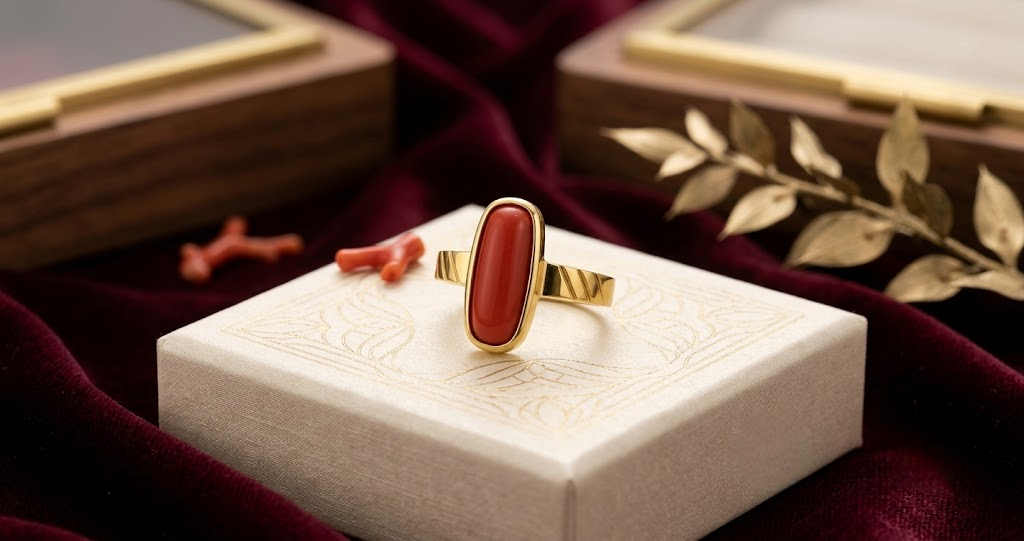
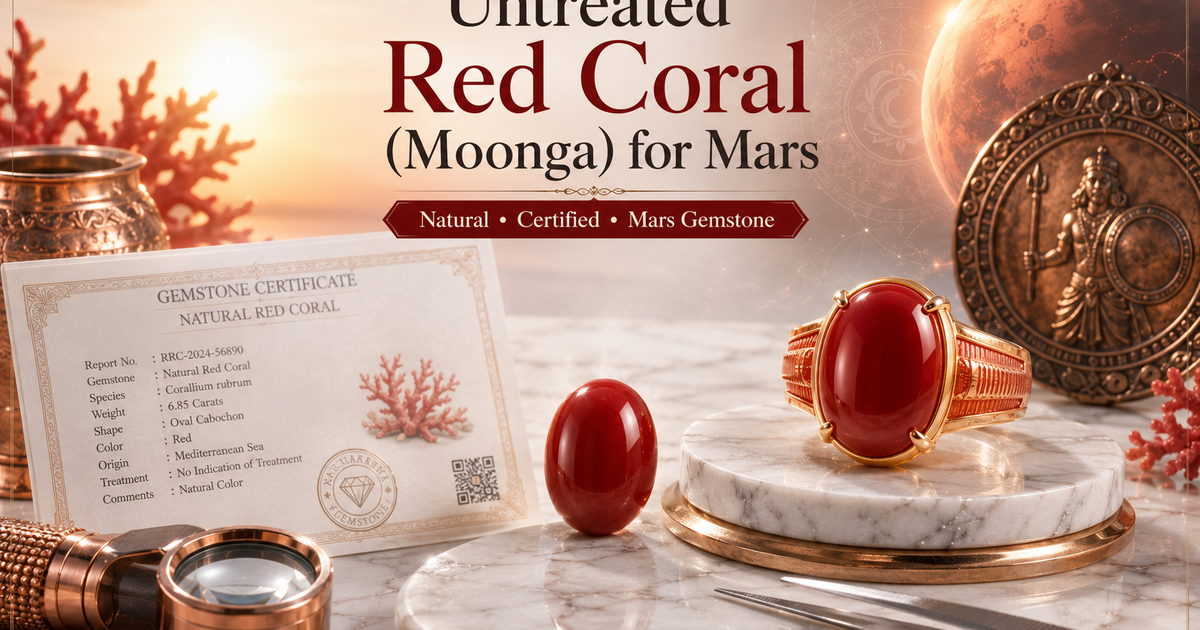
Red Coral, commonly known as Moonga or Moonga Ratna, is an organic gemstone traditionally associated with Mars (Mangal) in Vedic astrology. Unlike most gemstones, coral is formed by marine organisms and is valued for its distinctive red to reddish-orange colour, smooth texture, and natural origin.
If you are planning to buy Red Coral for jewellery or astrological purposes, understanding its quality, origin, treatments, certification, colour, shape, and price is essential.
If you are looking for a natural and certified gemstone, explore GemRishi's Certified Gemstones before making your purchase.
What Is Red Coral (Moonga)?
Red Coral is a precious organic gem material formed from the calcium-carbonate skeletons of certain marine coral species. It is generally opaque and relatively soft, with a hardness of around 3½ on the Mohs scale.
In Indian gemstone traditions, Red Coral is associated with Mars, and it is one of the nine traditional Navratna gemstones.
Because natural coral can resemble dyed or reconstructed materials, authentication is particularly important when purchasing an expensive piece.
If you are comparing different gemstones for astrological purposes, you can also explore GemRishi's gemstone collection to compare Red Coral with other traditional gemstones.
Why Is Red Coral Associated With Mars?
According to Vedic astrology, Red Coral represents Mars (Mangal) and is traditionally associated with qualities such as:
- Courage
- Confidence
- Determination
- Energy and vitality
- Leadership
- Initiative
These are traditional astrological beliefs, not scientifically established medical effects. If you are purchasing Moonga specifically as an astrological gemstone, suitability should be determined according to your individual horoscope rather than simply choosing a stone based on its appearance.
Before purchasing an astrological gemstone, it is important to understand its traditional significance and choose the stone according to your individual requirements.
Types and Origins of Red Coral
Two names frequently encountered in the gemstone market are Italian/Mediterranean Coral and Japanese Coral.
Italian Red Coral
Italian or Mediterranean coral has historically been an important source of precious red coral. Fine-quality specimens can display attractive, even red colour and a smooth polished surface.
It is widely available in different shapes and price ranges, making it a popular option for buyers.
Japanese Red Coral
Japanese coral is also highly valued, particularly for rich and saturated red colours in fine specimens. However, origin alone should not be treated as a guarantee of quality.
The individual stone's colour, surface, structure, treatment status, and documentation should also be evaluated.
How to Choose a High-Quality Red Coral
When buying Moonga, pay attention to these major factors.
1. Colour
Colour is one of the most important quality factors.
Look for:
- Rich red to deep red colour
- Even colour distribution
- Attractive natural lustre
- No obvious artificial colour concentration
Deep, uniform red coral is generally more desirable and can command a higher price. However, colour alone cannot prove authenticity because dyed coral can also appear intensely red.
If you are purchasing a gemstone online, compare the product details, photographs, weight, colour and certification rather than judging authenticity from colour alone.
2. Surface Quality
A good Red Coral should have a smooth and well-polished surface with minimal major cracks, pits, cavities, or structural damage.
Some natural growth characteristics can occur because coral is an organic material. Therefore, not every natural surface mark means that the stone is fake.
3. Shape
Red Coral is commonly available in shapes such as:
- Oval
- Round
- Capsule
- Cabochon
- Triangular
- Cylindrical
Shape generally affects appearance and price, but it should not be used as the primary indicator of authenticity.
4. Size and Weight
A larger, high-quality natural coral can be considerably more expensive than a smaller stone of similar quality.
Don't select a Moonga simply because it has a higher carat or ratti weight. Quality and authenticity are more important than size alone.
For buyers comparing gemstones by carat and ratti, GemRishi also provides a Carat to Ratti Converter through its customer-support resources.
Natural vs Dyed vs Imitation Red Coral
One of the biggest challenges when buying Moonga is distinguishing natural coral from treated or imitation material.
Common alternatives include:
- Dyed coral
- Reconstructed coral
- Resin or polymer imitations
- Plastic
- Glass
- Other materials sold as coral
Some treatments can improve colour or appearance, making visual identification difficult. Professional gemological testing can help distinguish natural coral from imitation and identify detectable treatments.
When buying a valuable gemstone, look for a seller that provides appropriate certification and clear information about the stone. GemRishi's certified gemstone collection is a useful reference for understanding how certified gemstone purchases are presented.
Avoid DIY Acid or Heat Tests
You may find online recommendations for acid, burning, rubbing, or hot-needle tests. These tests can damage the gemstone and are not appropriate for valuable jewellery.
For an expensive Moonga, professional laboratory testing is the safer approach.
Why Certification Matters
A laboratory report provides important information about the material and can increase confidence when purchasing an expensive Red Coral.
Before buying, check whether the report identifies:
- Natural or imitation material
- Weight and measurements
- Colour
- Detectable treatments
- Other relevant observations
Do not rely solely on a seller's statement that a stone is "100% original." Always verify the certificate and its report number through the issuing laboratory where possible.
GemRishi states that its gemstones are accompanied by certificates of authenticity and works with recognized gem-testing laboratories. You can read more about its quality and certification approach on the GemRishi About Us page.
Red Coral Price: What Determines the Cost?
There is no single fixed price for Moonga. The cost can vary substantially depending on:
FactorEffect on PriceColourRich, even red generally increases valueSurface qualitySmooth, well-preserved material is preferredSizeLarger fine-quality pieces are rarerOriginSome origins command premiumsTreatmentNatural material generally has greater valueCertificationIndependent documentation adds buyer confidenceShapeCertain shapes may command higher prices
Red Coral prices can vary significantly according to quality, weight, origin, treatment and certification. Therefore, compare stones only after confirming their natural status, treatment disclosure, weight, and quality.
For current gemstone options, you can browse GemRishi's certified gemstone collection, where Red Coral (Moonga), Italian Red Coral and different ratti-weight options are listed among the site's popular gemstone searches.
How to Identify a Genuine Red Coral Before Buying
Use this practical checklist:
Check 1: Ask for a Laboratory Report
Do not purchase an expensive stone without appropriate documentation.
Check 2: Examine the Colour
Look for naturally attractive, evenly distributed colour rather than an unnaturally bright surface colour.
Check 3: Inspect the Surface
Look for excessive cracks, cavities, coatings, or suspicious surface features.
Check 4: Ask About Treatments
Specifically ask whether the coral has been:
- Dyed
- Bleached
- Coated
- Resin/polymer treated
- Reconstructed
Treatment disclosure is important because treated material may have different value and durability characteristics.
Check 5: Compare Certificate and Stone
The certificate details should correspond to the actual gemstone, including measurements and weight where applicable.
Check 6: Compare Price Carefully
An unusually low price for a supposedly premium natural Red Coral should be treated as a warning sign rather than automatically considered a bargain.
For additional peace of mind, review the seller's return and authenticity policy before purchasing.
Red Coral for Astrological Use
If you are buying Moonga specifically for astrology, don't select it solely on colour or price.
Traditionally, astrologers associate Red Coral with Mars and may recommend it depending on an individual's birth chart.
Before purchasing, consider:
- Whether Red Coral is astrologically suitable for you.
- The recommended weight or size.
- The preferred metal and setting.
- Whether a natural stone is required.
- Whether treatment is acceptable for your intended use.
Astrological recommendations vary, so consult a qualified astrologer if the stone is being purchased specifically as a planetary gemstone.
Red Coral Buying Checklist
Before making your purchase, make sure you have checked:
- Natural coral identification
- Colour quality
- Surface condition
- Treatment disclosure
- Weight and measurements
- Laboratory certificate
- Certificate verification
- Seller reputation
- Return policy
- Final price per carat/ratti
For a wider selection of certified natural gemstones, visit GemRishi.
Frequently Asked Questions
Is Moonga the same as Red Coral?
Yes. Moonga is the commonly used Hindi/Indian trade name for Red Coral.
Which colour of Red Coral is best?
Rich, even red is generally considered desirable. However, colour should always be evaluated together with natural origin, surface quality and treatment status.
Is Italian or Japanese Red Coral better?
Both can contain high-quality material. Don't choose solely by origin; evaluate the individual stone's colour, surface, structure, treatment disclosure and documentation.
Can Red Coral be fake?
Yes. Dyed coral, reconstructed material, plastic, resin, glass and other substitutes can be marketed as Red Coral. Professional testing is recommended for valuable purchases.
Is certification necessary when buying Moonga?
For a valuable purchase, an independent laboratory report is strongly recommended because visual appearance alone may not reliably establish authenticity or treatment status.
Is Red Coral suitable for everyday wear?
It can be worn as jewellery, but it requires more care than harder gemstones because of its relatively low hardness. Avoid scratches, chemicals and rough handling.
Final Buying Advice
The best Red Coral is not necessarily the largest or darkest-looking stone. A good purchase should combine natural identity, attractive colour, good surface quality, appropriate treatment disclosure, reliable certification, and a fair price.
If you are buying Moonga for astrological purposes, first confirm that it is suitable for you, then focus on authenticity and quality. A smaller, genuine and well-documented Red Coral can be a much better purchase than a large but questionable stone.
If you are ready to compare certified gemstones, explore GemRishi's Certified Gemstones Online and review the available gemstone options before making your final decision.
Have Questions Regarding This Gemstone?
Connect 1-on-1 with GemRishi’s certified Vedic gemologists on WhatsApp for personalized birth chart recommendations, lab certificate verification, or custom jewelry quotes.
Gemrishi
Gemrishi is a certified gemologist and Vedic astrology scholar at GemRishi with over 15 years experience in natural gemstone origin authentication.