Pukhraj vs Yellow Topaz: 7 Key Differences Every Gemstone Buyer Should Know
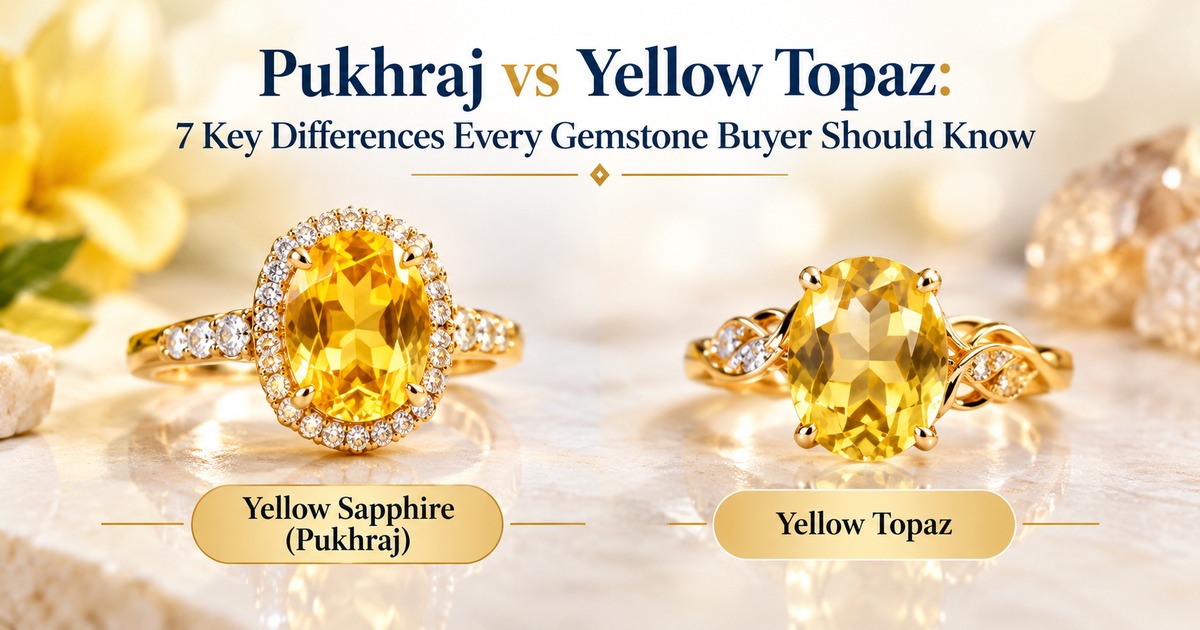
Yellow Sapphire (Pukhraj) with Yellow Topaz are the two gemstone having similar colour appearance. Both can display attractive shades of yellow, from pale lemon to rich golden tones.People used these gemstones in rings, pendants, and other jewellery. However, their similar appearance can be misleading. Pukhraj and Yellow Topaz are two different gemstones, with distinct mineral compositions, physical properties, market values, and traditional associations.They are similar in color but have different nature.
Pukhraj, commonly known as Yellow Sapphire, belongs to the corundum family and is traditionally associated with Jupiter, or Guru, in Vedic astrology.
Yellow Topaz is a separate mineral valued for its colour, brilliance, and suitability for jewellery. Although the two stones may look alike at first glance, they are not interchangeable in gemological terms.
The distinction matters when you are choosing a gemstone for everyday wear, comparing prices, or looking for a stone for astrological reasons. A yellow gemstone's appearance alone cannot establish its identity, natural origin, or treatment history. Understanding these differences can help you make a more informed purchase and avoid paying a premium for a stone that is not what you expected.
In this guide, we will compare Pukhraj and Yellow Topaz across seven important areas, helping you understand what sets them apart and which option may suit your needs.
What Is Pukhraj (Yellow Sapphire)?
Pukhraj is the Hindi name commonly used for Yellow Sapphire, a yellow variety of corundum. Its colour can range from light yellow to vivid golden yellow, depending on the stone's natural characteristics and any treatments it may have received.
Yellow Sapphire is prized for its durability and its place in fine gemstone jewellery. With a hardness of 9 on the Mohs scale, it is suitable for rings and other pieces that may be worn frequently. Natural stones with attractive colour, good clarity, and desirable cutting can command high prices, although value varies considerably from one stone to another.
In Indian tradition, Pukhraj is associated with Jupiter, known as Guru or Brihaspati. Some people choose it for astrological reasons, while others appreciate it simply as a precious yellow gemstone. If you are exploring gemstone options, you can begin with the GemRishi homepage
and browse its gemstone collection
.
What Is Yellow Topaz?
Yellow Topaz is a distinct mineral appreciated for its transparent appearance, attractive colours, and versatility in jewellery. Its yellow shades range from pale, champagne-like tones to deeper golden hues. Topaz also occurs in other colours, including blue, pink, and colourless varieties.
With a Mohs hardness of 8, Topaz is a reasonably durable gemstone for jewellery. However, it has perfect basal cleavage, meaning it can split along a particular plane if struck with sufficient force. This makes careful setting and handling especially important.
Yellow Topaz is generally more affordable than comparable-quality Yellow Sapphire, although prices depend on colour, clarity, size, treatment, and market conditions. It can be a good choice for someone who wants a beautiful yellow gemstone without necessarily purchasing a sapphire.
7 Key Differences Between Pukhraj and Yellow Topaz
1. Mineral Composition: Two Different Gemstones
The first difference lies in what these gemstones actually are. Yellow Sapphire is a variety of corundum, an aluminium oxide mineral, whereas Yellow Topaz is an aluminium silicate mineral containing fluorine and hydroxyl. Their similar colours do not make them the same stone.
This distinction is important when buying jewellery because gemstone identity affects durability, rarity, grading, and market value. A seller should identify the stone correctly rather than using general terms such as “yellow precious stone.”
If you want to learn more about sapphire, visit GemRishi's Yellow Sapphire gemstone page
. You can also explore relevant gemstone guides on the GemRishi website
to understand the varieties available before making a purchase.
2. Colour and Appearance: How Do They Look Different?
Colour is often the first thing that attracts a buyer to a gemstone. Both Pukhraj and Yellow Topaz can display bright yellow and golden shades, making them difficult to distinguish in photographs or under certain lighting conditions.
Yellow Sapphire may appear pale yellow, lemon yellow, or richly golden. Yellow Topaz can also range from light yellow to honey-like golden tones. The actual appearance of either stone depends on its natural colour, cut, clarity, and any treatments.
A well-cut stone of either variety can look beautiful. However, colour alone cannot confirm whether a gemstone is Yellow Sapphire or Yellow Topaz. Even an experienced buyer may need professional gemological testing to establish its identity.
Instead of relying only on photographs or a seller's description, check the gemstone's identification report when authenticity matters.
3. Hardness and Durability: Which Is Better for Everyday Wear?
Durability is particularly important if you plan to wear your gemstone ring regularly.
Yellow Sapphire ranks 9 on the Mohs hardness scale, while Yellow Topaz ranks 8. Both are relatively hard gemstones, but sapphire has an advantage when it comes to resistance to scratching.
Topaz has another characteristic that buyers should understand: perfect cleavage. This means it can split along a particular crystallographic plane if it receives a sufficiently strong impact. A sharp blow can damage a Topaz gemstone even though it has a hardness of 8.
For rings worn every day, Yellow Sapphire is generally the more suitable option in terms of scratch resistance. Yellow Topaz can also be worn in rings, but a protective setting and sensible care are particularly useful.
Neither gemstone is indestructible. Removing rings during heavy work and avoiding sudden impacts can help preserve both stones.
4. Clarity and Inclusions: What Should Buyers Look For?
Clarity refers to the presence of internal characteristics, commonly called inclusions, and surface features within a gemstone. These characteristics can affect transparency, appearance, and value.
A good-quality Yellow Sapphire may have attractive transparency and relatively few visible inclusions. Yellow Topaz can also be eye-clean and transparent, giving it a bright, polished appearance.
However, a gemstone does not automatically become genuine because it contains inclusions. Likewise, a stone with excellent clarity is not necessarily synthetic or fake. Natural gemstones vary, and some natural stones are remarkably clean.
When comparing two stones, look for transparency, an attractive cut, and the absence of obvious cracks or damage. For a valuable purchase, ask for a reliable laboratory report that identifies the gemstone and discloses any detected treatments.
Remember that clarity is only one part of quality. Colour, cut, carat weight, treatment status, and the overall appearance also influence value.
5. Price and Market Value: Why Does Pukhraj Often Cost More?
Price is one of the biggest reasons buyers compare Pukhraj with Yellow Topaz. Yellow Sapphire often commands a higher price because it belongs to the precious sapphire family, and fine-quality natural stones can be relatively scarce.
Yellow Topaz is often the more budget-friendly option. It can offer an attractive golden appearance without the same price commitment as a comparable fine Yellow Sapphire.
Still, there is no single price that applies to every stone. A natural sapphire with desirable colour, good clarity, substantial carat weight, and documented origin may cost considerably more than a lower-quality sapphire. Topaz prices also vary according to quality, size, colour, treatment, and market demand.
When comparing prices, make sure you are comparing like with like. Check the weight, measurements, gemstone identity, treatment disclosures, and certification rather than choosing solely by the price per carat.
A very low price for a stone advertised as premium natural Pukhraj deserves further investigation.
6. Traditional Astrological Significance: Are They Interchangeable?
Astrology is another reason people look at Pukhraj and Yellow Topaz together.
In Vedic astrology, Yellow Sapphire is traditionally associated with Jupiter, also known as Guru or Brihaspati. Jupiter is symbolically connected with wisdom, knowledge, prosperity, learning, and spiritual growth. People who follow these traditions may choose Pukhraj after consulting an astrologer about their birth chart.
Yellow Topaz is sometimes discussed as a more affordable alternative in gemstone and astrological buying guides. However, it is not the same mineral as Yellow Sapphire, and the two should not be presented as gemologically equivalent.
Whether Yellow Topaz is considered an acceptable substitute depends on the particular astrological tradition or practitioner's advice. There is no scientific evidence that either gemstone produces planetary effects or guarantees wealth, marriage, career success, or other life outcomes.
If your main purpose is astrological, clarify which stone is being recommended before purchasing. You can also explore GemRishi's gemstone collection
to compare available gemstone options.
7. Jewellery, Care and Buying Considerations
Both gemstones can be used in rings, pendants, earrings, and other jewellery. Your choice will depend on your budget, preferred colour, intended use, and the setting in which the stone will be mounted.
Yellow Sapphire is a strong option for frequently worn jewellery because of its hardness and good overall durability. Yellow Topaz is also suitable for jewellery, particularly when it is securely set and protected from hard impacts.
For cleaning, use lukewarm water, mild soap, and a soft brush when appropriate. Rinse carefully and dry with a soft cloth. Avoid sudden temperature changes and harsh chemicals, and consult a jeweller before using ultrasonic or steam cleaners, particularly if the gemstone has been treated or its setting is delicate.
Before buying either stone, ask the seller for:
- The exact gemstone name and mineral identity.
- The carat weight and measurements.
- Information about natural or synthetic origin.
- Details of any colour or clarity treatments.
- A suitable gemological laboratory report for higher-value purchases.
- Clear return, exchange, and product-disclosure policies.
These details are more useful than relying on a gemstone's appearance or a broad claim that it is “100% original.”
Which Gemstone Should You Choose?
If you are looking for a durable precious gemstone for a ring, appreciate sapphire's natural characteristics, or specifically want Pukhraj for traditional astrological reasons, Yellow Sapphire may be the better fit. Its higher hardness is also an advantage for jewellery that sees frequent use.
If you prefer the look of a golden gemstone but have a tighter budget, Yellow Topaz is worth considering. It offers its own beauty and character without needing to be treated as a lesser version of sapphire.
Neither choice is automatically better for every buyer. A well-selected gemstone should suit your purpose, budget, and personal preferences.
Before making your decision, browse the GemRishi gemstone collection
and compare available options carefully. If you are purchasing for astrological reasons, seek advice from a practitioner you trust and make sure the gemstone being sold matches the one recommended.
Final Thoughts
Pukhraj and Yellow Topaz may share similar yellow shades, but they are different gemstones with distinct characteristics. Understanding those differences helps you choose with confidence, whether your priority is jewellery, durability, price, or traditional astrological significance.
Frequently Asked Questions
1. Is Pukhraj the same as Yellow Topaz?
No. Pukhraj is Yellow Sapphire, a variety of corundum. Yellow Topaz is a separate mineral with different physical properties.
2. Which is more expensive, Pukhraj or Yellow Topaz?
Yellow Sapphire is generally more expensive than comparable Yellow Topaz, particularly when it is natural and of fine quality. Actual prices depend on several factors, including colour, clarity, weight, and treatment.
3. Can Yellow Topaz replace Pukhraj in astrology?
Some practitioners consider Yellow Topaz an alternative, but recommendations differ. Anyone choosing a gemstone for traditional astrological purposes should clarify which stone is intended rather than assuming the two are interchangeable.
4. Which gemstone is harder, Yellow Sapphire or Yellow Topaz?
Yellow Sapphire has a Mohs hardness of 9, compared with 8 for Yellow Topaz. Sapphire is therefore more resistant to scratching, although both stones need appropriate care.
5. How can I tell Pukhraj and Yellow Topaz apart?
Colour alone is not reliable. Their mineral composition and physical properties differ, so professional gemological testing is the safest way to establish identity, especially when buying an expensive gemstone.
6. Is Yellow Topaz a good choice for a ring?
Yes. Yellow Topaz can be used in rings and other jewellery, but its perfect cleavage makes protection against sharp impacts particularly important. A secure setting and careful handling help reduce the risk of damage.
7. Should I choose Pukhraj or Yellow Topaz based on price alone?
No. Consider your purpose, gemstone identity, quality, treatment status, durability, and budget together. A lower price may be attractive, but accurate identification and transparent product information are essential.
Have Questions Regarding This Gemstone?
Connect 1-on-1 with GemRishi’s certified Vedic gemologists on WhatsApp for personalized birth chart recommendations, lab certificate verification, or custom jewelry quotes.
Gemrishi
Gemrishi is a certified gemologist and Vedic astrology scholar at GemRishi with over 15 years experience in natural gemstone origin authentication.