
Chrysocolla: The Teaching Stone – Benefits, Meaning, Uses & Healing Properties
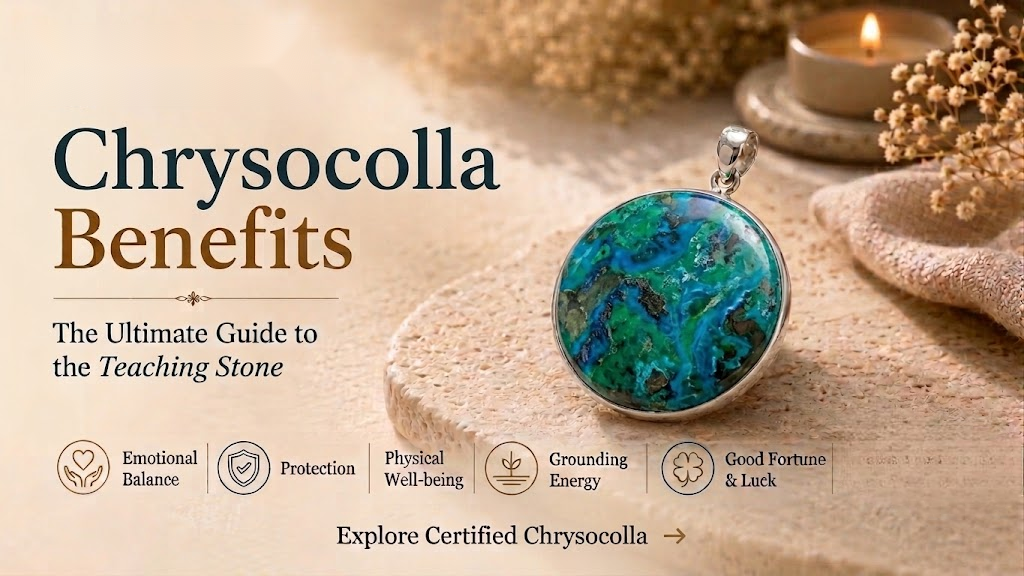
Chrysocolla: The Teaching Stone – Benefits, Meaning, Uses & Healing Properties
Introduction
With its mesmerizing shades of blue, green, and turquoise, Chrysocolla is a gemstone that stands out for both its natural beauty and symbolic meaning. Often known as the “Teaching Stone,” Chrysocolla has traditionally been associated with wisdom, communication, emotional balance, self-expression, and personal growth.
Unlike classical astrological gemstones such as Emerald (Panna), Ruby (Manik), or Yellow Sapphire (Pukhraj), Chrysocolla is primarily appreciated as a decorative and collector gemstone and in crystal traditions.
Its distinctive blue-green patterns make every Chrysocolla specimen unique. Whether you are interested in gemstones for their appearance, mineralogy, jewelry appeal, or traditional metaphysical symbolism, Chrysocolla is a fascinating stone to explore.
In this guide, discover Chrysocolla meaning, benefits, healing properties, uses, jewelry options, care instructions, and how it compares with other blue-green gemstones.
What Is Chrysocolla?
Chrysocolla is a hydrated copper-bearing mineral typically found in copper-rich geological environments. Its beautiful coloration ranges from light blue and turquoise to deep blue-green and green.
The presence of copper contributes to many of the vibrant colors associated with Chrysocolla. The gemstone can occur alongside other copper minerals, which can create fascinating natural patterns and color combinations.
Chrysocolla is relatively soft compared with many gemstones used in everyday jewelry. Therefore, it is generally better suited to pieces such as pendants, earrings, beads, and carefully protected cabochon jewelry.
Key Characteristics of Chrysocolla
PropertyChrysocollaMineral typeHydrated copper-bearing mineralTypical colorsBlue, green, turquoise, blue-greenAppearanceOften mottled, patterned, or matrix-richLusterGenerally vitreous to dullHardnessRelatively softCommon usesJewelry, cabochons, beads, ornaments, specimensTraditional associationCommunication, wisdom, calmness, self-expressionChrysocolla Meaning
The name Chrysocolla comes from Greek roots traditionally associated with gold and glue, reflecting its historical association with materials used in goldworking.
Beyond its mineralogical name, Chrysocolla has developed a strong symbolic identity in crystal traditions.
It is often associated with:
- Wisdom
- Communication
- Self-expression
- Emotional calm
- Learning
- Patience
- Inner reflection
- Personal growth
Its blue-green color is also commonly connected with tranquility and communication, making it particularly popular among people interested in stones associated with peaceful expression and emotional awareness.
Why Is Chrysocolla Called the “Teaching Stone”?
One of the most interesting names associated with Chrysocolla is the “Teaching Stone.”
This name reflects the traditional belief that the gemstone encourages people to learn from their experiences and share knowledge with others.
Rather than representing teaching only in an academic sense, the symbolism of Chrysocolla can extend to:
- Learning from life experiences
- Communicating knowledge
- Listening carefully
- Developing patience
- Expressing ideas clearly
- Understanding emotions
- Sharing wisdom
For this reason, Chrysocolla has traditionally been considered an appealing stone for teachers, writers, speakers, counselors, artists, and people involved in communication or creative work.
Chrysocolla Benefits
Chrysocolla is traditionally believed to offer several emotional and spiritual benefits. These benefits belong to crystal and metaphysical traditions and are not scientifically proven medical effects.
1. Supports Clear Communication
One of the most widely associated Chrysocolla benefits is its connection with communication.
Crystal practitioners traditionally believe that Chrysocolla can encourage people to express their thoughts more calmly and honestly.
It is often associated with:
- Clear expression
- Patient communication
- Active listening
- Confidence in expressing ideas
- Thoughtful conversations
This symbolic association is one reason Chrysocolla is often called a communication stone.
2. Encourages Self-Expression
Chrysocolla is traditionally associated with authenticity and emotional expression.
People who find it difficult to communicate their feelings may use Chrysocolla during meditation as a symbolic reminder to express themselves openly and respectfully.
Its traditional symbolism centers around the idea of speaking your truth while maintaining compassion and understanding.
3. Associated With Emotional Balance
The calming blue-green appearance of Chrysocolla has made it popular in crystal practices focused on relaxation and emotional balance.
Traditionally, it is believed to encourage:
- Calmness
- Patience
- Emotional awareness
- Inner peace
- Thoughtful responses
It can be incorporated into meditation or personal reflection as a visual reminder to slow down and approach difficult situations calmly.
4. Encourages Wisdom and Learning
As the “Teaching Stone,” Chrysocolla is strongly associated with learning and wisdom.
Its traditional meaning encourages people to look at experiences as opportunities for growth.
This makes it a meaningful gemstone for those who value:
Learning → Reflection → Understanding → Sharing
Rather than simply seeking knowledge, the symbolism of Chrysocolla emphasizes understanding and communicating what has been learned.
5. Promotes Personal Reflection
Chrysocolla is often used during meditation and reflective practices.
Holding the stone while quietly reflecting on personal experiences may help create a meaningful ritual around:
- Self-awareness
- Personal development
- Emotional reflection
- Goal setting
- Mindfulness
The benefit here is primarily symbolic and experiential rather than medically established.
6. Associated With Creativity
Because Chrysocolla is traditionally connected with communication and self-expression, it is also popular among creative individuals.
Artists, writers, musicians, designers, and other creative people may appreciate Chrysocolla as a symbolic representation of creative expression and originality.
Chrysocolla Healing Properties
In crystal-healing traditions, Chrysocolla is often described as a calming and nurturing gemstone.
Traditional associations include:
- Emotional balance
- Communication
- Self-expression
- Creativity
- Inner calm
- Wisdom
- Patience
- Personal growth
- Spiritual reflection
Important Note
These healing properties are based on traditional crystal practices and spiritual beliefs. There is no established scientific evidence that Chrysocolla can diagnose, prevent, or treat medical conditions.
It should therefore not be used as a substitute for professional medical care.
Chrysocolla and the Throat Chakra
Chrysocolla is commonly associated with the Throat Chakra in crystal traditions.
The Throat Chakra is traditionally connected with:
- Communication
- Truth
- Self-expression
- Listening
- Authenticity
Because of this association, Chrysocolla may be used during meditation with the intention of encouraging clearer and more compassionate communication.
A simple practice is to hold the stone comfortably, take several slow breaths, and focus on an intention such as:
“I communicate clearly, calmly, and authentically.”
How to Use Chrysocolla
There are several simple ways to incorporate Chrysocolla into your everyday routine.
1. Wear Chrysocolla Jewelry
A Chrysocolla pendant or necklace is a popular choice because it allows the gemstone to remain close to the throat area.
You can also find Chrysocolla in:
- Earrings
- Bracelets
- Beaded jewelry
- Rings
- Cabochons
Because the stone is relatively soft, jewelry should be worn with care.
2. Use Chrysocolla During Meditation
Place Chrysocolla in your hand while meditating and focus on communication, emotional balance, or personal growth.
You can combine the practice with deep breathing and positive intentions.
3. Keep Chrysocolla in Your Workspace
A polished Chrysocolla specimen can be placed on a desk, writing table, or creative workspace.
It can serve as a visual reminder of:
Creativity + Learning + Communication + Wisdom
4. Add It to a Gemstone Collection
Chrysocolla's unusual patterns make it an attractive addition to a gemstone or mineral collection.
Collectors often appreciate individual specimens for their natural color combinations and mineral formations.
Chrysocolla Jewelry
The blue-green appearance of Chrysocolla makes it particularly attractive in statement jewelry.
Its natural patterns can include combinations of:
- Turquoise blue
- Deep blue
- Light green
- Dark green
- Brown or earthy matrix patterns
Because no two natural pieces necessarily look exactly alike, Chrysocolla jewelry can have a distinctive one-of-a-kind appearance.
For buyers interested in gemstone jewelry, GemRishi also offers a broad selection of natural and certified gemstones, including Emerald, Ruby, Yellow Sapphire, Blue Sapphire, Opal, Turquoise, Tourmaline, Aquamarine, Amethyst, and other gemstones.
Chrysocolla vs. Turquoise
Chrysocolla and Turquoise can sometimes be confused because both can display beautiful blue-green colors.
However, they are different minerals.
FeatureChrysocollaTurquoiseMineral categoryHydrated copper-bearing mineralHydrated phosphate mineralCommon colorsBlue, green, turquoiseBlue, green, blue-greenAppearanceOften highly patternedOften more uniform or matrix-richHardnessRelatively softGenerally harder than ChrysocollaJewelry useCabochons, pendants, beadsRings, pendants, bracelets, beadsMain appealUnique blue-green patternsClassic blue-green gemstone appearance
GemRishi's gemstone collection also includes Turquoise (Firoza), making it useful to explore the differences between blue-green gemstones when selecting a stone.
Is Chrysocolla a Birthstone?
Chrysocolla is not one of the traditional modern birthstones assigned to a particular month.
However, gemstone enthusiasts may choose Chrysocolla based on its color, personal symbolism, spiritual associations, or aesthetic appeal.
If you are specifically searching for traditional birthstones, GemRishi's gemstone collection includes several popular birthstone options and precious gemstones.
Is Chrysocolla an Astrological Gemstone?
Chrysocolla is primarily known as a mineral specimen, jewelry gemstone, and crystal associated with metaphysical traditions rather than one of the principal gemstones used for traditional Vedic planetary remedies.
This distinction is important.
Traditional Vedic astrology commonly uses gemstones such as:
- Ruby for the Sun
- Pearl for the Moon
- Red Coral for Mars
- Emerald for Mercury
- Yellow Sapphire for Jupiter
- Diamond or White Sapphire for Venus
- Blue Sapphire for Saturn
- Hessonite for Rahu
- Cat's Eye for Ketu
If you are choosing a gemstone specifically for Vedic astrological purposes, it is advisable to consult a qualified astrologer and select a gemstone according to your individual birth chart.
GemRishi specializes in natural, lab-certified astrological gemstones, including Blue Sapphire (Neelam) and other traditional Vedic gemstones.
How to Care for Chrysocolla
Chrysocolla requires more care than harder gemstones because it is relatively soft.
Follow These Care Tips:
- Clean it gently with a soft, damp cloth.
- Keep it away from harsh chemicals.
- Avoid ultrasonic cleaners.
- Avoid steam cleaning.
- Protect it from prolonged heat.
- Store it separately from harder gemstones.
- Avoid dropping or striking the gemstone.
- Remove Chrysocolla jewelry before activities that could cause scratches or impact.
If the Chrysocolla has been stabilized, treated, or combined with another mineral, its care requirements may differ.
How to Choose a Good Chrysocolla
When buying Chrysocolla, consider the following factors:
1. Color
Strong, attractive blue, green, and turquoise colors are generally desirable.
2. Pattern
Natural Chrysocolla can display fascinating patterns and matrix formations. Personal preference plays an important role in choosing the appearance you like.
3. Surface Quality
Look for a piece with a smooth and well-polished surface when purchasing finished jewelry.
4. Treatment
Ask whether the material has been stabilized, treated, dyed, or otherwise enhanced.
5. Seller Transparency
Choose a reputable gemstone seller that provides clear information about the gemstone's identity, quality, treatment, and origin when available.
For traditional astrological gemstones, certification is particularly important. GemRishi highlights its natural and lab-certified gemstone offerings, with certification information available for its astrological gemstone collections.
Final Thoughts
Chrysocolla is much more than a beautiful blue-green mineral. Its distinctive colors, natural patterns, and symbolic connection with wisdom and communication have made it a fascinating gemstone for collectors and crystal enthusiasts.
Known as the “Teaching Stone,” Chrysocolla is traditionally associated with learning, communication, self-expression, emotional calm, creativity, and personal growth.
Whether you choose Chrysocolla for its unique appearance, add it to your gemstone collection, wear it as jewelry, or use it as part of a meditation practice, its natural beauty makes it a memorable gemstone.
For those interested in exploring other natural gemstones, GemRishi offers a wide range of certified precious and semi-precious gemstones, backed by a long-standing heritage in gemstone sourcing and craftsmanship.
Explore more gemstone knowledge through the GemRishi Journal, where you can discover guides covering gemstone meanings, benefits, astrological significance, buying tips, and authenticity.
Have Questions Regarding This Gemstone?
Connect 1-on-1 with GemRishi’s certified Vedic gemologists on WhatsApp for personalized birth chart recommendations, lab certificate verification, or custom jewelry quotes.
Gemrishi
Gemrishi is a certified gemologist and Vedic astrology scholar at GemRishi with over 15 years experience in natural gemstone origin authentication.